Showing posts with label Short Film. Show all posts

Sunday, 9 June 2019

Roundhay Garden Scene

A Mystery?

To talk about the cinema's present, one must first acknowledge its past. Roundhay Garden Scene (1888), one of the oldest surviving fragments of motion picture history, could be called, at its most dismissive, a camera test; a two-second recording that captures four individuals wandering around the gardens at Oakwood Grange in the suburb of Roundhay, Leeds, West Yorkshire. Obviously intended as an experiment in recording movement, the few seconds of surviving footage have, with the passage of time, become possessed with a feeling of mystery, if not anxiety. Scratch beneath the surface of its seemingly benign exterior and Roundhay Garden Scene becomes a precursor to the subconscious cinema of filmmakers like Fritz Lang, Jacques Rivette, Stanley Kubrick, David Lynch and others. Films that are charged with an air of conspiracy, or obscurity; of dream-worlds and paranoia, controlled and manipulated by an unseen system of influences.

Like the aforementioned Kubrick's final masterwork Eyes Wide Shut (1999), Roundhay Garden Scene is a film so suggestive and enigmatic that it lends itself to the kind of Rorschach-like approach to film criticism that I've indulged in here. It becomes a black mirror, so void of deeper meaning that we're compelled to project our own meanings onto it; inventing a narrative where none exists; enlivening its minimal presentation with our own thoughts, fears and concerns. Like the way the metaphorical noose tightens around the lives of the protagonists in Kubrick's last film, the observation of the participants here has an undercurrent of something more sinister. It's as if the events unfolding are being manipulated by an unseen organisation; shadowy forces again at work. It suggests something of the private made public; a kind of open doll's house or glasshouse facade that the audience is invited to peer into; becoming witness to some recreation of "normal" behaviour that's too stylised, mechanical or forced to be considered real.


Roundhay Garden Scene [Louis Le Prince, 1888]:

Much of this particular reading of the film - as something more ominous or insidious than its no doubt innocent intentions - has been undoubtedly coloured by the strange events surrounding its production. Firstly, the death of one of its on-screen participants, Sarah Whitley, ten days after the filming was complete. More significantly, the mysterious disappearance of its 'author' - the early cinema pioneer Louis Le Prince - two years later. The body of Le Prince was never discovered, and several conspiracy theories exist that attempt to explain the course of events. Lastly, Le Prince's son, Adolphe Le Prince, another participant in the film, was discovered shot dead around two years after he testified in court against Thomas Edison about his father's inventions. Such tragedies become like black clouds that hover over the legacy of this film and lead the mind to wander about its conception. While I'm no great conspiracy theorist, I do think it's interesting to speculate.

With its matter of fact title and the mysterious system of circumstances surrounding its release, Roundhay Garden Scene is a film that gives the audience room to dream and to project onto its surface their own subjective and subconscious narrative. It transcends categorisation, being at once a documentary - a recording of an actual scene that captures people long-dead and preserves them forever in this prison of celluloid - and a dramatisation; a recreation of something real turned fiction. The presentation of its participants as they move through the space becomes a dance like the planets in orbit. Like the investigation into the photograph in Michelangelo Antonioni's great masterpiece Blow-Up (1966) I feel like I need to go deeper into this film, to scrutinise the shadows in the window, the gaps between the bushes, the suggestions at the corners of the frame; to unlock the mysteries that surround the film and define its legacy. Another time perhaps.

Tuesday, 10 April 2012

Recent Work

Small catalogue of images from recent film-related work. Since last Augst, I've been making a conscious effort to reinvent my approach to filmmaking. If a lack of funds or a lack of support amongst friends and family means that I'm unable to make a film like Le lit de la vierge (1969) or Le pont du Nord (1981), I can at least explore the same themes through a different methodology. This reinvention owes a lot to the influence of filmmakers like Chris Marker, Agnès Varda, Patrick Keiller, Derek Jarman and early Peter Greenaway, but it's also a continuation of what I've been trying to do with the blog: i.e. using a particular film as a frame for exploring more personal ideas under the belief that criticism, for me at least, should be a combination of essay, autobiography and genuine fiction. The same is also true for filmmaking.

At this point I'm not at all confident enough to post the actual films online. Some of the more recent projects could still be improved with tighter editing, a new soundtrack mix, etc, but I suppose I wanted to include some acknowledgement of their existence, if only to remind myself that the blog is still mine, and not in the possession of some other, disconnected part of my psyche that exists somewhere outside of the boundaries of my everyday life [although it does, no question]. Nonetheless, it's the first great step towards actually sharing my work with an audience, and not just making it for myself.


Communication: DV, Colour / 14 minutes and 27 seconds / 20/02/2012:


Self Portraits: DV, Colour / 8 minutes and 24 seconds / 30/01/2012:


Garden Scene: DV, Black & White / 28 minutes and 15 seconds / 02/01/2012:


A Reading of Virginia Woolf's 1931 Novel The Waves [extract]: DV, Colour / 40 minutes and 22 seconds / 26/12/2011:


Absence: DV, Colour / 10 minutes and 16 seconds / 15/11/2011:


Sperm Impregnates the Egg / A Baby is Born: DV, Colour / 4 minutes and 32 seconds / 23/10/2011:


The Illicit Carpet Bombings of Eastern Cambodia and Laos, March 18 1969 to May 28 1970: DV, Colour / 6 minutes and 22 seconds / 15/10/2011:


The Dying Light: DV, Colour / 8 minutes and 15 seconds / 06/10/2011:


Sunrise [An Impression]: DV, Colour / 53 minutes and 10 seconds / 28/09/2011:


Prison of Rain: DV, Black & White / 12 minutes and 53 seconds / 10/09/2011:


The Quest for Fire: DV, Colour / 7 minutes and 28 seconds / 06/08/2011:

All images © Amarcord Films/Lights in the Dusk, 2011-2012

Sunday, 4 March 2012

Black Ice

The title seems appropriate. The experience of the film suggesting the slow slippery slide of an unseen hazard as it catches the light of a clear December morning, just seconds before our feet slip out from under us, or the car drifts into the break. This light, burning bright beneath the surface of the screen, throws shapes into our periphery. Shapes that might exist as mere markings on the celluloid - like a living collage of daubed paint, dead leaves or spilled ink - but which, on closer reflection, can be interpreted by the viewer on an emotional or psychological level. Not so much as a Rorschach Test as an attempt to find meaning in the abstract. Like the refracted glare of the sunlight flaring off the camera lens on a holiday snapshot, or the dappled spots of rain on a windowpane that turns the world outside into a shimmering mosaic, this, as an effect, is something powerful enough to transform the mundane into the extraordinary.

Like in Mothlight (1963), or The Garden of Earthly Delights (1981), the presentation of the film, when looked at, straight-on, as a moving canvas, creates an interpretation that is further established in the mind by the connotations of the title. Here, it's that slow forward-journey through the void that makes Black Ice (1994), as a motion-picture, more immersive, more captivating, than any 3D blockbuster. The illusion of depth, of movement, created, not by multi-million dollar "FX", but by an optical illusion. Something that is formed within the mind; the act of viewing transforming it into whatever we want it to be, but at the same time, exactly what the filmmaker intended.


Black Ice by Stan Brakhage, 1994:

When I was a child, I'd play this game where I'd press the palms of my hands hard into my eye sockets and hold them there for several minutes. After a short while, the impression of the force would form against the retina and create the illusion of movement. A trip into the unknown, like Avatar (2009), but less expensive. At first the experience was like a slow descent into the depths of a jungle canopy. The tops of trees, enormous - green, blue and purple - covering the forest floor (which seemed endless), would blur and blend all around me. I'd dare myself to keep my hands pressed as hard against the eye for as long as I was able; to stay on this path, this trek, down into the abyss that my imagination was creating, to see what else I might discover. Eventually the whole thing would merge into a collage of colours, all melting and dissolving into a series of amorphous great blobs, like the shapes in a lava lamp, or a B-movie assimilation of the 'stargate' sequence from the end of 2001: A Space Odyssey (1968).

I was sure that this activity was damaging my eyes but it was worth it to experience all that the mind could conjure. Like interpreting abstract art, it was something that I could claim as my own. It wasn't defined or restricted by what others suggested, but open to my imagination. The same is true of Brakhage's films, which are there to be looked at, intently, closely or from a distance, at the changing shapes that create images, ideas, emotions, stories and room for contemplation. Watching a film like Black Ice in the dark of this room on a small laptop, the light of the screen like a beacon, is a profound experience, though I can only begin to imagine how extraordinary it would be to see it as intended, as a theatrical projection. The entire cinema becoming the portal for some fantastic journey, like Jules Verne, sans contraption.

Thursday, 2 February 2012

Intervals

A film nervous with the anticipation of something?

Though the something never arrives, at least not the something one might expect from the grating, almost metronome-like soundtrack, or the framing of shots, which imply The Third Man (1949) via shades of early Godard, or some similar tale of espionage suggested by these street level observations and the European locale. The amplification of the 'dubbed' sounds, at least initially, seem to play against a natural expectation for a certain kind of drama, or 'pay-off', in the dramatic sense. The ticking sound, like a ticking clock, counting the minutes, or a time bomb, like with Hitchcock, from Sabotage (1936) to Saboteur (1942). However, the dramatic reveal that we're anticipating turns out to be something else, unrelated, but no less remarkable! An explosion, not in the sense of a terrorist attack, but as an actual emotional revelation felt within the experimentation of the form.

The creative associations that are forced upon the work by this juxtaposition of sound and image create a sense of drama that would otherwise be nonexistent, and this, effectively, is the point.

Like Greenaway's later film, The Draughtsman's Contract (1982), this is a film about the relationship between the viewer and the work itself. While the later film would employ a dramatic device made famous by Antonioni in his masterpiece Blow-Up (1966) - in which an artist creates a work that reveals, on closer inspection, the clues to a terrible crime - the approach to this particular film is less narrative, more subjective. Here the audience adopts the role of the Draughtsman, or the unnamed photographer of Antonioni's film. However, unlike the two characters there, we (the individual spectator) haven't created this work, but are being invited by the filmmaker to look at it, to study these shots, these recurring moments in time, with the same restlessness, the same obsessive curiosity. At first it all seems fairly mundane; geriatrics and hesitant children shuffling through near-vacant streets. Without the soundtrack in place, these images would seem uneventful, perhaps even routine.


Intervals directed by Peter Greenaway, 1968-1973:

In the act of closely examining these shots, the audience begins to project their own ideas and interpretations onto them, drawing consciously or unconsciously on a familiarity with the machinations of a genre (or the general conventional presentation of cinema) to invent their own scenarios, to justify Greenaway's experiment in an attempt to anchor it to some kind of recognisable context or theme. This, as an experiment, is directly related to the specific way that we, as audiences, experience films; an experiment in the art of looking and seeing, but also in allowing the film (and the filmmaker) to manipulate the way we receive information through the combination of sound and image.

In the majority of films this is hidden; part of the great magic act that filmmakers use to dazzle their audience, creating moments of comedy and drama, terror and suspense from a seemingly simple cutting between scenes, characters and situations. With Intervals, Greenaway wants to expose the lie, expose the tricks that these storytellers use to manipulate the emotions of an audience. Here these cyclical street-scenes (presented as the 'Intervals' of the title) that repeat several times, each time with subtle variations on the soundtrack, are intended to push the viewer into analysing their own subjective interpretation of the images, and what these images might suggest.

While the earlier experiments with sound create an atmosphere of tension or suspense - something slightly ominous or threatening, again, like a ticking clock, counting down the seconds to some actual devastation - the wave of orchestration that breaks and pulls the images back from the brink of catastrophe (and back towards something more conventionally cinematic, in the Hollywood sense), creates a feeling in the viewer of our senses or perceptions being altered, subtly or not so subtly, by the experimentation with the form. Here we have the same images, the same streets and people appearing again and again, and yet our interpretation of these events is transformed, significantly, by the specific choice of soundtrack. This, in a very Greenaway stroke, is the essence of cinema at its most creative and unashamedly deceptive.

Thursday, 12 January 2012

The Cage

The naked figure runs towards the gate. The surface of it fills the frame, becoming a barrier; an ornate wall - itself a relic to another time - which reduces the body of this man to something small and insignificant. We watch as his futile fists pound on the heavy exterior, both desperately and aggressive; trying without any great success to rend the gate open in a fruitless effort to break through to the other side. Excluding the music there is no sound, but we can imagine what is said: "let me out!" or possibly "let me in!"

From the images and the English translation of the title we can infer meaning. Time as a cage; a prison.


The Cage directed by Shûji Terayama, 1964:

The images are strange and enigmatic, but seem to suggest the various themes that explain what the film is potentially about. The above image can possibly be read as representation of birth. The figure - anxious, naked, desperate to escape this netherworld, to embrace life, or something like it - becomes like a child; his stature reduced to that of an infant in contrast to the overwhelming scale of the barred exterior, which looms before him in stoical reception.

Such a reading might seem too literal. The film certainly doesn't require such elucidation - the mood of the thing is enough to entrance us or provoke a response; the images suggesting stories or interpretations, but really just catching our eye with their disarming compositional approach - but it does make the experience of viewing more intriguing.

The images tell the story, or suggest one. An eye squints through the bars, like the eye of the viewer - the bars, as ever, a representation of the one-way relationship between the audience and the film - watching these images unfold. Some of the images conjure immediate associations, such as the old woman carrying the clock, carrying time, as a figurative gesture. Each of us are a prisoner of time, conscious of it. Perhaps not every second or every minute, but certainly the months, years and decades.

Other images seem vague or beyond easy interpretation. Two men exercise in unison, like prisoners in the yard. A hooded figure stands in the centre of a clock face, his silhouette - a body without a soul - becomes the hour hand, marking time.


These images add to the atmosphere of the film. That heavy sense of foreboding, which is only intensified by the tortured soundtrack; the thump of a drum, counting the seconds, or the howl of an anguished cry. Terayama's short is haunting, mesmerising, like much of the director's work (though some of his films are admittedly too contentious for my tastes), becoming, in effect, a series of bold gestures that suggest different meanings, different ideas, that play on the subjective gaze of the audience, like all art does.

Other viwers might disagree with these suggestions, but for me the film is a great figurative essay on time. A slow march towards the inevitable... like death or something else?

Friday, 19 August 2011

Water for Maya

How do you describe the indescribable? Narrow your eyes for long enough and the images start to look like the flutter of a billion butterfly wings. Other times, it is a gallery of faces - some haunted, some disturbed - looking out for just a split-second, then gone again; lost in this kaleidoscopic burst of colours, daubed, physically, onto the celluloid. These 'phantom faces' make us question our own role as a prospective audience. Are we the "viewer", passively observing the work presented to us and attempting to glean something meaningful, either a thought or a feeling from the experience; or are we the "viewed", the real objects of significance.

I wonder how many different audiences or viewers a film might see during the course of its lifetime. How different their relationship is to us than ours is to them. An audience may see only a handful of films a year, but the film itself will see literally thousands of these objects of curious interest presented to it during an average day. A very different gallery of faces than the ones imagined here, between the spaces of the frame. Instead, a gallery of faces more like the ones found in Abbas Kiarostami's extraordinary Shirin (2008), in which the spectator becomes the spectacle.

If film was more than just a dead-object brought to life by the gaze of the observer, who enlivens it through personal reflection and subjective opinion, would it be possible for the film, or these faces, to judge us, as a collective work, as we judge it?


Water For Maya by Stan Brakhage, 2000:


Shirin directed by Abbas Kiarostami, 2008:

As the blur of colours and textures explode and disperse, a second layer of images reveals itself, gradually, over the course of the film. A ghost story - non-narrative, but a story all the same - moving beneath the surface. This spectral play of shadows, where the glimpsed faces become almost explicit, is where the real power of the film rests. Not simply as a tribute to the American filmmaker Maya Derren, as hinted at by the film's title, but as a truly sensory cinematic experience.

In this remarkable montage, every frame has the power of a Pollock or a Kandinsky. On screen for less than the normal time that it might take for our eyes to register its form, but still vivid, vital; a series of images open to interpretation. The accumulative effect of these images when viewed against one another in a quick succession, creates something that is difficult to define, and even more difficult to express in words. It is something that can only be felt through the process of viewing.


Water For Maya by Stan Brakhage, 2000:

Monday, 15 August 2011

Commingled Containers

At first sight, it's like a hail of rain, falling from the heavens. Our eyes have to adjust to it. It takes a moment or two before we realise we're looking down at an embankment of waves. The soft spots of light dappled on the surface of the water blur with the movement of the camera, creating the impression of a flowing haze of drizzle as it downpours against a backdrop of Picasso-blue clouds. There's something almost kaleidoscopic about the way this image plays on the screen. The motion of the light as it bends and distorts with the movement of the apparatus suggests the static of an outdated television set; a transmission from somewhere beyond the reality of the here and now, or perhaps even a split-second blur of blue frost that recalls, in the nicest possible way, an 'old-Hollywood' depiction of an acid flashback.

Nonetheless, the effect is profound. The impressions of the light and the water as they wash-over and distort the lens creates a sense of mystery; an underwater adventure, sans Cousteau, looking for Atlantis, but finding only the natural wonder of the planet that surrounds us. There is a new world beneath these waves; little cloud-shapes catching the form of something backlit; giving the feeling of figures moving within a mist or emerging from the shrouded darkness of the soft seabed. Or illuminations, catching the speckles of water behind the lens, refracted in close-up, like the wings of insects swarming around the face of a dying light.

Eventually we realise that the explorations of these depths carry a greater significance. As with Brakhage's earlier film, 'I... Dreaming' (1988), there is a deeper meaning to this montage of images, the impressionist blurs and the impenetrable forms that the viewer transforms, through imagination and association, into something almost rational. There's a story here, a feeling; an attempt to find something to make sense of the order of the universe in a very vague but also very resonant way, but also an attempt to understand the certainty of death, the fragility of the human body; a presentation of nature, like death itself, at its most dramatic and mysterious.

There is something introspective about these images too; a man, looking to the water to find inspiration, but seeing only a reflection of his own mortality staring back. The shots of the water, violent or still, or the effect of the camera when submerged beneath the creek, create not only a sense of life in movement, but a suggestion of the general flow of existence, from birth to death.

The general experiments seem to be damaging both the camera and the film, but in a way that creates something beautiful. The light that spills into the frame during the closing shot, before it plunges, forever into darkness, is evocative of what survivors describe as a vision of the afterlife. Not in any sentimental or overly romantic way, but as a very real experience; a reaction, within the mind and the eyes, to the body draining of life. At the very end, the film dissolves into nothing, as the waves break and part; drifting out towards the oceans, or towards the coast, or as part of the general ebb and flow of a rushing river, out to meet its king, the sea.


Commingled Containers by Stan Brakhage, 1997:

Saturday, 6 August 2011

I.... Dreaming

Sweet spirit, see the dark void; the psychology of a space, this house in your absence, with its clutter and its mess; or the lonesome silhouette and the cramped interiors that feel enormous without your body there to claim them. Here, in the blurred images of an abandoned old man, and I... dreaming of you.

Immediately these images speak to a feeling of great loneliness suggested by the framing of shots. The emphasis on certain spaces within the frame that recall the everyday intimacy of domestic-living - the bedroom or the kitchen - creates a sense of devastating anxiety or discomfort when placed in contrast against the quieter moments of solitary reflection, insinuating the loss.

Even without the benefit of context or biography, the feeling of emptiness is here, in these rooms, with their small pools of light that drip from loft windows, drawing our attention to the devastating darkness of the rest of the frame. The house, as a home, with its usual connotations and associations, seems bereft, as if the actual building itself has fallen into a ceaseless state of mourning.


I... Dreaming by Stan Brakhage, 1988:

Here, the agitation of the form, with its jump cuts, its restless time-lapse of moments where the grandchildren play in the sitting room, suggests the inability of this man to feel at ease in these surroundings. The home, once familiar, once a place of comfort and relaxation, is now a place that traps the body in a limbo, between solitude and desperation.

The man, reduced to nothing more than shadows and shapes, a reflection in a window pane, or a blurred and obscured mass in the extreme close-up of the camera's eye, is himself an empty frame, haunted by the ghost of his subject.

Thursday, 10 March 2011

Lotus Flower

The new Radiohead video, Lotus Flower - the first single from their already available to download album The King of Limbs - continues the band's interest in promoting themselves via simple, low-fi, low-budget promos that seem positively homemade in comparison to the celebrated, high-concept videos for songs like Street Spirit, Karma Police, Pyramid Song, etc. Having first discovered the notion of music as something more than just a soundtrack to childhood family outings during that particular period of the band's creative evolution there's still a lingering sense of warm nostalgia for the days, pre-access to the Internet, when coming home from school and flicking through the music channels to see the new Radiohead video (or Björk, or Blur, or Eels) brought on a rush of excitement unlike anything else.

It was the whole cultural communicative thing too, which probably still exists, but like everything else these days is accelerated; no longer something to actually wait for, discover or stumble across when you least expect it, but there, at your fingertips, and on-demand. The playground buzz of the next few days when you'd ask your friends "did you see that?" no doubt has less of the same sting of anticipation that it used to have in the early-millennium days when the thought of using a computer to simultaneously link your friends with the relevant clips and information was the stuff of older kids, or science fiction.

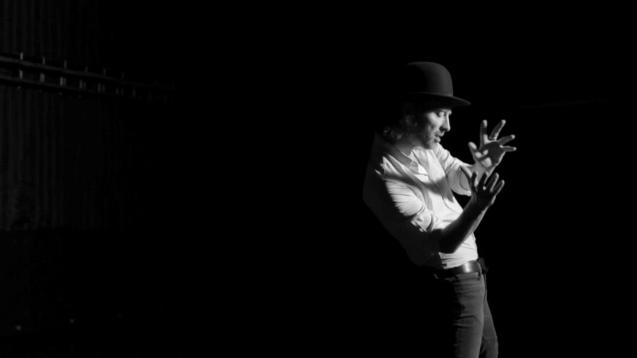
Lotus Flower begins, in back-lit black and white, in a severe looking service tunnel reminiscent of the one featured in Philippe Garrel's silent post-May '68 psychodrama, Le révélateur (1968). It could be described, with total straight-faced honesty, as a "performance video", though not in the industry jargon sense of a band or musician sitting in a room hitting their instruments in-sync with a studio backing track. This is the performance video as a work of legitimate performance art; where the movement of the body, in time and in step with the beats, melodies, counter melodies and chord changes of the song itself creates an expression that articulates, not necessarily what the song is about, but the mood, the atmosphere and the way the song makes us feel.

The feel of any Radiohead song is unmistakable: nocturnal, restless, desolate and claustrophobic; with the sense of technology as both a liberator and facilitator in our own glorious downfall. A cultural year-zero in the beautifully Ballardian notion of consumer meltdown; kingdom come and the myths of the near future. Though the dance is typically a kind of celebration, it is here a solitary expression, performed for the benefit of an audience no doubt alone or connected to the world only by that thin invisible thread that links us, from one machine to the next. As the video develops, moving with each new change in rhythm and tone, the hypnotic convulsions on screen become as mournful and sombre as Yorke's wailing falsetto. At the same time they possess a freedom and a lack of self-consciousness usually reserved for the inner-city drunk or the roadside lunatic. Someone like Denis Lavant's character in the Yorke affiliated Rabbit in Your Headlights video, who finds strength in absolute abandon.

Lotus Flower may not have the immediate awe-factor or something like Just or Street Spirit or Knives Out, with their unanswerable questions, technical virtuosity and endless imagination, but there's something quietly overwhelming about this video that at first seems to be almost thrown-together as an afterthought, but reveals, with subsequent viewings, to be something quite remarkable, fascinating and total alien to anything else currently being produced.


Lotus Flower directed by Garth Jennings, 2011:

Monday, 7 February 2011

Renault Clio Commercial

Can television commercials be elevated to the creative level of modern art? The new promo for the Renault Clio, currently screening on British television, attempts to establish itself as something a little different from the average car commercial through an adventurous appropriation of both conventional and unconventional references. The result: a 40 second clip that impresses as a work of pure audio-visual experimentation but, like the majority of the kind of modern-art being referenced herein, leaves the audience wondering... what does it all mean?

Mixing contrasting elements of pop-culture and high-art, the ad' plays like a bizarre combination of installation-piece and the trailer to Jean-Luc Godard's recent Film Socialisme (2010). Cross-cutting between stock-footage of movie stars like Audrey Hepburn and Marlon Brando with sequences of the burlesque "performer" Dita Von Teese and the French football player Thierry Henry - while the soundtrack blurs samples of Clare Maguire, David Bowie and Rihanna to create something that adds an enigmatic commentary to the images - the intention of the clip seems to be the presentation of the spectacle of glamour; where art, celebrity and the car itself become objects to be fetishized and admired.

On top of this, oblique inter-titles that work against the images are superimposed on-screen to create an association of ideas. The intent? To hypothesize about the possible meanings behind Renault's famous advertising slogan: "what is va va voom?" At this point, I'm not sure if this commercial really warrants any kind of greater, in-depth analysis (sometimes a commercial is just a commercial), but I did enjoy it; not just as a work of actual video production, but as a rather interesting and impressive piece of contemporary objet d'art.


What is Va Va Voom? directed by Ishbel Whitaker & Marc Hawker for "Darkfibre", 2011:

Friday, 10 September 2010

World of Glory

In discussing the brief snippet from the ever contentious Uwe Boll's no-doubt harrowing new film Auschwitz (2011) - particularly the way in which the sequence communicates the most regrettable atrocity associated with the holocaust - chiefly, human indifference - through the image of a Nazi guard listlessly marking time while the cries of the women and children call out from the torture of the gas chamber - I was reminded of this short 15 minute feature from the always brilliant Swedish filmmaker Roy Andersson.

World of Glory (Härlig är jorden, 1991) - which seems to take place in the present day, but nonetheless begins with a sequence deliberately intended to evoke the horrors of the Second World War - may be the greatest and most penetrating comment ever made on the issues of genocide, shame and collective guilt. Expressing its ideas through incredibly simple though never simplistic static tableaux - where the intention of scenes is to present the void-like moral decay form within the very soul of its ghostly central character (played by Klas-Gösta Olsson) - World of Glory grabs the viewer's attention from the very first frame; establishing a particular tone of disquieting, deadpan surrealism, before eventually leading us, scene by scene and minute by minute, through the painful empty life of this enigmatic central figure, in a way that seems to underline or exaggerate the absolute vacant misery of his pitiless existence.

In the unforgettable opening sequence, a group of officious, grey-suited spectators stand beside the rear of a monstrous diesel-fuelled truck, watching a huddled mass of naked women and children being loaded into the hold. The piercing cries of the smallest child, central to the frame, are shattering, as the small fat man to the left of frame kicks out at the boarding-ramp to hasten their ill-fated departure. As the heavy-metal doors are slammed shut, locked and bolted, muting but failing to drown out the horrible screams from within, one of the spectators, a thin man with a sinister moustache, turns to face the camera.

At this moment, as the large, industrial hose is led from the exhaust to the small vent at the back of the truck, the audience is being explicitly acknowledged - worse, implicated - in these events, but can only experience the unfolding massacre, hopeless and removed.


World of Glory directed by Roy Andersson, 1991:

From here, the film cuts to a scene in a hospital ward. The thin man, the same character who acknowledged our presence during the opening moments, introduces us to his near-comatose mother lying lifelessly in bed. "This is my mother..." he says, matter-of-factly; "I am very attached to her" From here, the film quickly establishes a rhythm, cutting from one vignette to the next as the man shares with us his mundane observations on everything from his job to his car to his bed and his family. Through these static sequences, Andersson is showing a character in an obvious state of denial; pretending to himself that these miniature moments that make up the fragments of his everyday routine are in some way 'meaningful.' That this life, which consists of work, or church, or family, is somehow a life well lived. We can assume from this (thought it isn't particularly clear) that Andersson is contrasting the drab tedium of this existence with the horror of the opening sequence. The character is, in a sense, in limbo; visibly damaged by the cold brutality of the film's first scene and yet desperate to convince himself that everything is still okay.

At the end of the film, the implication, that everything is not okay, is made clear, with Andersson's framing of this character, upright in his bedroom, his hands over his ears, while his wife lies asleep in bed. The guilt of what he has witnessed is simply too great to ignore, and the constant bleed of useless information or personal trivia can no longer distract him from the horrible cries that haunt his every waking moment. The film quite brilliantly asks the audience to question who is worse; those who pull the switches, or those who stand idly by and allow such things to happen.


World of Glory directed by Roy Andersson, 1991:

Wednesday, 26 May 2010

Wanderlust

A song about embracing the new - about the restless pursuit of the next great adventure - presented with a visual accompaniment that achieves the expression of the unbelievable, the astounding, or the thrill of the unknown. Wanderlust, in its purest form, is an adventure in eight-minutes; a breathless, exhausting trek down river, where the forward motion of this character is matched by the driving rhythms of the music itself. Kraftwerk-like rhythms that recall something like Trans-Europe-Express (1977); where the sense of movement, atmosphere and place is the thing that draws us in, maintains our interest throughout the duration of this narrative (aural, visual or imaginary), and leaves us hopelessly searching for that next rush of discovery when the song comes to an inevitable close.

The particular yearning for a new place or the need to travel, explore and do other things is largely a metaphor for Björk's career as a whole. In this sense, the video could be seen as a dramatised fantasy version of her own life and vocation; beginning with this small, exotic figure discovering something extraordinary that comes from her own connection with nature; a connection that will grow and transform into an uncontrollable entity, forcing her to leave the security of home and taking her on this remarkable journey - where she is carried along through uncertain waters by the support of others, where she fights a battle with herself, where she is plagued by various obstacles that attempt to harm and hinder - before eventually making the ultimate plunge into the unfamiliar; into the great unknown.

This beautifully made clip is everything a film like Avatar (2009) promised to deliver, but couldn't; a fully immersive 3D experience, which - through the sheer power of its imagery and imagination - transports us to another world.


Wanderlust directed by Isaiah Saxon & Sean Hellfritsch, 2008:

Schalcken the Painter (1979)

Schalcken the Painter [Schalcken the Painter [Leslie Megahey, 1979]: This is a film I first saw around four years ago. At the time I found...