Showing posts with label Abbas Kiarostami. Show all posts

Monday, 6 October 2014

Top Ten: 1990


Ranking the Decades
A Year in Film List + Image Gallery


Gremlins 2: The New Batch [Joe Dante, 1990]:


Edward Scissorhands [Tim Burton, 1990]:


Trust [Hal Hartley, 1990]:


Close-Up [Abbas Kiarostami, 1990]:


Innisfree [José Luis Guerín, 1990]:


Nouvelle vague [Jean-Luc Godard, 1990]:


The Comfort of Strangers [Paul Schrader, 1990]:


No Fear, No Die [Claire Denis, 1990]:


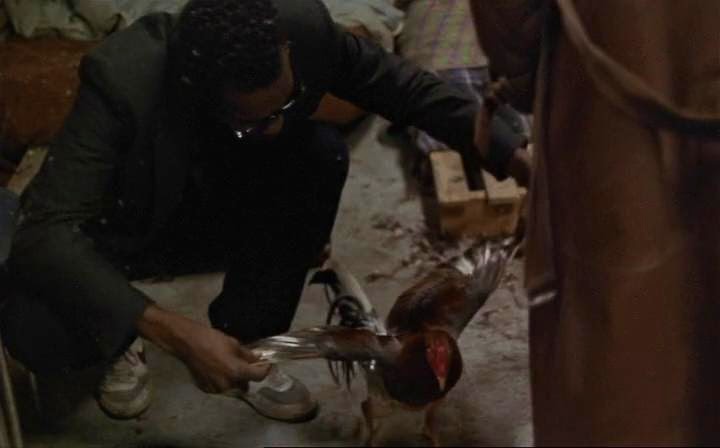
Miller's Crossing [Joel & Ethan Coen, 1990]:


Dick Tracy [Warren Beatty, 1990]:

Above, arranged in order of preference, my personal top-ten best films of the year (from what I've seen), accurate at the time of writing.

Wednesday, 1 October 2014

Top Ten: 1994


Ranking the Decades
A Year in Film List + Image Gallery


Three Colours: Red [Krzysztof Kieślowski, 1994]:


Ed Wood [Tim Burton, 1994]:


Three Colours: White [Krzysztof Kieślowski, 1994]:


The Hudsucker Proxy [Joel & Ethan Coen, 1994]:


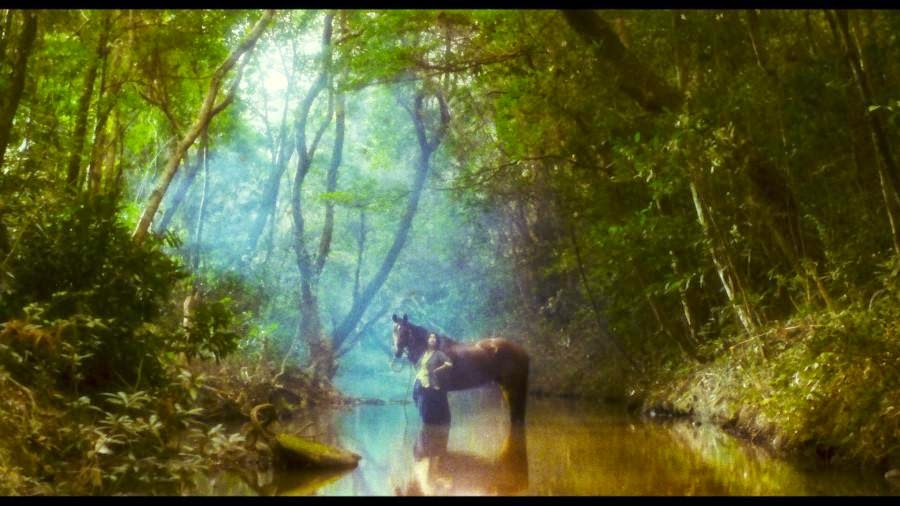
Through the Olive Trees [Abbas Kiarostami, 1994]:


Bullets Over Broadway [Woody Allen, 1994]:


Take Care of Your Scarf, Tatiana [Aki Kaurismäki, 1994]:


Pulp Fiction [Quentin Tarantino, 1994]:


Sátántangó [Béla Tarr, 1994]:


Ashes of Time + "Redux" [Wong Kar Wai, 1994-2008]:

Above, arranged in order of preference, my personal top-ten best films of the year (from what I've seen), accurate at the time of writing.

Friday, 5 September 2014

Top Ten: 1997


Ranking the Decades
A Year in Film List + Image Gallery


The Butcher Boy [Neil Jordan, 1997]:


Tren de sombras (Train of Shadows) [José Luis Guerín, 1997]:


Robinson in Space [Patrick Keiller, 1997]:


The Tango Lesson [Sally Potter, 1997]:


Hana-bi (Fireworks) [Takeshi Kitano, 1997]:


Happy Together [Wong Kar-Wai, 1997]:


Labyrinth of Dreams [Gakuryu Ishii (formerly Sogo Ishii), 1997]:


A Casa (The House) [Sharunas Bartas, 1997]:


The Hips of J.W. [João César Monteiro, 1997]:


Taste of Cherry [Abbas Kiarostami, 1997]:

Above, arranged in order of preference, my personal top-ten best films of the year (from what I've seen), accurate at the time of writing.

Wednesday, 3 September 2014

Top Ten: 1999


Ranking the Decades
A Year in Film List + Image Gallery


Sicilia! [Danièle Huillet & Jean-Marie Straub, 1999]:


Pola X [Leos Carax, 1999]:


The Spousals of God [João César Monteiro, 1999]:


Farewell, Home Sweet Home! [Otar Iosseliani, 1999]:


L'humanité [Bruno Dumont, 1999]:


The Wind Will Carry Us [Abbas Kiarostami, 1999]:


All About My Mother [Pedro Almodóvar, 1999]:


Eyes Wide Shut [Stanley Kubrick, 1999]:


Audition [Takashi Miike, 1999]:


Beau Travail [Claire Denis, 1999]:

Above, arranged in order of preference, my personal top-ten best films of the year (from what I've seen), accurate at the time of writing.

Friday, 19 August 2011

Water for Maya

How do you describe the indescribable? Narrow your eyes for long enough and the images start to look like the flutter of a billion butterfly wings. Other times, it is a gallery of faces - some haunted, some disturbed - looking out for just a split-second, then gone again; lost in this kaleidoscopic burst of colours, daubed, physically, onto the celluloid. These 'phantom faces' make us question our own role as a prospective audience. Are we the "viewer", passively observing the work presented to us and attempting to glean something meaningful, either a thought or a feeling from the experience; or are we the "viewed", the real objects of significance.

I wonder how many different audiences or viewers a film might see during the course of its lifetime. How different their relationship is to us than ours is to them. An audience may see only a handful of films a year, but the film itself will see literally thousands of these objects of curious interest presented to it during an average day. A very different gallery of faces than the ones imagined here, between the spaces of the frame. Instead, a gallery of faces more like the ones found in Abbas Kiarostami's extraordinary Shirin (2008), in which the spectator becomes the spectacle.

If film was more than just a dead-object brought to life by the gaze of the observer, who enlivens it through personal reflection and subjective opinion, would it be possible for the film, or these faces, to judge us, as a collective work, as we judge it?


Water For Maya by Stan Brakhage, 2000:


Shirin directed by Abbas Kiarostami, 2008:

As the blur of colours and textures explode and disperse, a second layer of images reveals itself, gradually, over the course of the film. A ghost story - non-narrative, but a story all the same - moving beneath the surface. This spectral play of shadows, where the glimpsed faces become almost explicit, is where the real power of the film rests. Not simply as a tribute to the American filmmaker Maya Derren, as hinted at by the film's title, but as a truly sensory cinematic experience.

In this remarkable montage, every frame has the power of a Pollock or a Kandinsky. On screen for less than the normal time that it might take for our eyes to register its form, but still vivid, vital; a series of images open to interpretation. The accumulative effect of these images when viewed against one another in a quick succession, creates something that is difficult to define, and even more difficult to express in words. It is something that can only be felt through the process of viewing.


Water For Maya by Stan Brakhage, 2000:

Schalcken the Painter (1979)

Schalcken the Painter [Schalcken the Painter [Leslie Megahey, 1979]: This is a film I first saw around four years ago. At the time I found...