Showing posts with label Federico Fellini. Show all posts

Saturday, 15 August 2020

The Film Director as Superstar


Or: The death of the author auteur

The title here refers to the 1970 book by Joseph Gelmis. I haven't read it, but I saw the cover used on another blog site, where it was being discussed in relation to a quote by Bernardo Bertolucci, and the image captured my attention immediately. The book, as I understand it, is a collection of recorded interviews with a number of high-profile filmmakers that had emerged during the post-war period. Brian de Palma, Robert Downey, Andy Warhol, John Cassavetes, Lindsay Anderson, Arthur Penn, Roger Corman, Richard Lester, Mike Nichols and Stanley Kubrick, among others.

The cover is fascinating because I can't tell if it's a painting or a sculpted model. I want to assume it's the latter, but I'm probably wrong. Chalk it up to my waning eyesight. However, certain elements of the image, the lighting on the hands, the texture of the jeans, the weight of the viewfinder and the perspective of the little director's chair, all have something more tactile and physical about them than a two-dimensional painting.


The Film Director as Superstar [Joseph Gelmis, 1970]:

I think there's something inherently arresting and exciting about the book covers from this particular period. Books published by Penguin and Pelican, specifically during the late 1960s and early 1970s, are always interesting and evocative in their design and illustration. I remember when I went to university, I'd spend hours in the library browsing the shelves of old books that had been collected from the decades before I was born. Books that had lived, that had been enjoyed, that had notes penciled into the margins by previous generations; books that in every sense of the word had a story to tell, their covers barely held together by sellotape yellowed by age.

To this day, if I'm looking for book recommendations, I'll browse old cover art online and become captivated by the presentation of a particular book, then find myself intensely disappointed when I find its more generic looking, modern-day incarnation.


Collage of old Penguin publications [John Greenaway, flickr.com, 2010]:

Many of these covers, and others, speak to me. Every one of these books looks like a must-read.

The cover and, I assume, to a large extent, the subject matter of Gelmis's book, mark it out as a relic to another time. On one level, its cover, no matter how captivating or "cute" it might appear, is a reminder that the history and legacy of the cinema was in many ways colonized by white men. White-male critics elevating the work of white-male filmmakers, often to the detriment of marginalized filmmakers from other backgrounds and persuasions. The director on the cover could have been modeled on Gordon Parks, Satyajit Ray, Agnès Varda, Ousmane Sembène, Marguerite Duras or Akira Kurosawa, all of whom were either superstars or on the road to becoming one.

However, a certain image, epitomizing what a film director looks like, had already been established during the early silent cinema, with figures like Erich von Stroheim, D. W. Griffith, Cecil B. DeMille, Fritz Lang, King Vidor, Charlie Chaplin, Josef von Sternberg, John Ford and Alfred Hitchcock, many of whom continued their respective careers into the post-war cinema, adding to a collective shorthand for what a director was, looked like, or did. For the film culture of the 1970s, still enlivened by the then-recent innovations and provocations of Stanley Kubrick, John Cassavetes, Ingmar Bergman, Federico Fellini, Jean-Luc Godard and others, it must have been a difficult legacy to break away from.

And yet the book is also a relic in the sense that the director, at least as far as the mainstream cinema is concerned, is no longer a superstar. On the contrary, if directors during the post-war years were elevated via an engagement with the auteur theory into cultural "brand names" that could sell a movie to an audience as sufficiently as any Hollywood star, then the modern cinema, existing as it is side-by-side with serialized content, short videos and so-called "prestige" TV, is more preoccupied with companies and studios, be it Disney and Marvel, Netflix and Amazon, Warner Bros. and A24.

The franchise mentality that now infects all discourse surrounding the cinema means that the corporate brand has been elevated above the individual. Nobody cares who directs the latest Marvel superhero movie, or the next Fast & Furious sequel, or the next Star Wars or Jurassic Park spin-offs. This is because the vision of the director is no longer that important. When safeguarding the integrity and fandom of the IP and delivering content that will satisfy the largest number of viewers without causing offence or disappointment, the director becomes little more than a franchise custodian. A brand-guardian that exists to follow the instructions of the studio bosses, the test audiences, and the major theatre owners. They work to translate the studio-approved text into studio-approved images.


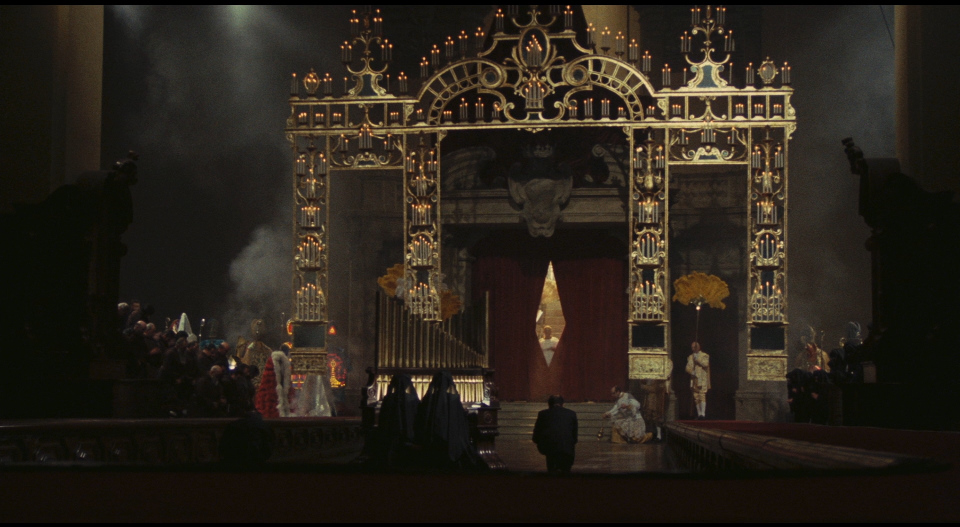
Fellini Satyricon (1969) vs. Marvel's Avengers: Infinity War (2018)
[comparative collage created by the blog author]:

The director as superstar, as brand, as "auteur", replaced by the studio as brand, as author. Can you imagine a modern-day filmmaker being afforded such a level of cultural reverence that their name features not just above the title, but a part of it?


Tenet (2020) vs. A Clockwork Orange (1971)
[comparative collage created by the blog author]:

Christopher Nolan is one of the most acclaimed and successful "auteur" filmmakers currently working, but even after generating billions at the box-office, his name barely carries the same promotional weight as Kubrick's.

Perhaps a sequel to Gelmis's book could be called "The Film Director as Dependable Journeyman", or perhaps less sympathetically, "The Film Director as Cog in the Corporate Machine." Something that would express explicitly how undervalued the role of the director, not as superstar, but as artist, has become in the twenty-first century.

It's a shame too, as we're now at a point in the history of the medium where the diversity of voices working in the English-language cinema is becoming richer every year. There are directors as varied as Steve McQueen, Dee Reese, Barry Jenkins, Jordan Peele, M. Night Shyamalan, Cate Shortland, Andrea Arnold, Ava DuVernay, Jon M. Chu, Greta Gerwig, Melina Matsoukas and Ryan Coogler among others, but in most cases these directors aren't dominating the discussion the way Hitchcock, Spielberg and Tarantino did. Instead, they've been forced to either sell out, to assimilate, to become subservient to the brands and the studios, or their work gets released onto Amazon or Netflix and becomes just another bit of product to be discovered.

Thursday, 21 February 2019

ROMA

Still the best film with the title 'Roma'


 Roma [Federico Fellini, 1972]: 

 A Year in Film Pt. 4 should be posted before the start of next week. I haven't had a lot of time for writing recently. Apologies.

Sunday, 11 March 2018

The Road to Nowhere


A note on a film: Falling Down (1993)

The film begins, atypically, with an intense pullback shot from the character's half-opened mouth. It's a hideous close-up; distorted by the use of a wide-angle lens, which seems to exaggerate the as yet still concealed repugnance of this character. His propensity for violence, his racism and frustrations with the modern world - which will soon spill-out; defining both the narrative and the character's ensuing journey into the darkness of his own despair - are already transforming him into something not quite human. A monster maybe? Although not the literal type of monster as defined by Dr. Victor Frankenstein, or a Count Dracula even, but as something more recognisable to the concerns and general disposition of America in the last half of the twentieth century.

In this first image, the mouth - less a conduit for food, water and air; less a means for verbal expression - seems transformed into an open wound...


Falling Down [Joel Schumacher, 1993]:

The way the camera pulls back from this mouth is itself like an act of revulsion. In a sense, we, as the viewer, are too close to the wound of it; the stench, the hatred; the snarl of aggression is too much for the audience to bear at this point in the narrative. But the shot also represents a kind of visual exhalation of breath. The character breathes out, in time with the movement of the camera, and in this gesture the entire film is like the last gasp expression of all of the different anxieties and frustrations that compel the character to make his final stand.

From here the camera ascends. It moves over his nose, where sweat drips from the tip like a slow faucet leak, to his eyes piercing behind horn-rimmed spectacles; a meek and officious look that seems incongruous to that rictus-like rend that the camera had previously pulled away from. As the title appears on-screen, the character's now closed eyes suggest a state of trance, as if a primal force, once dormant, is about to be awoken. The suggestion that this character - this sleeping tiger - is about to be shaken from his complacency; from the deceitful delusion of the American dream.


Here, the iconic 'stars and stripes' appearing in the background of the shot seem significant. A sort-of symbol that defines the character (or his own conception of "the self"), as well as becoming a part of the film's essentially heavy-handed social commentary; which only becomes more hysterical and histrionic as the film plays out.

The same shot continues, unbroken. It movies down, over the character's hands - now gripped tight to the steering wheel, as if trying to anchor himself to this moment of mundane actuality - and further, along the body of the car now trapped in this social deadlock (the combination of the traffic jam and the tracking shot now recalling the iconography of Jean-Luc Godard's similarly controversial 1967 film Weekend - although the comparison is no doubt unintentional).


Weekend [Jean-Luc Godard, 1967]:
In Godard's film, the traffic jam/tracking shot seems to offer a reflection of the then-contemporary French culture at a kind of impasse. The cars are no longer moving, just stuck in one place, unable to progress or move forwards, but as ever, a semblance of life goes on. The two protagonists from the film, married couple Roland and Corrine, eventually break free from the inactive lifestyle represented by these cars, complacent in their immovable stagnation, and cut their own path towards anarchy, revolution and eventual destruction.

8½ [Federico Fellini, 1963]:
A more accurate but still perhaps unintentional point-of-reference to the scene from Falling Down could be this sequence from Fellini's masterwork 8½, where the idea of a traffic-jam as microcosm of modern-life is once more viewed through the eyes of a white, middle-aged, male protagonist on the brink of some kind of crisis or collapse.

Schumacher's camera keeps moving; a slow prowl across an overheated radiator - venting steam as a preface of things to come (the engine of the vehicle signifying the growing fury of the character off-screen?) - before tilting upwards and tracking closer towards the rear of the car in front.


Falling Down [Joel Schumacher, 1993]:

Here, the little girl with the plastic doll peers back at the protagonist with dead eyes that seem devoid of life and wonder; the gaze becoming more a gesture of judgement, or accusation, than of curiosity. To the audience she's just a kid like any other, but to the character she's a possible representation of the dual role of the mother and daughter that will soon define the film's emotional conflict (even the hair and appearance of the child is styled as if to resemble that of the actors Barbara Hershey and Joey Hope Singer, who respectively feature later in the film as the protagonist's estranged wife and daughter).

The camera now swings right, across another vehicle. It moves slowly, revealing the sight of a woman applying lipstick in the car's side mirror (another grotesque mouth; another exhaling expression) and across to a plush novelty Garfield toy suction-cupped to the rear side window.


The combination of vanity and consumerism becomes an affront to the character's position as someone drifting outside of the borders of conventional society; presenting another attack on the culture of indifference - or the inability to look at the world for what it is because we're all too concerned with our own private, hermetically preserved existence - but it's also intended, in its use of iconography, to again bring to mind the presentation of the mother and child.

The woman, enhancing her femininity (is her self-worth only defined by external appearances, or is the make-up another mask that people wear in order to face the world, or to conceal the monster within?) and the toy, as a reminder of childhood innocence, are offered to show, on a more subtle level, how these symbols (the mother and child) have become distorted by the central character's anger and contempt. His rage against the superficiality of the contemporary American society in stark contrast to the perceived idealisms of the past.

The shot continues now, moving further along the side of a school bus. Here unruly children throw paper planes from open windows, oblivious to the adult concerns of the traffic jam, or the grown-up fear of missing work or social engagements, and the penalties that such actions might incur.


Now the commentary becomes broader, less personal; the children as possible literal representations of the innocence of youth? They're not bothered by the traffic jam; they see it as an excuse to play. But their joviality and their efforts to make the best of a bad situation are once again an affront to the character's inner turmoil, and their voices, exaggerated on the soundtrack, cuts through the percussive assault of James Newton Howard's score like a dentist's drill.

As the camera descends, once again revealing the 'stars and stripes' emblazoned on the side of the bus, it would be easy to interpret this symbolically, as the literal "youth of America" (these kids, trapped in a state of innocence; in a sense protected from the horrors of the world outside), but it seems more likely that the flag is a reminder of the ideals that the character, in his anger and delusion, feels have been lost or corrupted. The flag as a reminder that America was once a land of opportunities, which seems incongruous if not cruel to the character's own position as a divorced, recently unemployed, forty-something male, reduced to living with his ailing mother in the bedroom of his childhood home.


The commentary continues as the camera maintains its descent. From a scene of children at play we pass over the heads of two young executives finding their own amusement as they sniff coke off the back of clenched fists and make deals on portable phones. For these yuppies, money never sleeps, and the traffic jam is just another opportunity to cash out or make connections; the "new America" of the energetic '80s drifting effortlessly into the burnt-out cynicism of the 1990s.


The shot finally comes to rest on the back of the protagonist's head, once again reinforcing his position as central to this image of America as a roadside microcosm; the catalyst for all subsequent events. This final shot, which signals the end of the credits and the end of this intricately planned sequence, places the audience inside the head of the central character; forcing us to identify, on some level, with his perception of the world before the full course of the narrative takes shape.


For me, this entire sequence is amazing, and along with Flatliners (1990), Tigerland (2000) and The Phantom of the Opera (2004), remains one of the greatest things Schumacher has ever directed. Unfortunately I can't say the same for the rest of the film, which despite its enduring popularity among certain audience members who feel the same sense of cultural alienation and displacement felt by the central character (and as such see his acts of reckoning and misdirected rage as justifiable), soon falls into the typically blunt, often judgmental hysteria that one might associate with the 'auteur' of films like St. Elmo's Fire (1985), A Time to Kill (1996) and Trespass (2011).

From here, Schumacher undermines the subtlety of the scene by repeating all of the same images, only this time within the context of a bludgeoning, Eisensteinian montage. It borders on parody, making obvious what has already been suggested, while turning what could've been a complex and multi-faceted look into a serious social and generational phenomenon (one that still has some sobering relevance if we think of the film in the context of the candidacy of President Trump, the rise of the 'alt-right' and the fascism of modern identity politics) into something with only a modicum more nuance and intelligence than the average Stallone or Schwarzenegger movie from the same period.

Tuesday, 26 February 2013

Viewing Log / 2013 / Week Eight


18/02/2013 - 24/02/2013


Nouvelle Vague [Jean-Luc Godard, 1990]: To suggest that the film is both beautiful and inscrutable goes without saying.  Godard's films, in general, are the most beautiful and the most inscrutable, awash with quotations, literary references, allegories and deconstructions.  To make sense of them, it is essential to see every cut, sound and image as expressive of something else; an emotion or idea articulated, not in the conventional approach of two character speaking scripted words in a short/reverse-shot, but where the combined inference of every sound and image, together or apart, tells a story.  Nouvelle Vague - the title, as ever, a pun - is, like most of Godard's greatest films, about a couple in crisis.  There are further references to class distinction (the rich and the poor), the backdrop of industry as a metaphor for existence (actions as transactions, commitment as commodity) and the house itself as a microcosm for the world in miniature.  Here, 'the help' (gardener, maid and housekeeper) take on the role of the Greek chorus; commenting on the drama from behind the hedgerows or in the background of things, while interpreting, as an audience themselves, the meanings and double-meanings of Godard's densely-layered approach.

The symbol of the two hands, meeting to create an embrace, goes back to La chinoise (1967), once again suggesting the need for communication (or togetherness), where the individual, when acting alone, is hopeless and adrift.  The couple in the film - never formally introduced but sketched well enough for the audience to draw their own conclusions - have reached the end of things.  As ever, they're moving in different directions (expressed via Godard's mesmerising use of the tracking shot) and unable to make sense.  'He' re-invents himself for 'Her', dying a figurative death and being reborn as the man (he thinks) she wants him to be.  Later, she will do the same.  By the end, the couple are free from the shackles of language and responsibility and are therefore able to find happiness in the straightforward expression (or embrace) of their love for one another. 


Amarcord [Federico Fellini, 1973]: A nostalgic film.  Not about nostalgia, as an idea, but influenced by a nostalgia for a place and its people that probably never really existed, outside of the subjective recollections of its director.  It's a great romp, beautifully filmed and featuring several sequences that stand amongst the very best of Fellini's career; but even so, every time I return to it, I like it a little less.  In fact, despite the almost universal critical consensus, I'd argue that the design and direction of Amarcord is simply a stepping-stone to the more imaginative stylisations of the subsequent Casanova  (1976) or And the Ship Sails On (1983).  Films that didn't necessarily have the same cultural impact at the time, but today have a complexity and a weight of emotion that is often lost within the more gregarious burlesque of the film in question.  Throughout Amarcord, the tension in the film seems to be created by the ideological distance between Fellini and his co-writer Tonino Guerra, where the political subtext (the encroaching power of Fascism) or the traces of magical realism (which are recognisable from Guerra's collaborations with Antonioni, Tarkovsky and Angelopoulos) jar against the kind of frivolous inflection of flatulence and fornication, which is typical of all things "Felliniesque."

At certain points in Amarcord, we can recognise sequences and images that might have felt more comfortable in other films co-written by Guerra, such as Red Desert (1964), Landscape in the Mist (1988) or Nostalghia (1983).  The latter film is an interesting comparison because it is a film 'about' nostalgia; about the loneliness of a character unable to return home and as such haunted by its memory.  Fellini's film has no such greater pull.  It is a reflection, exaggerated for comic effect, mixed with some genuine pathos and a lot of heart, but ultimately too narrow in its historical presentation to work as anything more than a postcard pastiche.  The "clowning" approach is certainly infectious, but maybe too personal to really mean anything to those of us too young to infer any real feeling from such an exceedingly idiosyncratic or eccentric recollection of events.


Flash Gordon [Mike Hodges, 1980]: Similar to what I said in regards to Batman & Robin (1997), the campiness, the artificiality and the stupidity of the film's hero, all seem intrinsically intentional to the design of the film, which is more a parody of the original comic strip than a genuine adaptation.  The acting wavers between the flat, wooden performances of the male and female leads and the deafening, theatrical bombast of the supporting cast, while the script, with its unanswered questions and infuriating 'deus ex machina', is weak and underdeveloped.  For most, this will be enough to condemn the film as an unmitigated failure, but for me the cinema is more than just a narrative art.  It goes beyond the influences of literature (adaptation) and theatre (performance) to embrace other forms, such as music, art, design, photography, costume, montage, architecture, sound and choreography.  When attempting to evaluate the subjective worth of a film, these elements should be seen as equal to the plotting and characterisation, because it is within this ability to present action and reaction through the juxtaposition of moving images, the change of light and the literal slowing down and stopping of time (by cutting from one scene to the next) that we find the true definition of cinema; the thing that establishes it, as an art-form, in its own right.  I'm not claiming that we should necessarily overlook a weak script or a performance that is out of key with the rest of the film, I'm just suggesting that the way audiences approach movies as nothing more than an illustrated text (where the filmmaking form is only there to serve the script, the characters and our own ability to suspend disbelief), is inherently wrong!

As a work of cinematography, art-direction, costume design and pure visual spectacle, Flash Gordon is a near masterpiece.  It is also more interesting, sub-textually, than something like Stars Wars (1977), which for me exists only as a superficial tribute to the same kind of genre.  Throughout Flash Gordon I wondered if I was sensing a satirical intent, and unsurprisingly, the film's director, Mike Hodges, explains during the DVD audio-commentary that his own view of the character had a lot to do with his personal take on American foreign policy, possibly post-Vietnam, but now very much as a precursor to the 'War on Terror'.  As such, there is something quite oppressive about the film's red, white and gold colour scheme, the "gung-ho" jingoism of the central character and the way Hodges contrasts this with a very Fascist-like depiction of Ming the Merciless; where the staging of scenes set within the vast, ornate fortress of the antagonist is somewhat reminiscent, in its iconography, of Leni Riefenstahl's disquieting propaganda piece, Triumph of the Will (1934). 


Kotoko [Shin'ya Tsukamoto, 2011]: "Confounding" doesn't even begin cover it.  This is Tsukamoto's most provocative and unsettling work since Vital (2004); a psychological drama that assaults the senses of the audience for a punishing 90 minutes until we're as uncertain of the reality of the situation as the characters on-screen.  The lead performance from J-Pop singer-songwriter 'Cocco' is a revelation.  She infuses both the film and her portrayal of this character with an intrepid abandon; brining to mind the similarly intense and similarly physical performances of Isabelle Adjani in Possession (1981) and Björk in Dancer in the Dark (2000).  The movement of her body, free, but at the same time, constricted, psychologically, is breathtaking, as the calm swaying of her limbs or the defiant stance of her body is turned into a rebellious act of physical expression by Tsukamoto's numbing, hyperkinetic approach.  Here, the shake of the camera or the blur its images (a body, silhouetted against a backdrop of distorted waves) becomes an outpouring of the pain and suffering that words alone can't convey.

Although emotionally gruelling and punctuated by a devastating violence that is at times reminiscent of the earlier Tokyo Fist (1995), Kotoko is actually Tsukamoto's warmest and most colourful film; the clarity of its HD images standing in stark contrast to the dark, grainy, colourless look of prior classics, such as Tetsuo the Iron Man (1989), Bullet Ballet (1998) and A Snake of June (2002).  It is also his most "feminine" film, with the appearance of 'Cocco' enforcing a greater sensitivity than any of his previous work, including the wounded Vital; where the maternal aspect of the character and the fragility of her body (in contrast with the strength of her emotions) overpowers Tsukamoto's usually more masculine emphasis on the brutal physicality of the human body - its strengths and weaknesses - against the symbol of Tokyo as an unmovable, metaphysical force.


Homecoming [Joe Dante, 2005]: I remember seeing this on the television at the time when the original series of Masters of Horror first premiered in the UK and finding it almost entirely worthless.  There was a kind of "how dare they..." reaction against the politics of the thing; the bluntness of the commentary, combined with the almost infuriating lack of scares, caused a personal backlash of deep resentment.  This was "Masters of Horror", not Masters of Political Satire!  Subsequently, my opinion of Dante, as a filmmaker, has changed.  There is a sly, sardonic, near-anarchic streak that runs throughout his work, where references to Chuck Jones and Frank Tashlin mesh with the spirit of Roger Corman and the atmosphere of Mario Bava.  As I've said before, I think what Dante does is similar to what Tarantino does with a film like Inglourious Basterds (2009), where a myriad of genre references are all chopped up and refracted to create something that uses the idea of homage or appropriation, not as a shallow "tribute", but to create additional levels of commentary and critique.  As a satire, Homecoming is truly inspired.

Set against the backdrop of a presidential election, the bodies of American soldiers murdered in Iraq return to cast a vote against the Republican party that sold them a lie, and consigned a generation to disability and death.  It's profoundly intelligent and incredibly witty, but it's also exceedingly moving, with the use of this very 'Romero-like' horde of sympathetic zombies becoming an onscreen representation of the sad legacy of war, in all of its misery and disgrace.  A returning army, wounded and maimed, unable to communicate; stepped over by society as an unpleasant reminder of the brutality of war, the betrayal of it.  In showing the society's refusal to acknowledge these fallen young men (and women), Dante and screenwriter Sam Hamm are able to create a greater commentary on the apathy and complacency of those of us, safe on the sidelines; promoting or condemning the business of war, without experiencing it firsthand. 


The Grey [Joe Carnahan, 2011]: I respect the intentions of the filmmakers.  At the centre of The Grey, there is a seriousness that is lacking from most mainstream dramas that deal with similar themes.  An approach to death that is sombre and un-ironic; gratuitous in the almost pornographic nature of the close-ups that reduce dead bodies to objects of continual curiosity, to be looked at, or leered at, by characters and audiences alike.  This is all tied into the film's survival aspect, which takes a character on the brink of suicide and eases him, through the struggle of the film, into making his final decision, between life and death.  I only wish I liked the film more, or even at all.  The filmmaking is generic.  The earlier scenes, which establish the pain and grief of the central character, have the feel of a really pretentious television commercial.  The kind that has little to do with selling an actual product, but instead, employs obvious cinematic techniques to equate smoking cigarettes with a struggle against the elements, or driving a particular sports car as akin to some near-promethean pursuit.

To give you an example of what I mean, check out Surfer (1999) by Jonathan Glazer or One Man, One Land (2002) by Tony Scott.  One is a promo for Guinness, the other for Marlboro cigarettes, but both of these commercials posit a representation of their respective 'brands' as something of an intensely physical, even somewhat herculean effort to stand against the elements, to tame the untameable.  This is what this film reminded me of.  A really long commercial for some anonymous brand.  Why?  I'm not even sure.  It's just something about the artificial sheen of the film.  The way everything is reduced to significant moments, captured in close-up.  The use of the voice-over, which exploits the natural gravitas of Neeson as a performer, feels hollow.  People don't think like this.  It's more an effort to define a character without developing the character first, reducing everything to series of easy signifiers - the entire story expressed as an extended montage of significant moments; the "salient points" - again, like in a TV commercial.

Schalcken the Painter (1979)

Schalcken the Painter [Schalcken the Painter [Leslie Megahey, 1979]: This is a film I first saw around four years ago. At the time I found...