Showing posts with label Music Videos. Show all posts

Sunday, 16 August 2020

The Wild Boys


Projections on the (unmade) film by Russell Mulcahy

It's one of the most curious 'what if's in pop cinema history. Russell Mulcahy, the Australian director who, during the late 1970s and early 1980s, pioneered the art of the music video, approached his frequent collaborators, English new-wave band Duran Duran, with a unique proposition. Mulcahy was looking to expand his range into the mainstream cinema and had set his heart on an adaptation of the cult 1971 novel "The Wild Boys: A Book of the Dead" by William S. Burroughs. Mulcahy was keen to have the group provide a soundtrack for this potential film adaptation and asked them to create a kind of anthem to help promote the idea. Suitably energized, the band went off and recorded their title song, The Wild Boys, which was released to huge success in July of 1984.

Despite Mulcahy's ambition and the enthusiasm of the group, the planned film adaptation never came to fruition. However, a music video did, and it provides a rare and fascinating insight into what might or could've been.


Duran Duran: The Wild Boys [Russell Mulcahy, 1984]:

Produced on a then unprecedented budget of £1million, with both elaborate robot and monster effects, wirework and acrobatics, all filmed on an enormous purpose-built industrial set covering the vast 007 soundstage at Pinewood Studios, the music video for The Wild Boys interprets the surreal text of Burroughs's dark dystopia through a combination of the post-apocalyptic horrors of Mad Max 2: The Road Warrior (1981), the rag-tag pirate band of outlaws found in the portrayal of Peter Pan and The Lost Boys, and the balletic, ultra-physical, dancing-as-fighting stylizations of the musical West Side Story (1961). In the process, the clip redefined the possibilities of the music video at a pivotal moment in its development, and ushered in a new era of artists being given enormous budgets to create promotional films that in many ways overwhelmed the creative merits of the song itself.

The Wild Boys was a far cry from the kind of videos Mulcahy had previously shot for Duran Duran, or indeed any other group from the same period. Most music videos, then and now, are about promotion. On one level, they're selling the song, but what they're really selling is the artist, their image, and the general aesthetic they're trying to convey. This was most apparent in the earlier videos Mulcahy had directed for the group, where the look and style was defined by exotic locations, icons of affluence and decadence, and the image of the band itself as handsome, fashionable, and upwardly mobile. They were a proper band, as proficient with their musicianship and instrumentation as U2, or as committed to the art of song-craft as The Pet Shop Boys or Roxy Music, but too often discredited as a lightweight boy band because they put the celebration of the surface, fun and fashion, at the forefront of what they did.

You only have to compare The Wild Boys to Mulcahy's still dazzling video for Duran Duran's earlier song, Rio, to see what a marked contrast the director had brought about in this later work. By introducing the influence of Burroughs and the intention to create something that stood outside of their own work and interests, the director pushed the band's style and image to strange new places, creating a work that attempted to sell, not their own vision, but the vision of the subject matter; this phantom film.


Duran Duran: Rio [Russell Mulcahy, 1982]:

From quick-cuts and canted angles, from sharp suits and peroxide hair, from pastel shades and body paint, we leave the exotic shorelines and romantic misadventures of Rio and arrive instead at this pop video "Interzone", with schoolboys wrecking a classroom in syncopated cuts, horror footage played out on Orwellian TV monitors, half-naked figures locked in combat by firelight, and a stranger emerging from the shadows like a gunslinger from an Italian Western, albeit one transposed onto this post-apocalyptic scene.

While much of The Wild Boys is steeped in 1980s silliness, including the "Starlight Express" style choreography of Arlene Philips, the belching fire motif, the bad video effects work and lead singer Simon Le Bon pouting his way through the lyrics as he's tortured on a giant water wheel, the visceral nature of the video, the physicality of the background performers and the syncopation between the choreography and the cutting, creates some incredibly compelling moments. The earlier sequences in particular help to draw the viewer into the world that Mulcahy and his collaborators are both creating, but also to a large extent adapting from the lyrics of the group. As Le Bon sings: "The wild boys are calling, on their way back from the fire. In August moon's surrender to, a dust cloud on the rise", it's matched by the image of the stranger emerging, silhouetted, from the dusty, desolate planes of the soundstage.

It's in these moments that the audience gets a sense of what Mulcahy's vision for his film of The Wild Boys might have been, with the mix of iconography, ripped as it is from westerns and post-apocalyptic science-fiction cinema, and the greater emphasis on the relationship between physical performance, sound, music and the cutting between shots, creating an aesthetic that was very much characteristic of the period and the influence of films like The Warriors (1979), Blade Runner (1982), Liquid Sky (also 1982) and the aforementioned Mad Max 2: The Road Warrior.

Had the film been released, it could've been a disaster; pilloried and lampooned as an example of the MTV aesthetic infiltrating the mainstream cinema. Conversely, it might have proven to be a singular work. One, which following in the wake of films like those aforementioned, could have provided a key example of the new cult cinema of the 1980s. We'll never know. However, there are further hints and relics to Mulcahy's never-realized film in his subsequent and analogous works, with the markedly more surreal, homoerotic, Cocteau-inspired video for the Bonnie Tyler song, "Total Eclipse of the Heart", perhaps providing some of the missing pieces to The Wild Boys puzzle.


Bonnie Tyler: Total Eclipse of the Heart [Russell Mulcahy, 1983]:

While a full adaptation of The Wild Boys would fail to materialize, Mulcahy would nonetheless go on to make his mark on the cinema with two back-to-back cult films produced during the 1980s. Razorback (1984), an "Ozploitation" horror film about a murderous pig terrorizing the Outback, and Highlander (1986), a high-concept fantasy about warring immortals battling for supremacy. Highlander remains perhaps the most highly regarded and well recognized of the director's filmography, popular with fans of the actors Christopher Lambert and Sean Connery, as well as devotees to the rock band Queen, who provided the soundtrack. Highlander would go on to spawn several sequels and television spin-offs since its initial release, including Mulcahy's own ill-fated sequel, Highlander II: The Quickening (1991)

From here, Mulcahy's film career is spotty and inconsistent. Of the other films of his that I've seen, The Shadow (1994), an Art-Deco influenced comic book fantasy, is one that carries a large degree of childhood nostalgia for me, as does his cult horror film, Tale of the Mummy (1998). Less successful was the serial killer drama, Resurrection (1999), which reunited Mulcahy with his Highlander star Christopher Lambert and featured a supporting role for the cult filmmaker David Cronenberg. The film has an interesting directorial aesthetic that places it squarely in the late 1990s, but it's horribly written and hugely derivative of David Fincher's superior psychological horror film Seven (1995). Mulcahy also directed the third Resident Evil film, Extinction (2007), which is the best of the first three installments, and features some visual throwbacks to the iconography and post-apocalyptic world-building of The Wild Boys video.


Resident Evil: Extinction [Russell Mulcahy, 2007]:

Mulcahy has also directed several well-received films outside of the fantasy and action movie genres, including On the Beach (2000), The Lost Battalion (2001), Swimming Upstream (2003), Prayers for Bobby (2009) and several episodes of the American remake of the Russel T. Davies series Queer as Folk (2000-2005). His most recent film, In Like Flynn (2018), about the early life and adventures of the Hollywood actor Errol Flynn, is currently available on Netflix.

Ultimately, The Wild Boys would prove to have a definite legacy. Along with the video for Thriller (1983) by John Landis and Michael Jackson, its scope and ambition would change the way filmmakers and record companies approached the idea of the music video as both a promotional tool and as a way of generating conversation. From here, budgets would become bigger, the subject matter would become more cinematic, more provocative in nature, and the success of the video became entangled with the potential chart success of the songs themselves. Other directors, like Mary Lambert, Bernard Rose, Tim Pope, Steve Barron, David Fincher and Jean-Baptiste Mondino to name a few, would continue to push the limits, injecting eccentricity, provocation or glamour into their respective videos, and inspiring the generations of music video filmmakers that followed in their wake. The Wild Boys may never have become a movie in its own right, but it endures as a strange piece of 80s pop-culture.

Thursday, 10 March 2011

Lotus Flower

The new Radiohead video, Lotus Flower - the first single from their already available to download album The King of Limbs - continues the band's interest in promoting themselves via simple, low-fi, low-budget promos that seem positively homemade in comparison to the celebrated, high-concept videos for songs like Street Spirit, Karma Police, Pyramid Song, etc. Having first discovered the notion of music as something more than just a soundtrack to childhood family outings during that particular period of the band's creative evolution there's still a lingering sense of warm nostalgia for the days, pre-access to the Internet, when coming home from school and flicking through the music channels to see the new Radiohead video (or Björk, or Blur, or Eels) brought on a rush of excitement unlike anything else.

It was the whole cultural communicative thing too, which probably still exists, but like everything else these days is accelerated; no longer something to actually wait for, discover or stumble across when you least expect it, but there, at your fingertips, and on-demand. The playground buzz of the next few days when you'd ask your friends "did you see that?" no doubt has less of the same sting of anticipation that it used to have in the early-millennium days when the thought of using a computer to simultaneously link your friends with the relevant clips and information was the stuff of older kids, or science fiction.

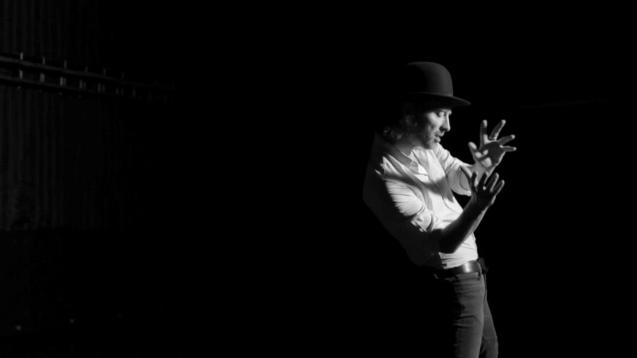
Lotus Flower begins, in back-lit black and white, in a severe looking service tunnel reminiscent of the one featured in Philippe Garrel's silent post-May '68 psychodrama, Le révélateur (1968). It could be described, with total straight-faced honesty, as a "performance video", though not in the industry jargon sense of a band or musician sitting in a room hitting their instruments in-sync with a studio backing track. This is the performance video as a work of legitimate performance art; where the movement of the body, in time and in step with the beats, melodies, counter melodies and chord changes of the song itself creates an expression that articulates, not necessarily what the song is about, but the mood, the atmosphere and the way the song makes us feel.

The feel of any Radiohead song is unmistakable: nocturnal, restless, desolate and claustrophobic; with the sense of technology as both a liberator and facilitator in our own glorious downfall. A cultural year-zero in the beautifully Ballardian notion of consumer meltdown; kingdom come and the myths of the near future. Though the dance is typically a kind of celebration, it is here a solitary expression, performed for the benefit of an audience no doubt alone or connected to the world only by that thin invisible thread that links us, from one machine to the next. As the video develops, moving with each new change in rhythm and tone, the hypnotic convulsions on screen become as mournful and sombre as Yorke's wailing falsetto. At the same time they possess a freedom and a lack of self-consciousness usually reserved for the inner-city drunk or the roadside lunatic. Someone like Denis Lavant's character in the Yorke affiliated Rabbit in Your Headlights video, who finds strength in absolute abandon.

Lotus Flower may not have the immediate awe-factor or something like Just or Street Spirit or Knives Out, with their unanswerable questions, technical virtuosity and endless imagination, but there's something quietly overwhelming about this video that at first seems to be almost thrown-together as an afterthought, but reveals, with subsequent viewings, to be something quite remarkable, fascinating and total alien to anything else currently being produced.


Lotus Flower directed by Garth Jennings, 2011:

Wednesday, 26 May 2010

Wanderlust

A song about embracing the new - about the restless pursuit of the next great adventure - presented with a visual accompaniment that achieves the expression of the unbelievable, the astounding, or the thrill of the unknown. Wanderlust, in its purest form, is an adventure in eight-minutes; a breathless, exhausting trek down river, where the forward motion of this character is matched by the driving rhythms of the music itself. Kraftwerk-like rhythms that recall something like Trans-Europe-Express (1977); where the sense of movement, atmosphere and place is the thing that draws us in, maintains our interest throughout the duration of this narrative (aural, visual or imaginary), and leaves us hopelessly searching for that next rush of discovery when the song comes to an inevitable close.

The particular yearning for a new place or the need to travel, explore and do other things is largely a metaphor for Björk's career as a whole. In this sense, the video could be seen as a dramatised fantasy version of her own life and vocation; beginning with this small, exotic figure discovering something extraordinary that comes from her own connection with nature; a connection that will grow and transform into an uncontrollable entity, forcing her to leave the security of home and taking her on this remarkable journey - where she is carried along through uncertain waters by the support of others, where she fights a battle with herself, where she is plagued by various obstacles that attempt to harm and hinder - before eventually making the ultimate plunge into the unfamiliar; into the great unknown.

This beautifully made clip is everything a film like Avatar (2009) promised to deliver, but couldn't; a fully immersive 3D experience, which - through the sheer power of its imagery and imagination - transports us to another world.


Wanderlust directed by Isaiah Saxon & Sean Hellfritsch, 2008:

Friday, 26 February 2010

This Must Be the Place

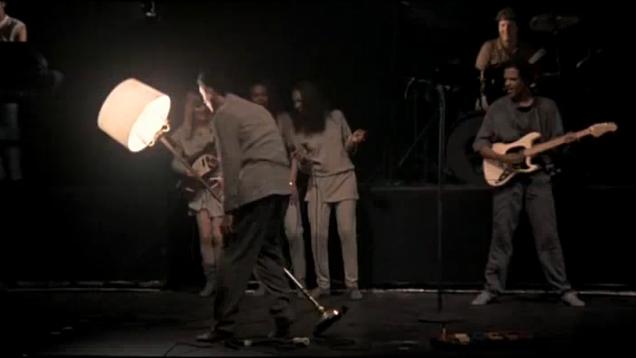
Towards the end of his performance of the Talking Heads' classic, This Must Be the Place (Naïve Melody) - during the song's extended coda/outro, to be precise - lead singer David Byrne breaks into an awkward, spontaneous piece of physical performance, in which he woos, seduces, dances with and, eventually, romances the prop lamp-stand that illuminates both singer and musicians. The lamp itself is an obvious symbol - a reminder of "home", as yearned for in the song's lyrics - as well as the primary lighting source for this particular performance; the perfect blending of content and form?

In taking this object and embracing it, physically - creating a performance or a role-play that one might generally expect to see acted out by two human beings - Byrne is illustrating, in a fairly imaginative fashion, the general role that inanimate objects (or indeed, consumer technology) play in satisfying the greater absence or nostalgia felt when disconnected from other human beings, or - in this particular instance - the home itself.

Home - is where I want to be
But I guess I'm already there
I come home - she lifted up her wings
I guess that this must be the place
I can't tell one from another
Did I find you, or you find me?
There was a time
Before we were born
If someone asks, this is where I'll be


The image of Byrne embracing this object, finding a certain physical and emotional expression through the personification of it, for me works on the same level as the image of Jacques Bonnaffé cradling the static of hotel room television set in Jean-Luc Godard's masterpiece Prénom Carmen (First Name: Carmen, 1983). In that particular film, the character's sense of loss, loneliness and the inability to express his broken-heartedness to the titular Carmen (Maruschka Detmers) is expressed through the substitution of the everyday, artificial "symbol" of the television; the invention, intended - supposedly - to bring us together.

In Stop Making Sense (1984), this performance, in which the lamp-stand is used to re-live - or fulfil the need for - a possible physical encounter, is likewise loaded with a particular loneliness or desperation; albeit, a desperation filtered through Byrne's characteristic childlike whimsy. This single moment in a film filled with amazing moments is further proof - as if it were needed - that Stop Making Sense is possibly the greatest film ever made.


Stop Making Sense directed by Jonathan Demme, 1984:

Sunday, 29 November 2009

Ready for the Floor

A continuation of a theme that I accidentally stumbled upon a month ago with my post on the Florence and the Machine video for Rabbit Heart (Raise It Up); the realisation that Lights in the Dusk needed something a little more colourful and contemporary to elevate it above the kind dreary nonsense so often featured on the pages of this blog. It could also be seen as a clear attempt to smuggle in some music discussion through the backdoor... which is always fun, but not enough to dedicate an entire space to.

At any rate, I thought it would be interesting if every other month or so, I wrote about one of my favourite music videos from each year, reserving the discussion only for videos that seem to aspire to something greater than the usual promotional gestures or the basic gone-but-then-forgotten generators of consumer hype. Although it's generally true that most media spectators can find at least some worth in the work of directors like Spike Jonze, Michel Gondry or Chris Cunningham (to name a few), there are still a number of videos that go without celebration, simply because many choose to see them as nothing more than empty promotional-work with no artistic merit, which of course, seems a little unfair – especially when many of the greatest music videos feature more creativity and imagination than the average feature film.

This particular clip, Ready for the Floor, by the British electro-pop band Hot Chip, strikes me as a particularly vibrant example of the perfect pop video; clever, concise, and above all else unique to the image of the band. In a few basic frames it succeeds in capturing the eye of the potential viewer with its unforgettable visual presentation; mixing pop-culture and pop-art in a way that makes it approachable, not only as an exciting piece of music-television, but also as something that wouldn't seem out of place in the pages of a glossy, ultra-hip, art and design magazine, such as Juxtapoz or PIG.

The notion that this particular combination of sound and image seems very modern, very fresh, and in some ways characteristic of a generation defined by its fascination with second-hand style or an obsession with childhood nostalgia.


Ready for the Floor directed by Nima Nourizadeh, 2008:

Ready for the Floor is exactly what I was describing in the earlier post when I referred to the "emphasis on the conceptual element; of lines, shapes, colours and contrasts." It is, in other words, a concept video - the kind that has become increasingly passé over the subsequent year, with several high-profile mainstream artistes successfully copying a similar look and feel from the video in question to the point where this particular appropriation, or look, has become predictable, or worse, entirely generic. For example, an electro-pop band in the year 2009 who want to appear on the vanguard of the avant-garde can easily throw in a few Commodore 64 effects or references to the kind of subject-matter that Kraftwerk were singing about on the album Computer World (1981) and still find themselves on the right side of the cutting edge.

However, we should remember that Hot Chip had been developing this kind of sound since 2004; even as the scene was still swooning for the lad-rock of bands like The Libertines and Arctic Monkeys. It feels specific to their image – to the image that their music creates, and to the particular personality of the band as a whole. That mixture of the nostalgic - exemplified by the current wave of 1980s style-references in fashion and design - mixed with the contemporary; the post-post modern notion that any idea has relevance, regardless of where it came.

The director of this clip, Nima Nourizadeh, took the song's throwaway reference to the Tim Burton-directed Batman (1989) - "you're my number one guy" (rather that than the more endlessly quotable "this town needs an enema") - and ran with it; creating a neon-coloured ode to Jack Nicholson's Joker by way of Ceaser Romero. The iconography is particularly relevant to anyone who grew up during that specific period, circa the late 1980s; from the two-face references predominantly evident in the dancing Vicky Vales' or the literal split-personality of lead-singer Alexis Taylor (who here looks like a cross-between the late-80s kids' show presenter Timmy Mallet and a Spike-era Elvis Costello), to the birthday gifts filled with poisonous gas, the Tetris-themed production design and the ghosts of Robert Palmer's oft-parodied video for his song Addicted to Love. It also reminds me a little of the classic videos that New Order made for the singles Blue Monday and True Faith; where the ideas of performance and conceptual design were blended together to create Haute Culture pantomime pieces; or something that might have been more at home in the Guggenheim than broadcast on MTV.

Although the video tells a story, placing the band at the mercy of an evil genius and forced to carry out a series of offbeat tasks in order to guarantee their escape (or so we assume), it doesn't really conform to any easily identifiable narrative like some of the more ambitious music videos often do. Instead, it presents these scenes as sketches that flow, one into the next, as if following the panels of a comic-strip (again, the retro Batman references of the pre-Chris Nolan variety). We can trace the line, left to right, like the vocals drifting from speaker to speaker, and pulled by that looped guitar riff that carries us through the song.

It also plays on the title, which, as written, could be something as innocent as ready for the dance floor - especially given the up-tempo nature of the music - but here, in the visual sense, seems evocative of something like the killing floor; in which the ready participants must sing karaoke into a microphone gun, or traverse a big-top style torture chamber that reminds us of a Game Boy classic.


Ready for the Floor directed by Nima Nourizadeh, 2008:


Tetris designed and programmed by Alexey Pajitnov, 1984:


Ready for the Floor directed by Nima Nourizadeh, 2008:

Schalcken the Painter (1979)

Schalcken the Painter [Schalcken the Painter [Leslie Megahey, 1979]: This is a film I first saw around four years ago. At the time I found...