Showing posts with label Music Reviews. Show all posts

Sunday, 20 September 2020

After Darkness Light


Performance in the age of Covid-19

One of the best filmed performances of recent years, Taylor Swift, live from the 2020 Academy of Country Music Awards, shows us everything that's wrong with the way TV producers and directors have traditionally recorded live music. Forced by restrictions around the Covid-19 pandemic to rethink the usual conventions, the producers of this year's event have embraced minimalism as necessity, recording performers on stage for an audience of no one, holding the gaze of the performer in shots that last for more than a fraction of a second, and in the process creating something that allows musicianship, songcraft and personality to rise to the surface. The result pushes musical performance towards something approaching great theatre; studied, dramatic and visual.

Since I don't pay much attention to Award Shows and competitions around art, I can't say how consistently the approach and aesthetic was carried over the course of the entire evening. This clip caught my attention primarily because I'm quite fond of Swift and found her recent album, "Folklore" (2020), a brilliant collection of songs and stories. In watching the performance here, you can appreciate Swift as both songwriter and storyteller. It's not just her words and voice that take us on a journey into the lives of these characters, which she sketches across the song in question – "Betty", a narrative that continues across two further songs from the "Folklore" album – but her body language, vocal intonations and facial expressions as well. It's a complete performance.


Taylor Swift, live from the 55th Academy of Country Music Awards [2020]:

Appearing relaxed and clearly enjoying the opportunity to perform and to bring her song to an audience, even a "virtual" one, Swift is charismatic and charming. As she sings, she's able to capture both the voice of her teen-boy protagonist, as he moons and whines over a girl who (rightly) doesn't want to know, as well as projecting her own withering contempt and amusement for this poor narrator, his chauvinism and entitlement picked apart with a subtle glance or a cold shrug of the shoulders. It's always been apparent that Swift had talent, but with "Folklore" she really shows potential to be one of the great troubadours, a singer/songwriter able to move effortlessly between both narrative and confessional-based songs.

However, what's most remarkable about this is the way it's filmed. As a music fan, the main thing that has always bothered me about live coverage of musicians and performers is the frequent cut away shots to members of the audience. While an establishing shot of the audience to begin and end a performance is good for creating context, TV directors will often cut to a crowd shot simply to enforce a sense of excitement or atmosphere; in the process, denying us the sight of the musicians on stage. Similarly, how often have we seen performances where a director cuts to a wide shot of the band performing during a great solo, excellent bass run, or a rhythmic drum fill, instead of going in close? It's like the people charged with filming live performances have no idea how music works or is created. We don't need to be reminded of the audience every three seconds. For those not fortunate enough to be attending live, the drama is on the stage, not looking up at it.

The approach adopted by the producers of this year's Academy of Country Music Awards is reminiscent of director Jonathan Demme's approach to his landmark concert film with the Talking Heads, Stop Making Sense (1984). There, Demme made the decision to keep audience shots to a minimum, holding the camera on the performers and cutting between shots only when necessary to emphasize a musician, a new song, or a change in staging. This way, the director was able to preserve the integrity of the on-stage performance, which the audience is there to see.


Stop Making Sense [Jonathan Demme, 1984]:

While not as clever as Demme's staging of the Talking Heads concert, the way the performance of Swift has been recorded is nonetheless similar in its attitude and approach: keeping the camera fixed upon the artist and her unseen harmonica player; backlighting the whole thing to give the performance a distinct and entirely visual "look"; highlighting the performer – her words and music – against the blackness of the backdrop, and in doing so, creating a visual implication of the light emerging from the darkness: post tenebras lux. Along with the sight of the empty auditorium that begins the clip and the resounding silence that closes it (no audience means no applause), this aesthetic aspect, born from necessity, provides a powerful reminder of where we are as a culture as we approach the final act of the year 2020.

This is the first example I've seen of one of these new, post-Covid showbiz events, where audiences and excess have been banished in the name of social distancing. I know there have been other Award shows, premieres and festivals conducted in a similar way, however, not having a lot of time for such things, I can't say whether or not these recent examples have resulted in anything as fresh and exciting as this. Nonetheless, it's interesting to see how these institutions have been forced to adapt to the challenges of maintaining a thin veneer of normalcy, while at the same time protecting people against a global pandemic, and how this has resulted, at least in this example, in a new and better visual language for recording. As the first films and TV shows produced under conditions of Covid begin to appear over the next six to twelve months, it will be interesting to see what effect, if any, such restrictions and limitations will have on the kind of images and scenarios we see.

Sunday, 16 August 2020

The Wild Boys


Projections on the (unmade) film by Russell Mulcahy

It's one of the most curious 'what if's in pop cinema history. Russell Mulcahy, the Australian director who, during the late 1970s and early 1980s, pioneered the art of the music video, approached his frequent collaborators, English new-wave band Duran Duran, with a unique proposition. Mulcahy was looking to expand his range into the mainstream cinema and had set his heart on an adaptation of the cult 1971 novel "The Wild Boys: A Book of the Dead" by William S. Burroughs. Mulcahy was keen to have the group provide a soundtrack for this potential film adaptation and asked them to create a kind of anthem to help promote the idea. Suitably energized, the band went off and recorded their title song, The Wild Boys, which was released to huge success in July of 1984.

Despite Mulcahy's ambition and the enthusiasm of the group, the planned film adaptation never came to fruition. However, a music video did, and it provides a rare and fascinating insight into what might or could've been.


Duran Duran: The Wild Boys [Russell Mulcahy, 1984]:

Produced on a then unprecedented budget of £1million, with both elaborate robot and monster effects, wirework and acrobatics, all filmed on an enormous purpose-built industrial set covering the vast 007 soundstage at Pinewood Studios, the music video for The Wild Boys interprets the surreal text of Burroughs's dark dystopia through a combination of the post-apocalyptic horrors of Mad Max 2: The Road Warrior (1981), the rag-tag pirate band of outlaws found in the portrayal of Peter Pan and The Lost Boys, and the balletic, ultra-physical, dancing-as-fighting stylizations of the musical West Side Story (1961). In the process, the clip redefined the possibilities of the music video at a pivotal moment in its development, and ushered in a new era of artists being given enormous budgets to create promotional films that in many ways overwhelmed the creative merits of the song itself.

The Wild Boys was a far cry from the kind of videos Mulcahy had previously shot for Duran Duran, or indeed any other group from the same period. Most music videos, then and now, are about promotion. On one level, they're selling the song, but what they're really selling is the artist, their image, and the general aesthetic they're trying to convey. This was most apparent in the earlier videos Mulcahy had directed for the group, where the look and style was defined by exotic locations, icons of affluence and decadence, and the image of the band itself as handsome, fashionable, and upwardly mobile. They were a proper band, as proficient with their musicianship and instrumentation as U2, or as committed to the art of song-craft as The Pet Shop Boys or Roxy Music, but too often discredited as a lightweight boy band because they put the celebration of the surface, fun and fashion, at the forefront of what they did.

You only have to compare The Wild Boys to Mulcahy's still dazzling video for Duran Duran's earlier song, Rio, to see what a marked contrast the director had brought about in this later work. By introducing the influence of Burroughs and the intention to create something that stood outside of their own work and interests, the director pushed the band's style and image to strange new places, creating a work that attempted to sell, not their own vision, but the vision of the subject matter; this phantom film.


Duran Duran: Rio [Russell Mulcahy, 1982]:

From quick-cuts and canted angles, from sharp suits and peroxide hair, from pastel shades and body paint, we leave the exotic shorelines and romantic misadventures of Rio and arrive instead at this pop video "Interzone", with schoolboys wrecking a classroom in syncopated cuts, horror footage played out on Orwellian TV monitors, half-naked figures locked in combat by firelight, and a stranger emerging from the shadows like a gunslinger from an Italian Western, albeit one transposed onto this post-apocalyptic scene.

While much of The Wild Boys is steeped in 1980s silliness, including the "Starlight Express" style choreography of Arlene Philips, the belching fire motif, the bad video effects work and lead singer Simon Le Bon pouting his way through the lyrics as he's tortured on a giant water wheel, the visceral nature of the video, the physicality of the background performers and the syncopation between the choreography and the cutting, creates some incredibly compelling moments. The earlier sequences in particular help to draw the viewer into the world that Mulcahy and his collaborators are both creating, but also to a large extent adapting from the lyrics of the group. As Le Bon sings: "The wild boys are calling, on their way back from the fire. In August moon's surrender to, a dust cloud on the rise", it's matched by the image of the stranger emerging, silhouetted, from the dusty, desolate planes of the soundstage.

It's in these moments that the audience gets a sense of what Mulcahy's vision for his film of The Wild Boys might have been, with the mix of iconography, ripped as it is from westerns and post-apocalyptic science-fiction cinema, and the greater emphasis on the relationship between physical performance, sound, music and the cutting between shots, creating an aesthetic that was very much characteristic of the period and the influence of films like The Warriors (1979), Blade Runner (1982), Liquid Sky (also 1982) and the aforementioned Mad Max 2: The Road Warrior.

Had the film been released, it could've been a disaster; pilloried and lampooned as an example of the MTV aesthetic infiltrating the mainstream cinema. Conversely, it might have proven to be a singular work. One, which following in the wake of films like those aforementioned, could have provided a key example of the new cult cinema of the 1980s. We'll never know. However, there are further hints and relics to Mulcahy's never-realized film in his subsequent and analogous works, with the markedly more surreal, homoerotic, Cocteau-inspired video for the Bonnie Tyler song, "Total Eclipse of the Heart", perhaps providing some of the missing pieces to The Wild Boys puzzle.


Bonnie Tyler: Total Eclipse of the Heart [Russell Mulcahy, 1983]:

While a full adaptation of The Wild Boys would fail to materialize, Mulcahy would nonetheless go on to make his mark on the cinema with two back-to-back cult films produced during the 1980s. Razorback (1984), an "Ozploitation" horror film about a murderous pig terrorizing the Outback, and Highlander (1986), a high-concept fantasy about warring immortals battling for supremacy. Highlander remains perhaps the most highly regarded and well recognized of the director's filmography, popular with fans of the actors Christopher Lambert and Sean Connery, as well as devotees to the rock band Queen, who provided the soundtrack. Highlander would go on to spawn several sequels and television spin-offs since its initial release, including Mulcahy's own ill-fated sequel, Highlander II: The Quickening (1991)

From here, Mulcahy's film career is spotty and inconsistent. Of the other films of his that I've seen, The Shadow (1994), an Art-Deco influenced comic book fantasy, is one that carries a large degree of childhood nostalgia for me, as does his cult horror film, Tale of the Mummy (1998). Less successful was the serial killer drama, Resurrection (1999), which reunited Mulcahy with his Highlander star Christopher Lambert and featured a supporting role for the cult filmmaker David Cronenberg. The film has an interesting directorial aesthetic that places it squarely in the late 1990s, but it's horribly written and hugely derivative of David Fincher's superior psychological horror film Seven (1995). Mulcahy also directed the third Resident Evil film, Extinction (2007), which is the best of the first three installments, and features some visual throwbacks to the iconography and post-apocalyptic world-building of The Wild Boys video.


Resident Evil: Extinction [Russell Mulcahy, 2007]:

Mulcahy has also directed several well-received films outside of the fantasy and action movie genres, including On the Beach (2000), The Lost Battalion (2001), Swimming Upstream (2003), Prayers for Bobby (2009) and several episodes of the American remake of the Russel T. Davies series Queer as Folk (2000-2005). His most recent film, In Like Flynn (2018), about the early life and adventures of the Hollywood actor Errol Flynn, is currently available on Netflix.

Ultimately, The Wild Boys would prove to have a definite legacy. Along with the video for Thriller (1983) by John Landis and Michael Jackson, its scope and ambition would change the way filmmakers and record companies approached the idea of the music video as both a promotional tool and as a way of generating conversation. From here, budgets would become bigger, the subject matter would become more cinematic, more provocative in nature, and the success of the video became entangled with the potential chart success of the songs themselves. Other directors, like Mary Lambert, Bernard Rose, Tim Pope, Steve Barron, David Fincher and Jean-Baptiste Mondino to name a few, would continue to push the limits, injecting eccentricity, provocation or glamour into their respective videos, and inspiring the generations of music video filmmakers that followed in their wake. The Wild Boys may never have become a movie in its own right, but it endures as a strange piece of 80s pop-culture.

Sunday, 15 September 2019

The Last Man to Leave

Thoughts on the album "Merrie Land" by The Good The Bad and The Queen
Originally written in December 2018

Although unlikely to garner much attention during next year's award season, one of my absolute favourite on-screen performances this year is Damon Albarn's beguiling turn as the ventriloquist dummy that appears in all ten promotional videos released in support of Merrie Land (2018): the second and very much long-awaited new album from Albarn's non-Blur, non-Gorrilaz side-project, The Good The Bad and The Queen.

As a more-than-worthy follow-up to the band's brilliant, self-titled 2007 debut, this second release continues the same approach of exploring the vague notions of "British identity" against a diverse musical soundscape, while at the same time presenting a wry but evocative commentary on the modern cultural landscape, its politics and the general mood of the day.

If the first album took as its focus the growing surveillance state of New Labour's "broken" Britain - still caught within the grip of post-7/7 terrorism, the illegal wars in Iraq and Afghanistan and the climate of economic excess that would inevitably lead to the financial collapse of the following year - then Merrie Land finds its obvious target in the disastrous Brexit situation.

By focusing specifically on the fallout from Brexit - with every element of the album, from its music and lyrics, to its song-titles and packaging managing to evoke the current zeitgeist of confusion, fear and cultural disagreement - Albarn and company have succeeded in producing not just a 'complete work', in the artistic sense, but a genuine statement.


The Truce of Twilight (Performance Video) [Paul Simonon, 2019]:

Beginning with the first track, a short piece of dialog sampled from the Michael Powell and Emeric Pressburger masterpiece A Canterbury Tale (1944), the album establishes a context of old English parochialism: that "martyr's dream" of an Arcadian idyll, all stiff-upper lipped determination, quaint village greens and cathedrals heralding the glories of God. From this point on, the subsequent ten songs offer a clear thread of wry observational commentary backed by engaging instrumentation, as the ensuing album traverses the outer reaches of the British landscape; from the cities and their surrounding suburbs, to the quiet villages and once-thriving coastal towns.

The ten videos produced to accompany the majority of songs taken from the album find Albarn buried beneath layers of intricate prosthetics to become the ventriloquist dummy. In each of the videos he sits in front of  an intentionally flat, two-dimensional green-screen backdrop, which changes from one song to the next in order to better present a specific mood, character or emotion.

Each persona, while uniform and unchanging, captures a different facet of the British "identity" (though the term itself is a misnomer: there is no one cultural identity definable as British, but countless different identities, all of them "British", all of them occupying the same plot of land.) However we chose to identify ourselves, personally or politically - whether we voted to 'leave' or 'remain', or didn't vote at all, whichever the case may be - the dummy here is us.


2. Merrie Land


3. Gun to Head


4. Nineteen Seventeen


5. The Great Fire


6. Lady Boston


7. Drifters and Trawlers


8. The Truce of Twilight


9. Ribbons


10. The Last Man to Leave


11. The Pioson Tree

The appearance of the dummy itself is inspired by a segment from the Ealing Studios anthology film Dead of Night (1945). The segment, titled The Ventriloquist's Dummy, sees the titular object develop a mind of its own, terrorising its master who can no longer control its amoral urges. Or does it? Is the dummy really possessed, or is the ventriloquist simply losing his grip on reality? Significantly, a still image from the film also features as part of the album's artwork.


Merrie Land [The Good The Bad and The Queen, 2018]:

In the presentation of the dummy, Albarn finds the perfect symbol for Brexit, if not Britain itself. This thing that has somehow gotten away from its own master, saying and doing appalling things without punishment, and destroying the psyche of the individual that can who can no longer control it.

Merrie Land combines the same musical influences of The Good The Bad and The Queen's first album, chiefly folk, ska and dub, but adds an element of music hall. In interviews accompanying the album's release, Albarn said he was influenced by the Northern English town of Blackpool. Fittingly, the music here has the feel of faded seaside glamour, empty funfairs and a world where the last bastions of "Englishness" (fish and chips, novelty postcards, cups of tea) struggle to remain relevant.

Tuesday, 4 June 2019

Discreet Music

Adventures in Ambient Discovery

There's an oft-repeated quote that has been attributed to everyone from Elvis Costello to Frank Zappa that states: "Writing about music is like dancing about architecture." While I think the inference of the quote is meant to expose the futility of writing about something that is there to be listened to, experienced and 'felt', it always leaves me a bit perplexed as to why dancing about architecture would ever be considered an inherently bad thing? I suppose because for me it conjures up images and scenes redolent of Wim Wenders' great documentary film, Pina (2011) - inspired by the dancer and choreographer Pina Bausch - in which architecture is very literally danced about, in every sense of the world. Would it not be a pretty remarkable and no less valid means of communicating the overwhelming importance (or unpleasantness) of a particular building than putting pen to paper or opening our mouths to speak? Nonetheless, the original quotation came back to me when I thought about how best to express the greatness of the album in question, "Discreet Music" (1975), recorded and produced by Brian Eno.

"Discreet Music" was Eno's fourth solo album and the second after "Another Green World" (1975) to slowly progress towards a style of music that would later be termed 'ambient.' While I wouldn't necessarily categorise "Another Green World" as an ambient record, specifically - its robust sound, strong melodies and sporadic use of live vocals still suggest a prominent art-rock influence - it did contain several tracks that gestured towards the kind of music beginning to blossom into consciousness here. Some tracks from that earlier record, such as Becalmed, or Spirits Drifting, lay the groundwork for the LP in question, as well as subsequent albums, such as "Ambient 1: Music for Airports" (1978) and "Ambient 4: On Land" (1982).

Given the specifics of its sound and concept - the drifting otherworldliness of it - "Discreet Music" remains a difficult album to write about, precisely because, beyond the facts and practicalities surrounding its production and legacy, it's a work that lends itself to the most subjective of voice and the most hyperbolic superlatives. While it might sound achingly pretentious as an endorsement, the sounds, tones and melodies contained here go beyond music in the conventional sense, and become instead like colours dripped into a clear body of water that ripple on the surface before clouding into something more abstract and formless as they sink beneath the depths. As such, listening to "Discreet Music" is like witnessing the same colours bloom into the fullness of life and vibrancy, like flowers do. More than melodies, beats and rhythms, the sound of the music evokes emotional temperatures; feelings of warmth and coldness; contrasting moods and a sense of space.


Discreet Music [Brian Eno, 1975]:

While Eno was inspired by the composer Erik Satie's conception of "furniture music" - meaning music that is intended to blend into the ambient atmosphere of the room; or as Satie himself put it, music that could "mingle with the sound of the knives and forks at dinner" - the experience of the title track is never uninteresting or disengaging. The sound of it, as it develops across its full thirty-minute duration, is captivating, if not dramatic, as its melodies and counter melodies drift like little sound clouds across a slow reverberating landscape scene. Like certain analogous records by the pioneering German group Kraftwerk - specifically "Autobahn" (1974) and "Trans-Europe Express" (1977) - this is music that takes us on a journey. With this in mind, I turn my attention back to the original album cover, with its distorted video-image of a dramatic sky above a shadowy city, and its connotations and suggestions of reflection, the ordinary turned extraordinary, and the passage of time. As with the very best examples of album-art, the cover image provides the perfect mirror to the music itself.

As much as I love the album's title track, it's the B-side of the original record that really strikes a chord with me. Here, working with composer and musician Gavin Bryars and members of The Cockpit Ensemble, Eno offers up three different and distinct interpretations of 'Canon in D Major' by Johann Pachelbel. Already one of my absolute favourite pieces of music (and a source of continual inspiration, especially when I was writing my first plays), Eno's variations transform the composition into standalone pieces that feel new and original, but are nonetheless still haunted by faint traces of Pachelbel's original melodies. The music presented across these three tracks is beautiful, transcendent, yearning, sad, mournful and spiriting. It conjure moods, emotions, memories and reflection and gives the listener the room to dream. The impression of these compositions is once again like the passage of clouds as their shadows travel across the patchwork-green landscapes of some pastoral English Arcadia that exists only between the heart and mind. Writing seem ineffectual here as I strain to communicate something that probably exists beyond words. Maybe I should've danced about it instead?

Saturday, 25 May 2019

Cosmic Tones for Mental Therapy


Adventures in jazz discovery

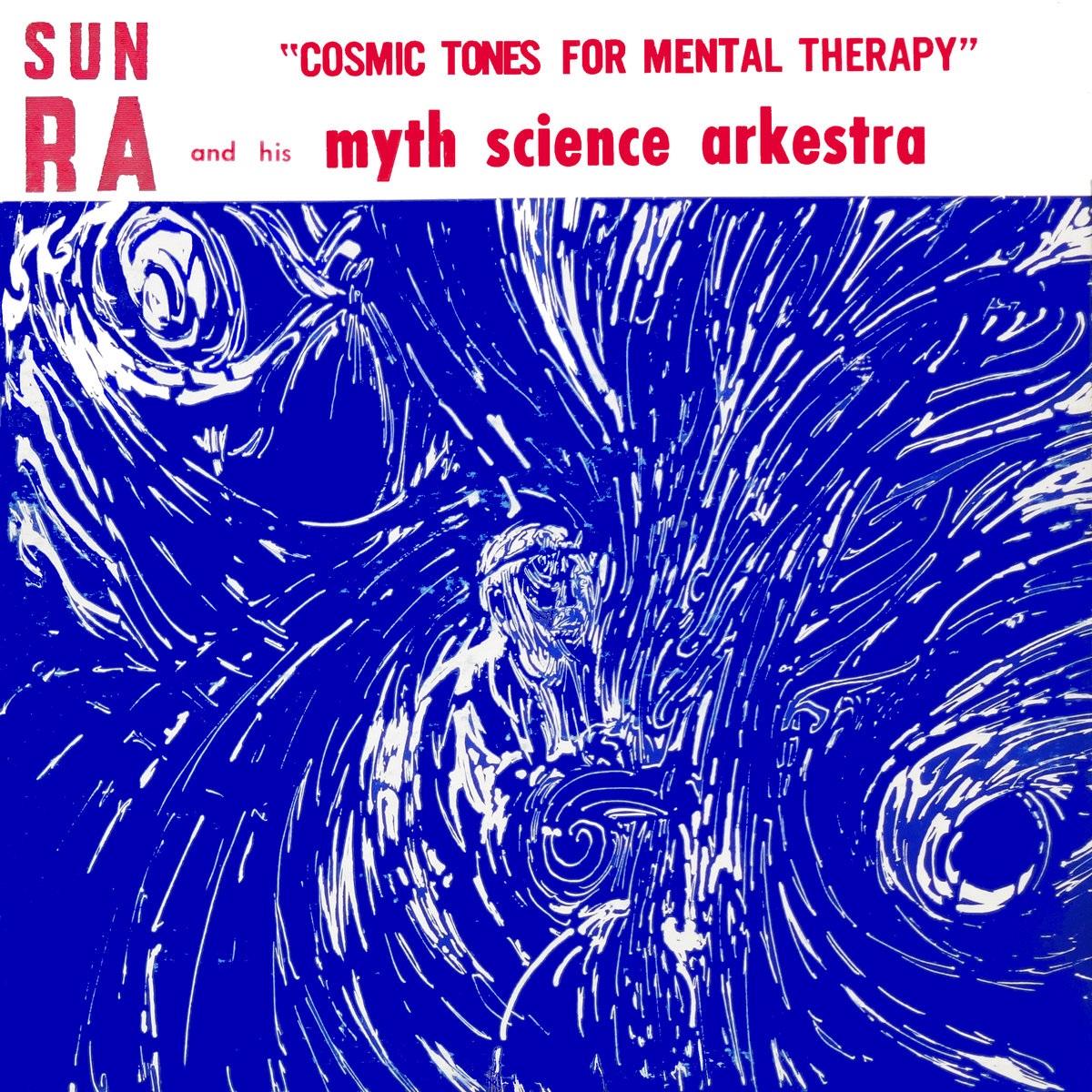
On a personal note, I love how so many of the great jazz albums use modern art imagery as an influence on their sleeve designs. "Bird and Diz" (1952), "Cookin' with the Miles Davis Quintet" (1957), "Time Out" (1959), "Mingus Ah Um" (1959), "Free Jazz: A Collective Improvisation" (1961), "Getz/Gilberto" (1963). Like those albums and others, the cover art for "Cosmic Tones for Mental Therapy" is pure abstract expressionism; the imagery capturing something of the sparse, near-ambient nature of the music contained within. As an explosion of modernism - which suggests images and emotions, as opposed to outright stating them in clear or simple terms - the artwork evokes the music and vice versa; creating a statement, both aesthetically and culturally; framing jazz, the genre, as somehow existing hand-in-hand with the earlier twentieth-century innovations in modern art.

As a record, or as an experience, "Cosmic Tones for Mental Therapy" could be described as like entering a darkened room with a mosquito. At first, the constant vibrations of the insect, as it buzzes, unseen, in the darkness, might evoke a particular sense of discomfort; a feeling of anxiety that suggests something bad or unpleasant is about to take place. Give it time however, and the hissing, whirring and buzzing sounds of the instrumentation as it passes from speaker to speaker, phased, as if again like an insect, dive-bombing around the head and ears of the attentive listener, becomes immersive, even hypnotic. Listen hard enough through the clamour and cacophony, and the melodies and counter melodies, the locked-in rhythms, become clear.


Cosmic Tones for Mental Therapy [Sun Ra and His Myth Science Arkestra, 1967]:

The opening track, 'And Otherness', feels like a clarion call across a desolate plain. North African influences seem to swirl about its discordant horn-sounds and complex rhythms, adding little blocks of colour and atmosphere throughout. There's an air of the ceremonial about this - something regal and majestic almost; like it could be the soundtrack to the inauguration of some new God-head or future king - but it's all too fragmented, as if the event is being recalled from the depths of an out-of-body experience or a chemically induced daze. 'And Otherness' sets a tone for the rest of the album, embodying the kind of free expressionism that typifies subsequent tracks, such as 'Thither and Yon', or the epic 'Adventure-Equation.' Here things start to stray into the realm of the pre-psychedelic, with its distorted drum pattern and layers of additional percussion building slowly; so drenched in echo and reverberation that the rhythm track becomes like the heavy flutter of a billion butterfly wings. Later, the horns arrive in waves of melody, ebbing and flowing across the tribal bedrock of drowned percussion, trilling and ringing; threatening to become a song in the conventional sense before unravelling again into something less structured, more formless, more free.

Side two of the record is a thing of beauty. Moving from 'Moon Dance', with its at-first cacophonous use of percussion - which sounds like a junkyard orchestra hammering on the trashcans, or like a heavy storm rattling the pots and pans - it soon reveals a complex system of rhythms all rolling then breaking, catching a staccato grove, then fragmenting into organs and other instruments, all blowing bursts of melody, notes and noise. The lo-fi nature of the recording suggests something amateur or homemade but the talent on display is nothing of the sort. The final track, 'Voice of Space' is an almost eight minute excursion into ambient minimalism, with the same fluttering percussion and seesawing brass and woodwinds suggesting further hints of melody, before separating along paths of discordant expression. Some of the instrumentation seems to recall the influence of "Threnody to the Victims of Hiroshima" by Krzysztof Penderecki, where the music has an inherent tension; a kind of clenching and unclenching of the figurative fists. Stabs of organ, like an ambulance siren, throw colour through the darkness, suggest an influence for the iconic introduction to the classic 1967 Van Morrison song, T.B. Sheets.

Recorded in 1963 but not released until 1967, "Cosmic Tones for Mental Therapy" is one of the many highlights of Sun Ra's prolific and pioneering career. While other albums would combine and refine his various influences - including jazz, funk, psychedelia, quote/unquote 'world music' and the foundations of what would eventually be termed Afrofuturism - "Cosmic Tones for Mental Therapy" is much sparser, seemingly less structured, but no less compelling. Every Sun Ra album seems to have its own colour and texture, capturing as it does a specific mood that sustains itself throughout. "Cosmic Tones for Mental Therapy" is no exception.

Schalcken the Painter (1979)

Schalcken the Painter [Schalcken the Painter [Leslie Megahey, 1979]: This is a film I first saw around four years ago. At the time I found...