Showing posts with label Image Gallery. Show all posts

Saturday, 22 August 2020

Landscape Artist


A Question of Aesthetics?


Unicórnio [Eduardo Nunes, 2017]:

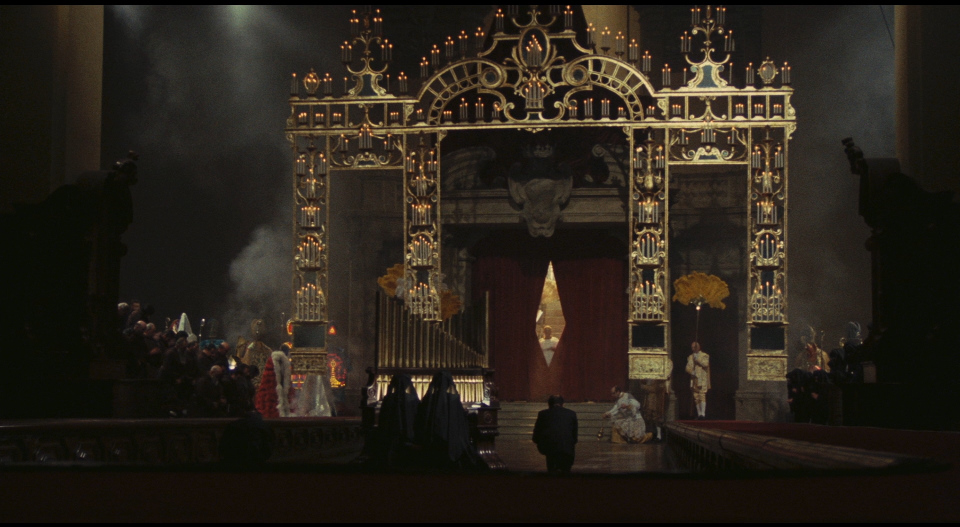
I saw a couple of the above images – taken here from the Eduardo Nunes directed film Unicórnio (2017) – posted in a movie-related discussion group on Facebook and was inspired enough to seek out a copy of the original trailer. Surprisingly, I'd never heard anything about the film previously, and have so far been unable to find a copy of it to watch, either through the usual streaming platforms, or conventional physical media.

I could probably live without the bespoke aspect ratio, which, without context, seems like a gimmick, however, the command and presentation of the landscape is extraordinary, finding an affinity for both the romantic imagery of Caspar David Friedrich, whose famous painting, Wanderer above the Sea of Fog (1818), shows a similar contrast between human figures left awed and overwhelmed by the majesty of nature, and the dream landscapes found in the films of Andrei Tarkovsky, such as The Mirror (1975), or Nostalghia (1983).

It's increasingly rare that I find myself enticed by film trailers, but this was a good one. Even watching it in un-subtitled Portuguese, and not entirely grasping what the film is even about, the imagery spoke, and seems especially captivating at a time when so many new films are entirely monoform in presentation, as if produced to fit a pre-existing template.

Friday, 13 March 2020

The Film Map

The History of Popular Film Set to the Art of Cartography

I have a few bits of writing that are almost finished. Hopefully, I'll be able to post them soon, it's just a case of finding a few quiet hours to really look at them and make some necessary final edits. Things have been hectic this past week and fears of Coronavirus have disrupted my regular routine, leaving me feeling anxious. I'm trying to remain rational, but it's one of those things where you can only hope it goes away quickly and we can all get back to normality, or whatever that might be.

To pass the time between posts, I thought I'd share some images from my "Film Map" (not to be confused with filmap, the great tumblr blog that compares location images from films with their real life counterparts ripped from Google maps). I received this map a couple of years ago as a present, but I only recently got around to displaying it on the wall. A shame really, as it was a perfect gift for a movie lover like me and has now taken pride of place in our living room.


It's interesting to think of the cinema as a physical space, like a city, country, or even the world itself. Would certain regions become tourist destinations – playgrounds for the rich elites and subject of countless articles and new stories – while others would become ghettoized, like places the guides and magazines tell you to avoid, but are nonetheless full of danger, intrigue and adventure? If my taste in cinema was a city, what would it look like I wonder? Would it be as eclectic and diverse in its layout as the one pictured here, or would it be more rigid or regimented? It's something to think about.


As a game, see how many of your favourite films you can spot, hidden away along the avenues and intersections, down the highways and byways, or across the streets and bridges. I couldn't photograph the whole thing, just enough to give you a sufficient overview.

Thursday, 9 January 2020

The Current Cinema


A Question of Aesthetics?

Avengers: Endgame [Joe & Anthony Russo, 2019]:

Image credits: Larry Wright @refocusedmedia [Twitter] / Marvel Studios

Sunday, 15 September 2019

The Last Man to Leave

Thoughts on the album "Merrie Land" by The Good The Bad and The Queen
Originally written in December 2018

Although unlikely to garner much attention during next year's award season, one of my absolute favourite on-screen performances this year is Damon Albarn's beguiling turn as the ventriloquist dummy that appears in all ten promotional videos released in support of Merrie Land (2018): the second and very much long-awaited new album from Albarn's non-Blur, non-Gorrilaz side-project, The Good The Bad and The Queen.

As a more-than-worthy follow-up to the band's brilliant, self-titled 2007 debut, this second release continues the same approach of exploring the vague notions of "British identity" against a diverse musical soundscape, while at the same time presenting a wry but evocative commentary on the modern cultural landscape, its politics and the general mood of the day.

If the first album took as its focus the growing surveillance state of New Labour's "broken" Britain - still caught within the grip of post-7/7 terrorism, the illegal wars in Iraq and Afghanistan and the climate of economic excess that would inevitably lead to the financial collapse of the following year - then Merrie Land finds its obvious target in the disastrous Brexit situation.

By focusing specifically on the fallout from Brexit - with every element of the album, from its music and lyrics, to its song-titles and packaging managing to evoke the current zeitgeist of confusion, fear and cultural disagreement - Albarn and company have succeeded in producing not just a 'complete work', in the artistic sense, but a genuine statement.


The Truce of Twilight (Performance Video) [Paul Simonon, 2019]:

Beginning with the first track, a short piece of dialog sampled from the Michael Powell and Emeric Pressburger masterpiece A Canterbury Tale (1944), the album establishes a context of old English parochialism: that "martyr's dream" of an Arcadian idyll, all stiff-upper lipped determination, quaint village greens and cathedrals heralding the glories of God. From this point on, the subsequent ten songs offer a clear thread of wry observational commentary backed by engaging instrumentation, as the ensuing album traverses the outer reaches of the British landscape; from the cities and their surrounding suburbs, to the quiet villages and once-thriving coastal towns.

The ten videos produced to accompany the majority of songs taken from the album find Albarn buried beneath layers of intricate prosthetics to become the ventriloquist dummy. In each of the videos he sits in front of  an intentionally flat, two-dimensional green-screen backdrop, which changes from one song to the next in order to better present a specific mood, character or emotion.

Each persona, while uniform and unchanging, captures a different facet of the British "identity" (though the term itself is a misnomer: there is no one cultural identity definable as British, but countless different identities, all of them "British", all of them occupying the same plot of land.) However we chose to identify ourselves, personally or politically - whether we voted to 'leave' or 'remain', or didn't vote at all, whichever the case may be - the dummy here is us.


2. Merrie Land


3. Gun to Head


4. Nineteen Seventeen


5. The Great Fire


6. Lady Boston


7. Drifters and Trawlers


8. The Truce of Twilight


9. Ribbons


10. The Last Man to Leave


11. The Pioson Tree

The appearance of the dummy itself is inspired by a segment from the Ealing Studios anthology film Dead of Night (1945). The segment, titled The Ventriloquist's Dummy, sees the titular object develop a mind of its own, terrorising its master who can no longer control its amoral urges. Or does it? Is the dummy really possessed, or is the ventriloquist simply losing his grip on reality? Significantly, a still image from the film also features as part of the album's artwork.


Merrie Land [The Good The Bad and The Queen, 2018]:

In the presentation of the dummy, Albarn finds the perfect symbol for Brexit, if not Britain itself. This thing that has somehow gotten away from its own master, saying and doing appalling things without punishment, and destroying the psyche of the individual that can who can no longer control it.

Merrie Land combines the same musical influences of The Good The Bad and The Queen's first album, chiefly folk, ska and dub, but adds an element of music hall. In interviews accompanying the album's release, Albarn said he was influenced by the Northern English town of Blackpool. Fittingly, the music here has the feel of faded seaside glamour, empty funfairs and a world where the last bastions of "Englishness" (fish and chips, novelty postcards, cups of tea) struggle to remain relevant.

Wednesday, 22 May 2019

Let the Devil Tempt Us

Jean-Claude Brisseau
In Memoriam

According to reports from the French mainstream media, filmmaker Jean-Claude Brisseau has passed away. A controversial figure in contemporary cinema, Brisseau had a style and sensibility that was singular, provocative and often charged with the supernatural. As an early disciple of Éric Rohmer, Brisseau shared his mentor's affinity for scenes of leisurely conversation, where set-pieces would often consist of two characters sitting down in a park or public space to discuss their relationships, the world and the mysteries of the universe. Unlike Rohmer's films however, such scenes were often punctuated by moments of brutal violence, a reverence to genre and explicit sexuality.

My introduction to Brisseau's cinema came in 2014 when I saw his penultimate feature, The Girl from Nowhere (2012). I can't remember what it was that brought the film to my attention but I do remember reading a plot synopsis and finding similarities to two of my favourite films from the same period: Lady in the Water (2006) by M. Night Shyamalan and Ondine (2009) by Neil Jordan. I've always had a personal interest in films about mysterious characters coming into contact with protagonists that have given up on life, and in doing so, bestow upon them a renewed sense of purpose. Added to this a particular fondness for films that deal with myths and miracles from a semi-plausible perspective and The Girl from Nowhere seemed a sure thing.


The Girl from Nowhere [Jean-Claude Brisseau, 2012]:

With its phantoms and its haunted memories, its strange encounters and premonitions, its relaxed conversations and discussions on art, the cinema, loneliness and grief, to say nothing of its thread of self-reflexivity, in which the protagonist's attempt to commit his memories to the page creates a subtle mirroring between the content of the character's text and the fantastical story unfolding on-screen, The Girl from Nowhere remains a fascinating and distinctive work. With its micro-budget aesthetic, its use of the director's own apartment as the principle location and its homemade special-effects, it also provided a template for my own work and the kind of films I wanted to make but never did. To this day, an image  from The Girl from Nowhere sits at the top of this very blog and provides a kind of shorthand for the type of cinema I find most bewitching.

Brisseau made other films that I love just as much as The Girl From Nowhere. Sound and Fury (1988) - which takes its title from a quotation from Shakespeare's Macbeth and has a similar juxtaposition between power structures, violence as a means to an end and the supernatural - finds the filmmaker following a line of influence from The 400 Blows (1959) to L'Enfance Nue (1968) with another film about a childhood on the fringes unravelling into brutality. In this film, Brisseau makes his first great leap in the aesthetic union between social-realism and poetic-realism, setting a template for the concerns and images that would come to haunt his later, more controversial features, such as Céline (1992), The Black Angel (1994), Secret Things (2002), The Exterminating Angels (2006) and À L'Aventure (2008).

Each of these films could be described as mysterious, hypnotic, classical and provoking, and would be more than worthy of a full, essay-length analysis of their respective strengths and weaknesses, and how well they deepen and enrich the political, aesthetic and metaphysical dialogues that run throughout Brisseau's work. In lieu of this kind of tribute please accept this small gallery of images taken from my favourite of Brisseau's films.


A Brutal Game [Jean-Claude Brisseau, 1983]:


Sound and Fury [Jean-Claude Brisseau, 1988]:


Céline [Jean-Claude Brisseau, 1992]:


Workers for the Good Lord [Jean-Claude Brisseau, 2000]:


The Exterminating Angels [Jean-Claude Brisseau, 2006]:


À L'Aventure [Jean-Claude Brisseau, 2008]:


The Girl from Nowhere [Jean-Claude Brisseau, 2012]:


Let the Devil Tempt Us [Jean-Claude Brisseau, 2018]:

Brisseau's final feature-length film, Let the Devil Tempt Us, was released last year (re-titled for English speaking audiences as the less compelling "Tempting Devils"). Understandably, sexual harassment allegations brought against Brisseau following the release of his scandalous but hugely successful late-feature, the aforementioned Secret Things, effectively ended his reputation as a respectable filmmaker of merit. Outside of France his work has drifted into obscurity. Very few (if any) English-speaking media outlets have mourned his passing, or used the occasion to open up avenues of discussion surrounding his work. While one must treat allegations of sexual misconduct with the upmost seriousness and concern, the attempts to suppress the films of Brisseau - or those by Roman Polanski, Woody Allen, Šarūnas Bartas, etc, etc. - seem reactionary, if not totalitarian, and do a great disservice to the many actors, technicians and collaborators who contributed to these works, and especially to the films produced prior to such allegations being made.

When groups talk of inclusivity, they often refer to social justice issues regarding representation. More female voices, more transgender voices, more voices from a non-white, non-western background. Such ideals are laudable and worth fighting for. But true inclusivity is also acknowledging that great art can be produced by anyone. From the most virtuous saint to the lowliest sinner, each of us has a story to tell, and a way of looking at the world that is unique, distinctive and possessing of our own inherent truth. Art is a way of looking at the world through different perspectives. Whether the artist comes from a place of vice or virtue, we can still learn something from seeing the world from their particular point of view.

Thursday, 21 February 2019

ROMA

Still the best film with the title 'Roma'


 Roma [Federico Fellini, 1972]: 

 A Year in Film Pt. 4 should be posted before the start of next week. I haven't had a lot of time for writing recently. Apologies.

Friday, 6 July 2018

Robby Müller


In Memoriam

In general, I tend not to make too many "R.I.P." posts. Other blogs that are more active than mine make such tributes a regular feature of their postings, but given that I'm not a very prolific writer here at Lights in the Dusk, I could imagine such posts becoming overwhelming given the general lack of other content. The sad fact is that too many great artists come and go and if I were to acknowledge each of them this blog would turn into an obituary.

However, Robby Müller, the great Dutch cinematographer famed for his collaborations with Wim Wenders, among other filmmakers, passed away this week, and it seems necessary to break from this tradition and share a few words (and images) about his extraordinary career.


To Live and Die in L.A. [William Friedkin, 1985]:

Müller was one of my absolute favourite cinematographers and was someone who seemed to gravitate towards projects and filmmakers that speak to me on a profoundly personal level.

It's difficult to choose a favourite film photographed by Müller. Throughout his career he brought a style, atmosphere and inventiveness that always seemed right for the specific project. In other words, he served the material. Whether he was working in 16mm black and white, as in Alice in the Cities (1974), 35mm colour, as in Barfly (1987), or pioneering the use of digital video, as in Dancer in the Dark (2000), My Brother Tom (2001) and 24 Hour Party People (2002), respectively, Müller was able to create lasting images that were bold, iconographic and always attuned to matters of light, space, character and location.

Whether collaborating with mainstream Hollywood directors, such as William Friedkin, John Schlesinger and Peter Bogdanovich, or more idiosyncratic, independent talents, such as Alex Cox, Jim Jarmusch and Raúl Ruiz, Müller always seemed to bring a level of craftsmanship that was even more remarkable given the limitations that he chose to embrace.

It's not an overstatement to suggest that Müller could have had the same career as Roger Deakins, Robert Richardson, or more recently Hoyte Van Hoytema; working exclusively on big budget Hollywood pictures for so-called "prestige" filmmakers. Instead, Müller chose to work with filmmakers that were unconventional, controversial and often at the start of their careers. In doing so, he nonetheless succeeded in creating a lifetime's worth of astounding images on small budgets, short schedules and against incredibly difficult filming conditions.


Robby Müller filming Kings of the Road [photo attributed to Wim Wenders]:

Just focusing on his early collaborations with Wenders already illustrates Müller's amazing versatility. Moving from the stylised and Hitchcokian The Goalie's Anxiety at the Penalty Kick (1972) to the almost documentary like travelogue of Alice in the Cities, we can appreciate both his mastery of different mediums and his ability to switch between works of unforced naturalism and painterly stylisation.

The subsequent films that Wenders and Müller made together would only broaden their creative pallet, as the emphasis on landscape, or 'place', became a central concern in a film like Kings of the Road (1976) or the early scenes of Paris, Texas (1984), while the use of colour would become increasingly more daring and expressive, as in the Edward Hopper influenced Patricia Highsmith adaptation The American Friend (1977).

The lasting legacy of Müller is perhaps best surmised by Wenders himself, who in a tribute to his former collaborator, states: "Like no other, you were able to seize moods and to describe situations in your imagery that revealed more about the characters than long dialogues or dramaturgical structures ever could. You knew how to create a distinctive atmosphere for each and every film, in which the respective actors were, in the truest sense of the phrase, "in good hands." For a handful of filmmakers, among whom I was one, you were their most important companion, like Hans W., Jim, Lars, Steve. And you were a role model for a whole generation of young directors of photography."

Below are some images taken from my absolute favourite films photographed by Robby Müller, which I hope illustrate many of the qualities discussed here, as well as providing a chronological record of his stylistic progression, trademarks, characteristics and key works.


Alice in the Cities [Wim Wenders, 1974]:


Kings of the Road [Wim Wenders, 1976]:


The Left-Handed Woman [Peter Handke, 1978]:


The American Friend [Wim Wenders, 1977]:


They All Laughed [Peter Bogdanovich, 1981]:


Repo Man [Alex Cox, 1984]:


Paris, Texas [Wim Wenders, 1984]:


To Live and Die in L.A. [William Friedkin, 1985]:


Down by Law [Jim Jarmusch, 1986]:


Mystery Train [Jim Jarmusch, 1989]:


Korczak [Andrzej Wajda, 1990]:


Until the End of the World [Wim Wenders, 1991]:


Dead Man [Jim Jarmusch, 1995]:


Breaking the Waves [Lars von Trier, 1996]:


The Tango Lesson [Sally Potter, 1997]:


Dancer in the Dark [Lars von Trier, 2000]:


Ashes [Steve McQueen, 2014]:

Schalcken the Painter (1979)

Schalcken the Painter [Schalcken the Painter [Leslie Megahey, 1979]: This is a film I first saw around four years ago. At the time I found...