Showing posts with label Andrei Tarkovsky. Show all posts

Thursday, 20 August 2020

Sans Soleil


The Image of Happiness
or: 'the black leader'

"The first image he told me about was of three children on a road in Iceland in 1965. He said that for him it was the image of happiness, and also that he had tried several times to link it to other images, but it never worked. He wrote me: One day I'll have to put it all alone at the beginning of a film with a long piece of black leader. If they don't see happiness in the picture, at least they'll see the black."

Chris Marker begins his film Sans Soleil (Sunless, 1983) with the above quotation. It is accompanied first by the image itself: three children on a road in Iceland in 1965. A second image, unremarked upon by the narrator, shows fighter planes on a naval ship undergoing maintenance. The first image, and Marker’s characterization of it as "the image of happiness", seems like a provocation; one of several that occur throughout the film. Is the filmmaker challenging the audience to find happiness in the image? Or is he challenging us to find what signifies this as an image of happiness in the context of the film, or indeed, in the life of his fictionalized avatar, the photographer Sandor Krasna?

Admittedly, I've never seen happiness in the image itself. The image for me looks like one of fear and discomfort; three children reacting to the intrusive appearance of a stranger, who films them without permission. As they move through the frame, their pale skin and blonde hair turned silvery by the low sun, they seem incongruous against the green of the surrounding landscape; out of place and out of time. Marker's camera dehumanizes his subjects throughout Sans Soleil, as he studies objects and individuals with the detached curiosity of an alien anthropologist trying to make sense of a culture and its customs beyond his understanding. As the children move, they do so like trapped animals, retreating, clinging to the edge of the road, unsure of the intentions of this photographer, who records them without consent.


Sans Soleil [Chris Marker, 1983]:

While it's perhaps irresponsible if not ableist to force a developmental diagnosis onto someone based only on a slim understanding of their personality, I do speculate whether there was something almost autistic about Marker. It would explain his way of bending the world to meet his various interests and obsessions, his ability to find meanings and connections in signs and symbols, the unerring gaze of his camera and the need to make sense of actions and interactions, as if straining to understand the deeper nuances of a glance, a stare, a gesture. Of course, it's possible that this was simply a result of his background in journalism, which had perhaps conditioned an approach to people as subject-matter, rather than as individuals. For Marker, people and places pose questions to be probed and explored. In turning his camera against them, he finds different ways of telling his own story, but never theirs.

The approach presents a barrier for many viewers. While Sans Soleil remains an acclaimed and singular work, feted and debated by film scholars the world over, there are many critics, especially on social media, that have found Marker's depiction and discussions surrounding other cultures and people to be both racist and colonialist in nature. The argument being that the filmmaker speaks on behalf of his subjects; that he denies them a voice; that he takes their images without consent and uses them in a context they could never agree to.

Throughout Sans Soleil we see people flinch at the sight of Marker and his camera. We see them pull away, turn, cover their faces. The images Marker captures are often of people showing discomfort, made anxious by the presence of the camera and the intrusion of the lens. On one level this creates an inherent truth, revealing personal and private moments that are authentic and real, but it does so at the expense of individuals who didn't agree to this exploitation. It presents a moral conundrum for many viewers more sympathetic to invasions of privacy and the loss of personal agency, especially those we now face with our own images in the age of the internet and social media.


Sans Soleil [Chris Marker, 1983]:

In discussing Marker's later film, Tokyo Days (1988) – a work that functions on some levels as a postscript to the film in question – I remarked upon the voyeuristic nature of Marker's cinema. How life, once viewed through a lens that both records but transforms its true reality, becomes a spectacle of performance, to be viewed and interpreted in the same way that we interpret a photograph or film. There's an element of this present in Sans Soleil, which moves between ethnological studies of modern Japan and the islands of Cape Verde, but also the phantom studies of the imagined San Francisco of Alfred Hitchcock's film Vertigo (1958) or the cultural footprints left by writer and philosopher Jean-Jacques Rousseau.

There is a sense that for Marker there is no clear delineation between the reality of the modern Japan and the unreality of Vertigo's San Francisco; that there's no line between his observations, both of and on the dock workers at Guinea-Bissau (recorded here by the filmmaker Sana Na N'Hada) and his later observations on the fictional characters of Scottie Ferguson and Madeleine Elster from the aforementioned Hitchcock film; that everything is part of a more intricate system of memory and human consciousness (or even subconscious), which, like a foreign territory, is there to be explored.

Personally, I find Sans Soleil to be a remarkable, genuinely profound work that defies categorization. Many have called it a documentary, or cinema essay, and yet I feel both terms misrepresent the film and only worsen the problematic nature of some of Marker's observations, or the charges of Orientalism. The film is as much a documentary as "Alice in Wonderland", operating instead on a level of fantasy, or science-fiction. It's a film that demands the viewer to adjust their perceptions and understandings of the world and its people to the same wavelength of Marker, where an obsession with cats and TV commercials, sleeping commuters and the realities of Kamikaze pilots, entwine with the influences of Jules Verne, Hitchcockian mystery, computer systems, natural disasters and the supposition that there is a layer of hidden reality that exists between all things and all times. For Marker, this hidden layer is called "the Zone"; an elevated state of being named in tribute to the metaphysical, extraterrestrial territory seen in the film Stalker (1979) by Andrei Tarkovsky.


Stalker [Andrei Tarkovsky, 1979]:


Sans Soleil [Chris Marker, 1983]:

Like the image at the beginning of the film, of the three children on a road in Iceland, we end the film with another provocation, and another admission of happiness. When Marker asks us to find "happiness" in the picture, it's a personal challenge. But are we seeing a depiction of happiness in the conventional sense, of smiling faces and arms outstretched, or are we being asked to find happiness in our own reading of the image, in the projection of our own personal thoughts and experiences upon it? Perhaps we find happiness in the memories and associations of our own childhood innocence, in the relationship between siblings, in the landscape, or the sense of home? Perhaps the real answer is in the Zone?

The "Zone" for Marker is not the sentient, metaphysical space that it is for Tarkovsky, but the space between images, between past, present and future, between reality and memory. Here, Marker shows us the same images we've seen before, only this time they've been run through a video synthesizer. This transforms the image into a second image. One that exists between reality and something else; not pictorial, nor documentary in nature, but a kind of projection, a phantom image, an image in decay. This brings us back to the implication of the first sequences of images and the significance of the black leader.

When Marker, via his female narrator, challenges us to see happiness in the picture of the three children, or be satisfied with only seeing the black, he's effectively asking us, in retrospect, to see the layers between images: the "zone" itself. In showing the two images concurrently, he isn't creating a juxtaposition: it's not an either/or. It's about seeing both pictures at the same time, one on top of the other, and finding the image that lives in-between. The image that exists in the blackness, and the blackness as an image itself. It's in these distinctions and the images between images that the secrets of Sans Soleil are revealed.

Friday, 31 January 2020

Actions Written on Water


Reflections on a film: Once Upon a Time in China II (1992)

When people talk about "poetic cinema", or films that have the quality of verse, they usually have a very specific type of film in mind. Slow, languorous films about serious subjects, like war, alienation, grief, historical atrocity, or cultural and emotional displacement. Films peppered with beautifully shot natural landscapes, or scenes of urban decay, where the atmosphere of a particular place, its ghosts and memories, is evoked by the filmmaker through a series of drifting, carefully choreographed tracking shots. On the soundtrack, classical music plays as solemn voices intone their deepest and most solipsistic feelings as an aural counterpoint to the images on screen.

Plainly speaking, the term "poetic cinema" no doubt conjures up the impression of works by filmmakers like Andrei Tarkovsky, Terrence Malick, Abbas Kiarostami, João César Monteiro, Apichatpong Weerasethakul, Wong Kar-Wai, Alice Rohrwacher, Sergei Parajanov, Derek Jarman, Maya Deren, Theo Angelopoulos, or the later films of Jean-Luc Godard, to name a few. While the work of these filmmakers is poetic, and sometimes even contains actual poetry spoken as part of the dialog, poetry itself is a form, like literature and painting, and within that form there are several different genres, schools and styles.

Dante Alighieri was a poet, but so is John Cooper Clarke, Dr. Seuss and Pam Ayres. Leonard Cohen was a poet, while Bob Dylan became one; likewise, Tupac Shakur. I'd even argue that there's a poetry in certain pop songs, which stir the soul as deeply as the poetry of the landscape, nature and the cosmos.


THE POETIC CINEMA?


The Color of Pomegranates [Sergei Paradjanov, 1969]:


The Mirror [Andrei Tarkovsky, 1975]:


The Tree of Life [Terrence Malick, 2011]:

As a result of both snobbery and inverse-snobbery, few would ever think to call an action film "poetic." However, many of the great action films of the past forty years do have a sense of poetry to them. I suspect this is because action cinema, at its core, is essentially operating on a similar level to that of the musical. These are both genres defined by the physicality of their performers, their grace and agility, as well as the presentation of the human body as a vessel for drama and spectacle. Action cinema is frequently called "balletic", not because it's an adjective that convinces the reader of the author's tremendously rich vocabulary, but because the line between ballet, as an art form, and mainstream action cinema, as a phenomenon, is incredibly faint.

Once Upon a Time in China II (1992), co-written, co-produced and directed by the legendary Tsui Hark, is a film that I wouldn't hesitate to call poetic. Melding themes of historical oppression, violence and xenophobia, alongside moments of slapstick comedy, melodrama and martial arts, it's an unashamedly mainstream film. However, in its stylization, its use of light and shadow, the movement of the camera and the way that it records bodies engaged in the most graceful and intensely choreographed movement, as well as in the generally heightened emotions of the film and its protagonists, it achieves something poetic, or something lyrical or rhythmical in nature.


Once Upon a Time in China II [Tsui Hark, 1991]:

Once Upon a Time in China II reacts both to and against the more conservative political leanings of the first installment, resulting in a work that's richer, both politically and aesthetically. Hark's cinema is liberated from convention here; the camera in perpetual motion, in step with his performers. It moves gracefully, like a flighted bird skimming the surface of a still winter lake. Like poetry written on water, the film becomes a dance between the elements, expressive and emotional.

Screenshots don't do the film justice, as the real thrill of Hark's work comes from the action, the cutting between shots and the way the actors and stunt performers express their tremendous physical abilities. Such demonstrations remind us throughout that the greatest special effect a film can contain isn't something that's been created and rendered on a computer, but the unique talent of the performers on screen.

What Hark does with Once Upon a Time in China II is take a style similar to that of Terrence Malick and apply it to the already vivid and comic-book-like stylizations of the martial arts film. So, the defining factors of the 'Malickian' aesthetic – the drifting camera, the wide angle lenses, the associative cutting between shots (which here emphasizes the minutia of the violent world in close-up against the confident wide-shots that give spatial and physical context to the giddy action) – provide a counter-point to the scenes of heroism, the knockabout comedy and the more conventional blockbuster flourishes. Hark's subsequent films, Green Snake (1993) and The Blade (1995), would push this poetic and delirious aesthetic even further, but the experience of Once Upon a Time in China II is no less brilliant.

Sunday, 19 January 2020

Roadside Picnic


Thoughts on the book by Arkady and Boris Strugatsky


I only knew of the brothers Strugatsky from the various film adaptations of their works. Specifically, the film Stalker (1979) by Andrei Tarkovsky, which is adapted from the book in question, and Hard to be a God (2013) by Aleksei German, based on the book of the same name.

Stalker has been one of my favourite films since I first discovered it during my teenage years and began those first tentative, adolescent steps towards a cinema made outside of the Hollywood mainstream.

To this day, the film's formalist aesthetic - its long tracking shots and carefully choreographed camera movements, its cross-cutting between images of both colour and sepia-tinted monochrome, its voice-over digressions and quoted poetry, its foggy landscapes and falling rain, its wind pushing through blades of grass and its preoccupation with ruined architectural spaces - remain part of my understanding of what many critics would call "pure cinema"; something that can't be translated to any other medium, but has to be experienced through that combination of sound and moving pictures, which only film (or visual content) can convey.


Stalker [Andrei Tarkovsky, 1979]:

While punctuated by earlier scenes of action and even a moment of suspense, Tarkovsky's film is a largely slow, vaguely academic treatise on philosophical and metaphysical themes. Like his earlier film, Solaris (1972), Stalker is recognised as a work of science-fiction, but unlike that earlier adaptation of the book by Stanisław Lem, the science-fiction elements have been made vague; pushed to the background of a story that's more concerned with atmosphere, imagery and ideas. Stalker gives the impression of themes like extra-terrestrial visitation, post-nuclear devastation, telekinesis and mutation, but without necessarily having to commit to an explanation as to why these events have occurred.

Approaching "Roadside Picnic" with an impression of what the book might be like from having seen and loved Tarkovsky's film was quite an experience. While the book expresses the same basic plot – a scavenger, known as a 'stalker', leads willing participants into a dangerous hinterland known as 'the zone', which has been transformed by an alien visitation – the structure, character and general tone of the book is remarkably different.


Roadside Picnic [Arkady and Boris Strugatsky, 1972]:

While Tarkovsky's film is quiet and reflective, "Roadside Picnic" has the tone of a hardboiled 40s detective novel. The character is cynical, violent and world-weary. He's closer to Harrison Ford's characters in either Star Wars (1977) or Blade Runner (1982) than the portrayal by Alexander Kaidanovsky in the subsequent film. The book's protagonist is a professional who's in it for the money; conflicted and marked by past experiences, and in a sense as much a prisoner of the lifestyle and the cruel economic realities of the brutal world that he inhabits.

The book is fragmented; it begins with a television interview (written in the same format), in which characters that drift in and out of the narrative as peripheral figures set-up the backstory and exposition. From here the book presents different episodes of the Stalker's life, establishing a narrative that feels more like a mosaic. Something made up of incredibly small, seemingly disconnected details that only become clear the further we step away from it.

Anyone going into the book expecting something akin to Tarkovsky's film will be disappointed. But the book is its own beast, and while fragmentary and episodic, I found it completely compelling. The atmosphere and world that is evoked by the brothers Strugatsky and the slow accumulation of details which add to our understanding of the character of the Stalker are each brilliant, with the writing teasing out moments of suspense, action, horror, humour and even the same philosophical concerns that Tarkovsky had elaborated upon in his subsequent film. In particular, the discussion that gives the book its title, "Roadside Picnic", is beautifully written, expressing the existential anxiety of human beings left feeling deficient or insignificant when touched by the presence of something greater than themselves.


Arkady and Boris Strugatsky [Photographer unknown]:

"Roadside Picnic" confounded my expectations, but it turned out to be a great work of pulp science-fiction. Having never read anything penned by the brothers Strugatsky, the book in question has definitely left me interested in experiencing more of their work. "Hard to be a God" (1964) is already of interest because of its connection to German's bizarre and (intentionally) alienating film, but I'm also keen to read the beautifully titled "Ugly Swans" (1972) and "The Doomed City" (1988).

After finishing the book, I was compelled to return to Tarkovsky's film to contrast and compare the differences between the two works. I think Tarkovsky and his collaborators capture an atmosphere of 'the zone' that exists in the book, but it's genuinely remarkable that Tarkovsky read "Roadside Picnic" and arrived at the character and narrative found in the finished film. It feels like he adapted the film from a plot synopsis rather than the book itself. That said, Stalker remains an absolute marvel and one of the great works of twentieth-century cinema.

While often considered a key work of the supposed 'slow cinema' movement, the first half of Stalker is actually briskly paced and relatively action packed; easing us into a mesmerising second-act expedition that connects the physical to the metaphysical in a profoundly dramatic way. Tarkovsky's aesthetic had matured into something unique here; his reflections on nature and existence finding the perfect expression in both content and form.

Thursday, 12 July 2012

One-Hundred Favourite Films - Part Seven

Ongoing response to The Dancing Image "100 (of Your) Favourite Movies" meme-that's-not-a-meme, presented here in a loosely alphabetical order. I'm posting the series in reverse formation in an attempt to maintain the original continuity, from A to Z.


Mauvais sang
Directed by Leos Carax - 1986

With some films, the experience cannot be explained, only felt. As much as I try to put into words some semblance of what these films are about, how they work and why I love them as much as I do, there is always that struggle to do justice to the true experience, which is personal, and difficult to define. With Mauvais sang, I could talk about its ambition and imagination; the gestures towards the poetic realism of filmmakers like Epstein, Vigo and Grémillon; the combination of B-movie noir and impressionist science-fiction (which recalls the Godard of Alphaville (1965) in its presentation of love in a world where the physical act of love has been made unattainable); or the feeling of it: the progression between scenes that are either funny, astounding, romantic or moving.

However, to describe the film in such a way would not do justice to the real feeling that is experienced. The recollections of a relationship, however vague, inform every scene, every word and every movement. The film as a work - as a physical object - reminds me of my own amour fou - mon "Petite Lise" - who loved its bursts of movement, its folly and its declarations, almost as much as I; who saw in it something that brought to mind our own sadness and embraced it, like the characters on-screen. To see the film now is to re-experience that affection in every expression of these characters, their actions and reactions, and in the film's sweeping gestures, which capture a feeling of what it is to love and to be loved.


Metropolis
Directed by Fritz Lang - 1927

In its construction, the city presents the two ideological perspectives established by the film's socialist-leaning epigram, which reads: 'Head' and 'Hands' need a mediator. The mediator between 'Head' and 'Hands' must be 'the Heart.' The city of the film is, in its design, a manmade barrier between these two spheres of society, ensuring that 'Head' and 'Hands' are forever separated, physically, by the structure of the thing; those divides of class, gender and generation made explicit in the very foundation of the world. Through the inadvertent actions of its two protagonists - Freder, son of Fredersen, and the enigmatic Maria - a link between the two words is finally forged, turning the city itself into the beating heart that drives both factions of this so-called Metropolis; this labyrinth of the mind.

However, the vision of the city is not only a mediator for its inhabitants, but inevitably becomes a kind of mediator for its own creators; a link between the politics of Thea von Harbou and the spectacle of Fritz Lang. If writer von Harbou saw the drudgery of the workers as something deplorable, director Lang transforms it into something truly terrifying. A vision of hell, where the workers feed a machine that becomes, in the eyes of the protagonist, like a monster, devastating in its ferocity. While the political aspects of the film are still relevant, it is the pure storytelling of Metropolis that leaves the greatest impression; the manifestation of this world that Lang and his technicians so vividly create is still, after almost a century, a genuine sight to behold.


Mother Küsters' Trip to Heaven
Directed by Rainer Werner Fassbinder - 1975

We contemplate the question: Why does Herr Küsters run amok? As a quotation, it sounds like the start of an appalling joke (and in many respects it is!) though one necessary to draw a line of influence from this film to an earlier one, also associated with Fassbinder, which ended with an explosion of fury and devastation that seemed to anticipate the unseen act of violence that begins the film in question. What is most cruel about the construction of the film is the way Fassbinder has his characters - this small family of aged mother, doting son and imperious daughter-in-law - just going about their usual domestic activities, oblivious to the terrible tragedy taking place on the other side of town.

The film reinforces Fassbinder's reputation as one of the great 'exploitation' directors. Not so much in his technique - which has little in common with filmmakers like Joe D'Amato or Larry Cohen - but in his continual interest in the manipulation of characters too vulnerable or trusting to recognise when the forces of a system far beyond their comprehension is conspiring against them. In Mother Küsters' Trip to Heaven, Fassbinder uses the story of this elderly woman's bleak descent into loneliness, resentment and eventual criminality to condemn the German culture of the 1970s; taking aim at the ineffectual left-wing intelligentsia, armchair terrorists, tabloid press and his own generation's ignorance and greed in contrast with the quiet stoicism and questionable loyalty of the martyred matriarch of the title.

It is easy to see the crime of Herr Küsters and the reactions to it as a comment on how the Germany of Fassbinder's generation had distanced itself from the sins of the father(land); refusing to acknowledge the atrocity of the holocaust on a human level, ignoring it, and therefore allowing the opportunity for history to repeat itself; a fear implicit in the violent conflicts taking place between left and right-wing political groups throughout the 1970s. In the absence of the "father", Mother Küsters becomes the real culprit, the only link to a man that can no longer be held accountable, and as such - a scapegoat? - shunned and ignored, denied any sympathy; guilty by association. Her downfall, chronicled throughout, is shattering to see.


Mulholland Drive
Directed by David Lynch - 2001

For Lynch, there is the surface, the thing that is presented as 'truth', and then there is the world beneath the surface, the dark despair that exists at the wounded heart of everything. In the opening sequence of his earlier film Blue Velvet (1986), Lynch illustrated this idea with a vivid montage of small-town suburban life - a world of fixed-grins, picket fences and saccharine '50s pop - cut-short by the sight of an elderly man falling to the ground in the throes of a violent seizure, and a slow malignant tracking shot through the undergrowth, revealing the writhing worms, festering maggots, and a severed human ear.

In some ways, the narrative of the film in question could be seen as a continuation of this earlier sequence, where Lynch establishes a surface projection of how things appear, or need to appear, and then the reality beneath. The two 'realms' offer two sides of a single story, where failure and disappointment are transformed in the mind of a central character into a waif's dream of Hollywood stardom, full of mystery and adventure. In this sense, the film is an obvious continuation of the same territory explored in Lynch's other great films, Twin Peaks: Fire Walk with Me (1992) and Lost Highway (1997), where a significant event in the lives of his characters causes a literal psychological metamorphosis; turning the story into a series of figurative gestures that hide the clues to an unfortunate chain of events. While the two preceding films are undoubtedly great works, there is a noticeable process of refinement in the development of Mulholland Drive, where the games played with the narrative and the usual interjections of horror, slapstick and soft-core erotica are not used to obfuscate or to confuse the audience, but to reveal hidden depths.

On the surface, the film is of course a captivating mystery; a genuine modern-day noir built around its two unlikely heroines who traverse this frequently sun-dappled Hollywood playground in search of the clues to an arcane conspiracy, and finding instead the hollow bones of a terrifying affair. And yet beneath the surface, the film is a heartbreaking psychological study; one that exposes emotions and ideas that never merely adorn the more characteristic moments of surrealism, but transcend them; turning what could've been a cheaply provocative and transparent experiment in self-reference into a genuine work of art.


Muriel
Directed by Alain Resnais - 1963

Subtitled 'The Time of a Return', Muriel is a film about memory, or more appropriately, about the past as something pervasive, like a shadow walking in-step with each character; something that we're unable to escape. Though other aspects of the work are just as intriguing, it is the film's continual emphasis on time and recollection - and how these concerns can be related through the power of the moving image to capture and record - that Resnais and his scriptwriter Jean Cayrol return to; creating a film where the formalist experiments - the editing and the placement of the camera - attempt to disarm the viewer; showing the capacity for the medium to manipulate and mislead, but also to suggest hidden truths.

The 'Muriel' of the title is not the lead character, as we might expect, but a name that haunts the character's stepson Bernard; a young man still traumatised by his experiences during the conflict in Algeria. In this sense, the scars of war - the lingering traces of it - becomes another great theme of the film; explicit in the battle-marked ruins of Boulogne-sur-Mer where the story takes place and implicit in several interactions between characters, who throughout the film seem to hide behind a facade of middle-class contentment, as if trying to maintain a sense of pre-war normality; almost as if life before the war had continued, uninterrupted.

When Cayrol and Resnais eventually reveal the true story of 'Muriel' - this character that seems to embody, in memory, the very spirit of the film and its restless observations on the themes aforementioned - the effect is truly devastating. The film itself - in its necessary contrast between sound (Bernard's painful confession) and image (a montage of 8mm footage of soldiers languishing between battle) - becomes a eulogy to this young woman, but also a means of expressing the great suffering of those made mute by the ravages inflicted by this stonewalled deceit. This is a film that offers a profound comment on the nature of atrocity, how we live with it, and how the attempt to ignore it, or to put it to one side, is the greatest indignity of all.


My Darling Clementine
Directed by John Ford - 1946

In the broadest terms, the story of Wyatt Earp and the Gunfight at the O.K. Corral doesn't interest me, and yet this is what the film appears to be about. However, beneath the surface of this historical fiction, there is a film about loss; about the loss of a brother. As an only child I've often envied those with close ties to their siblings and that sadness felt by Wyatt Earp after the death of his brother during the first act of the film is something that I can almost relate to. The feeling of wanting something but never having it is sometimes equal to having something and then losing it. The film, in its mood and sense of momentum, is haunted by this loss - the loss of a brother but also the loss of innocence, or an ideal - turning even the burgeoning love story between Earp and the character of Clementine Carter into something charged with the anticipation of a tragedy.

This same feeling of grief is inherent in Ford's direction, with the staging of scenes and the framing of shots, compositionally, emphasising a certain abstract stillness; where interactions between characters are turned into ghostly encounters, intrusions and stolen moments, caught like images from a phantom documentary, "of the period" (though no such documentary could exist). It is the authenticity of these images, the dirt and the grime and the sense of lives being lived, that creates this feeling of something credible, emotionally and cinematically, even if the story is pure fabrication.


Nostalghia
Directed by Andrei Tarkovsky - 1983

Any discussion of the themes behind the film should really begin with the title, which establishes upfront the overwhelming feeling of loss and the personal displacement that hangs above the lives of these characters, suspended, like the sword of Damocles waiting to drop. However, this is not a film about 'nostalgia' in the sense of being a 'nostalgic work' - like for example Amarcord (1973) or Radio Days (1987), where specific memories of places and people are exaggerated on screen as they are in the mind - but rather an attempt to understand the feelings behind this nostalgia. The loneliness, disruption and dissatisfaction that compels these characters to take shelter in a crumbling Italian village, where each relic of a past existence uncovers deep reminders of their own tragic despair.

The character in Tarkovsky's film is, like the filmmaker himself, in exile. Unable to return home, this character finds himself haunted by past recollections; memories of figures framed within a desolate landscape, an old house and a shroud of fog, like the fog of memory, obscuring everything. These images suggest some possible clue to deciphering the true feelings of this character, which, as ever with Tarkovsky, seem impossible to define. For this is a poet's impression of his own great sorrow, suggested throughout by the solitude of the village, the dust and decay, and his own dealings with characters similarly haunted; consigned to their fate, like the defiant 'mad man' Domenico, or like Eugenia, desperate for an escape.

The tone of the film throughout is sombre and pensive. At times, the imagery suggests a continuation of the oppressive, post-apocalyptic misery of the director's previous film Stalker (1979) - or even a precursor to the genuine fear of atomic annihilation featured in his final work, The Sacrifice (1986) - but it's always the feeling of the film, the emotions of it, that draw us in. The emphasis on long takes - where the camera moves about these characters, observing them, presenting each shift between reality and fantasy, past and present, as a genuine movement between worlds - turns the experience of the film into a waking dream. A dream of home shared by each protagonist (and by the audience as well) that is impossible to define and even more difficult to reclaim.


Notre musique
Directed by Jean-Luc Godard - 2004

A film composed of three movements, like a symphony; the association reflecting the greater connotations of the title: the voice, a means of expression and communication: "our music?" Each movement of the film is a representation of a different argument on the nature of war, presented by means of a specific cinematic approach. The three movements - montage, dramatisation and allegory - act as interpretations of the three kingdoms of Dante's the Divine Comedy - Hell, Purgatory and Paradise - creating a single narrative. One that develops like a series of unconscious thoughts, moving, like characters through the rubble of places or the ruin of existence; never acting, but reacting as everyday people might when faced with the reality of war; the injustice of it.

In its rolling montage of violence and devastation - and with the burnt ruins of Sarajevo still standing as a solitary witness to the last great horror of the 20th century - Godard asks the question: "how can we live?" The audience responds: "with our fingers in our ears and our eyes tightly closed." The inquisitive nature of the film is never aggressive or didactic, like the Godard of the 1960s, but gently probing. The aim is to evoke emotions and ideas through sounds and images, creating something that moves between moments of poetic abstraction, wicked satire and affecting psychological study; presenting the atrocity of war and the folly of terrorism without condescension, but also gesturing lightly towards something hopeful; a vision of paradise, tranquil but exclusive, pastoral but closed-in...

The final movement, which acts as a kind of free adaptation the final act of Godard's earlier Week End (1967) - turning that film's depiction of violence and immorality in the Garden of Eden into an Eden of autocratic efficiency - uses this beautiful bucolic setting to create a contrast between something natural and pure and something corrupt; a system built on control and segregation, like the world itself. Although stunning in its presentation, this coda, both satirically and sympathetically, shows us the paradise that awaits these martyrs, and in its own subtle way shows us where the folly of terrorism ultimately leads. A dream of heaven as a place where nothing ever happens.


One from the Heart
Directed by Francis Ford Coppola - 1982

I suppose it makes sense that a film about romantic folly has itself become known as the great romantic folly of its director's career. While Coppola's film may have yet to shed its reputation as the wildly ambitious extravagance that tarnished his reputation and almost destroyed his career, it remains, for me at least, one of the director's greatest films.

On the surface, One from the Heart is as pure a work of cinematic imagination as one could ever hope to see. A vivid extravaganza, full of expressive colours, dazzling sets, theatrical transitions, musical numbers, circus routines and a poet's portrayal of love that finds even the most personal or intimate of feelings transformed into a spectacle of old-Hollywood-style decadence or Cocteau-like verse . However, beneath the surface of this display of magic mirrors, high-wire acts and allusions to MGM musicals there is a story about failure and disappointment, about spent-time and lost chances. A film about the difficulty faced by this couple in their attempts to understand one another; to look into the eyes of the other and see the reason why they first fell in love, and not just a sad reminder of their own disillusionment staring back at them.

Through this contrast between the stylisation of the form and the coarseness of the protagonists, Coppola's film becomes more than just a frivolous fantasy, but a moving and intelligent deconstruction of a relationship; where the carnival spirit and decadent glamour of the world created only reinforces the emptiness shared by these characters, the lack of excitement and adventure. In this respect, Coppola's film is ultimately about the pursuit of love as a physical space. In the arms of another we can accept our situation, or at least find beauty in the world around us, as opposed to dreaming of impossible things.


Onibaba
Directed by Kaneto Shindô - 1964

What I'm always left with is the impression of scenes; the heat, the closeness, the sense of space. Although the story is certainly engaging, it is the feeling of the film - the energy of it - that for me makes the experience so extraordinary and difficult to describe. The atmosphere of the location, barren and claustrophobic, is defined by the imprisoning blur of the marshland, with its tall reeds, which - when presented across the full-width of Kiyomi Kuroda's mesmerising 'scope frame - become like a wall that exists, literally or figuratively, between two realms. A wall that divides these characters, closing in on them, trapping them emotionally, physically and psychologically between the world of the living and the world of the dead.

Everything that happens in the film unfolds as if these characters are in-limbo; each moment held or suspended, like a scream of agony, or one of ecstasy? Although terrifying in its ferocity, the film is also surprisingly sensual. That heat and the closeness of the bodies within the frame, half-naked and wet with sweat, creates the feeling of something primal, even erotic! A heightened emotional state that turns the film into a prolonged nightmare, suggesting an interpretation of lust and jealousy that is almost supernatural.

Wednesday, 14 July 2010

Image Gallery: In a Lonely Place

Back in March of this year, the always-worth-a-look Checking on My Sausages put out an invitation for bloggers to submit a single frame in the hope of creating "a gallery of images [chosen by you] to stand for so much of what makes Cinema such a rich and exciting medium." Yesterday, The Dancing Image created a meme "for those who love pictures" intended to develop the original idea, urging fellow bloggers to "pick a theme" and select a collection of images that complement it. Only the Cinema was the first blog to respond, with writer Ed Howard choosing "Five Sensual Shots" assembled loosely around the theme of sensuality and sexuality: images that entice, provoke, and suggest. At the end of his post he offered an open invitation for anyone reading to get involved, and so, with that, here are my selections.

The general theme here complements a list I recently made on TheAuteurs MUBI, bringing together my favourite films that best capture the feelings of loneliness, longing and desperation. In my own words: A list of films that beautifully capture that feeling of an endless drift, towards nothing or oblivion; where journeys are made, both into the world and into oneself in an attempt to escape life and its various responsibilities. Where the loneliness of characters, or their own often restless attempts to make a connection with the people and places that thrive and flourish all around them, leads them into a greater adventure, or alternatively, into harm. These films evoke an overwhelming sense of solitude and isolation, either through the emptiness of a place, the spaces between people or the general desperation of late night ennui. However, they also reveal the more personal truths that are found in quiet contemplation, in the landscape, in memory, or in the thousands of little stories that exist in the spaces between everyday conversations.

At this point, I'm going to deliberately break the final rule of the meme by not selecting any other blogs to tag - simply because most blogs I read will most likely get tagged anyway - but nonetheless, I do hope that the images here suggest some of those particular feelings or immediate emotional responses, even without the benefit of context or clarification.


La notte directed by Michelangelo Antonioni, 1961:


The Passenger directed by Michelangelo Antonioni, 1975:


Kings of the Road directed by Wim Wenders, 1976:


Taxi Driver directed by Martin Scorsese, 1976:


In a Year with 13 Moons directed by Rainer Werner Fassbinder, 1978:


Radio On directed by Christopher Petit, 1979:


The State of Things directed by Wim Wenders, 1982:


Prénom Carmen directed by Jean-Luc Godard, 1983:


Nostalghia directed by Andrei Tarkovsky, 1983:


Boy Meets Girl directed by Leos Carax, 1984:


Paris, Texas directed by Wim Wenders, 1984:


Shadows in Paradise directed by Aki Kaurismäki, 1986:


September directed by Woody Allen, 1987:


The Match Factory Girl directed by Aki Kaurismäki, 1990:


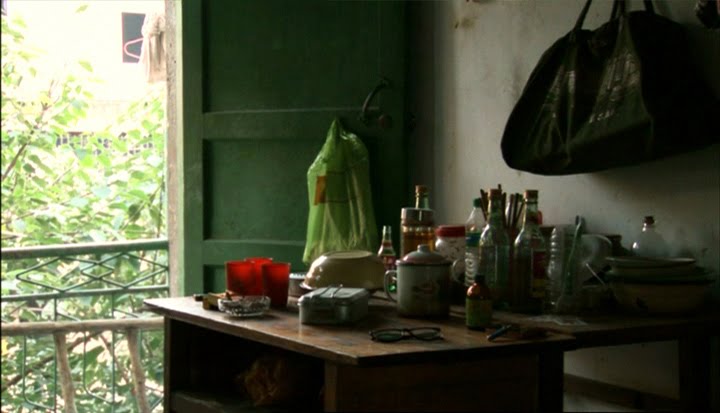
Still Life directed by Jia Zhangke, 2006:


Colossal Youth directed by Pedro Costa, 2006:

Schalcken the Painter (1979)

Schalcken the Painter [Schalcken the Painter [Leslie Megahey, 1979]: This is a film I first saw around four years ago. At the time I found...