Showing posts with label Michelangelo Antonioni. Show all posts

Thursday, 30 April 2020

The Eclipse


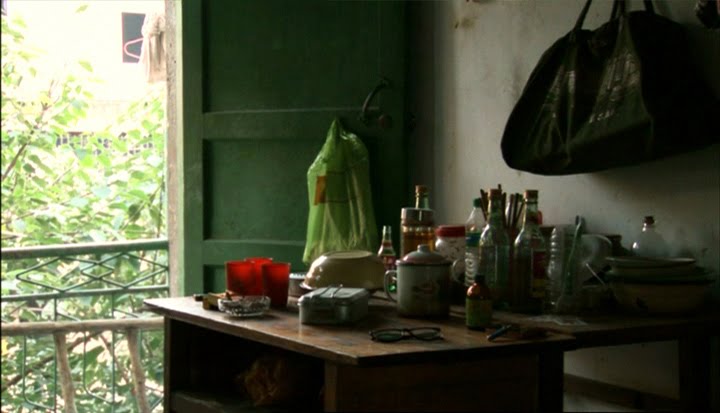
Still Life

In March, I was designated a key worker. This means that while much of the country is on lockdown, I'm one of the many people still making the commute in to work. I argued that the work I was doing was inessential. That any part of my job that was essential could be done from home, and anything that couldn't be done from home should be postponed due to the current government guidelines around social distancing. I work at a hospital. I'm not medical staff, nor do I fulfill any of the great litany of other important roles, such as porter, cleaner, security, catering, pharmacy or IT, to name a few. My role is creative and largely administrative. I'm not going to flatter myself; it's not essential.

Like a lot of people, the experience of the past two months has had a profound effect on my mental health and wellbeing. Every conversation is now charged with discussions around Covid-19. Headlines scream from every news site or social media platform about the great changes that the world has undergone over the course of the year so far. It's easy to become overwhelmed by the fear of infection, death and the potential loss of friends and loved ones, however, it's not just the realities of life under lockdown that cause such stress, but the way the course of life has been distorted and overturned.

As I ventured out for my first day of work after the lockdown restrictions were introduced, the thing that caused me the greatest anxiety was the sense of loneliness; the alienation of being one of only two or three people riding the train to work, when once it would've been packed with fellow commuters. The empty buses and barren streets that I follow on my way to the hospital, or the general lack of people on site, the locked doors, the added security, each put me in mind of every post-apocalyptic horror film I could ever imagine, from The Last Man on Earth (1964) and Dawn of the Dead (1978) to Morning Patrol (1987) and 28 Days Later (2002). The feeling of solitude and disconnection was incredible.


The Last Man on Earth [Sidney Salkow, 1964]:


Morning Patrol [Nikos Nikolaidis, 1987]:


28 Days Later [Danny Boyle, 2002]:

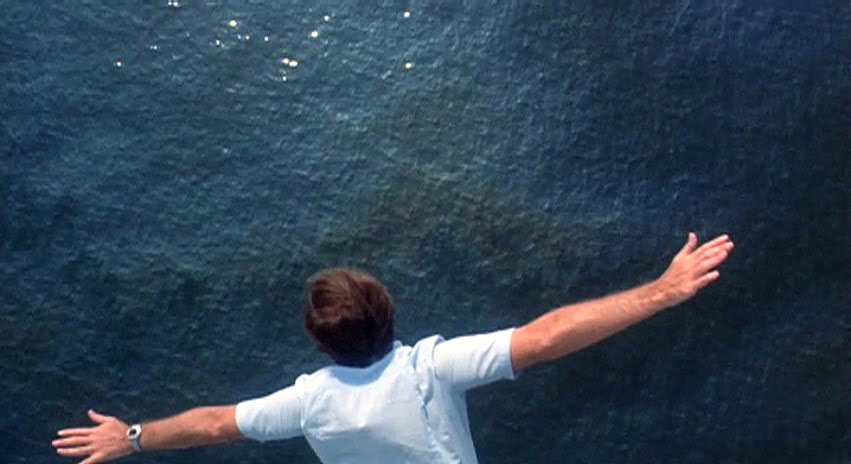
It wasn't just genre films that this experience put me in mind of. When I think now about the first week going to work after the state of quarantine was declared, I was most reminded of the final sequence of director Michelangelo Antonioni's great masterwork, L'eclisse (1962).

One could argue that Antonioni was putting social distancing and self-isolation on screen decades before the concept achieved historical recognition. His best films, from Il Grido (1957) to The Passenger (1976), are each about characters in conflict with the world and unable to settle. A backdrop of alienation or an impending crisis is often used as a projection of the rift within the lives of these characters as they struggle to conform, find peace, or accept their own sense of self. This was certainly true of L'eclisse, which chronicles the affair between a young bourgeois woman from an affluent part of Rome and a successful stockbroker, but uses the relationship to hint at weightier, more existential themes.

The rifts in the relationship between these characters and the crisis they face is mirrored by the world of the film, with its stock market crash and allusions to a potential nuclear war propelling the film towards a final sequence that remains one of the most extraordinary in the history of cinema. Departing from conventional uses of language, both spoken and "cinematic", Antonioni instead suggests something almost pre-apocalyptic. The film slows to a stop, the atmosphere becomes labored and pregnant with the anticipation of something cataclysmic, and there is a sense of the society collapsing in on itself, becoming inert and inarticulate, regressing or ascending to a more primitive, elemental state.


L'eclisse (The Eclipse) [Michelangelo Antonioni, 1962]:

When I first saw Antonioni's film over a decade ago, I remember quite vividly the effect this sequence of images had on me, and how transformative the film was on both an emotional and psychological level. Going outside into the back garden of my parents' house and feeling the quiet stillness of the suburban scene, I felt, in a most significant way, that the world was both larger and smaller than I could ever imagine. Changed by the experience of viewing, I felt overwhelmingly that my place within the world was little more than an insignificant speck, no greater or more important than the rustling leaves or the tweeting birds that were my only reminder that this seeming simulacrum of existence was still life.

I now have this same feeling when I travel to work. The same sense of the world being at once expansive, overwhelming in how vast and unknowable it actually is, and at the same time being claustrophobic or fenced in. The same feeling of insignificance, of alienation, of displacement, of the recognizable "everyday" reality as we once knew it breaking down into something strange and unusual, or of the portent of some even greater cataclysmic event just readying itself to plunge the world into further silence.

At this time, I think about the most vulnerable members of society and I hope they're okay. The elderly, people with disabilities, people without work or homes, all struggling with the same fears, anxieties and uncertainties. I think about the key workers putting themselves at risk. I think about how difficult it must be for children to adapt, and the impact that this period will have on their psychological development. Whatever happens, it's important to remember that we're all in this together. Stay safe.

Thursday, 21 November 2013

Key Films #28

La notte [Michelangelo Antonioni, 1961]:

In an early scene, the audience is introduced to the protagonists - the married couple Lidia and Giovanni Pontano - as they tend the hospital bedside of a dying friend.  The significance of this scene is immediately clear, and the level of detail and information that Antonioni and his co-writers place within these seemingly perfunctory conversations and the awkward small talk establish a dynamic between characters that will be explored and examined as the narrative unfolds.  This sequence - as with the opening sequence of the subsequent L'eclisse (1962) - is also essential to understanding the tone of the film; the emptiness of the hospital, the distance between the protagonists (both physical and emotional) and the occurrence of a surreal and disarming sequence in which Giovanni is confronted by a disturbed and uninhibited young woman who attempts to seduce him, create a stark, clinical and at times often distinctly morose feeling that seems to place the viewer within the same emotional and psychological mindset as the characters on-screen.  It also suggests a blatant (if generic) interpretation, in which the notions of sex and death become figuratively entwined.  This creates a somewhat interesting psychological parallel to the protagonist in Antonioni's later film, The Red Desert (1964), where the character Guiliana's own time in a psychiatric hospital led to a no less humiliating seduction and extramarital affair.

Giovanni's own revelation, that he was tempted by the sick woman's advances, will eventually act as a similar catalyst for the subsequent events.  Again, like Guiliana, the psychological and sociological implications of the confession throw Lidia's once-comfortable existence into a spiral of self-doubt, jealousy and sexual-anxiety that leads this character on an expedition into the ruins of the past.  Approaching the film, in this sense, as a kind of journey into "the self", or as an episodic, sexually motivated act of psychoanalysis, the similarities to Eyes Wide Shut (1999) by Stanley Kubrick become immediately clear.  La notte could almost be described as a kind of spiritual precursor to the Kubrick film, albeit, with the roles reversed.  In Eyes Wide Shut, it was the husband Bill who was plunged into a freefall of confusion and sexual jealousy after his wife Alice confessed to an infatuation with a fantasy male archetype.  In Antonioni's film, the emphasis is on Lidia, who instead of finding liberation through separation, or a sense of closure in the exploration of these places significant to her youth, is almost haunted by Giovanni, unable to escape his influence or even his control.  In the presence of her husband, she is simply "the wife", or more specifically "Giovanni's wife", confined to the shadow of her spouse as the dependable shoulder of support.  As such, she sees herself - even in absence - as not exciting enough nor attractive enough to break out of the conventional and subservient role that the culture expects her to play.

The style of the film, with its black and white cinematography and its emphasis on the dehumanising presence of cold, concrete architecture - which dwarfs and suffocates the characters in almost every frame - confronts the viewer with a world seemingly devoid of life.  Like the final moments of L'eclisse, the overall tone of the film following the wife's crisis of faith is one marked by an icy claustrophobia, uncertainty and an almost fragrant sent of apocalyptic dread.  As Lidia wanders a disintegrating landscape of old buildings, empty streets and dilapidated relics desperately in search of the past, she finds only unfathomable ciphers engaging in either violence or triviality as a last gasp attempt to reclaim a certain joy from the natural languor of everyday living.  Unlike the gang of men brutally cheering on a fist fight, or the crowd of gawping onlookers who observe a toy rocket launched from a desolate field, Lidia is again distant and disconnected, unable to comprehend or even glean any sense of the most simple pleasure from these moments, moving and still.  Throughout the film, Antonioni typically has his characters framed through empty windows, their reflections trapped or isolated by the shot composition and its relation to the overall design.  This continues the theme of examination, as the audience is compelled to see the characters not just as specimens, but as an illustration of our own emptiness, banality and emotional discontent.


Sisters [Brian De Palma, 1973]:

Without question, a transitional work; a film that closes the (rear) window to one facet of De Palma's career, while at the same time leaving the shade open for something new.  The film exists on the fault line between the director's earlier, more experimental, counter-culture efforts of the late 1960s - in which his continual interest in voyeurism and the manipulation of the moving image was combined with socio-political discussions on race, sexual politics and the war in Vietnam - and the ensuing supernatural and psychological thrillers that the filmmaker would intermittently devote himself to during the subsequent years.  On paper, the central narrative of Sisters - at least as it develops through the combination of murder mystery and psychosexual horror - gestures towards the baroque modern melodrama of consecutive works, such as Phantom of the Paradise (1974), Carrie and Obsession (both 1976), where the tortured psychology of characters forces the drama to fracture into a series of exhilarating, edge of the seat set-pieces that become, through the course of the narrative, like a projection of the protagonist's own fragile emotional state.  However, the sub-text of the film and the presentation of its central characters is still rooted in the post-1960s, pop-art mindset of radical politics, genre deconstruction and ironic, self-reflexive lampoon.

While many will no doubt see the film and take from it the obvious lifts from Hitchcock - especially in the way the murder is staged against a fittingly 'retro' Bernard Herrmann score - the undertones are far more sensitive to the cultural concerns of the time.  Through the film's first act of violence, De Palma is referencing the still topical murder of Kitty Genovese (in the way the initial crime is ignored and brushed aside as a lover's quarrel, despite the presence of an actual witness) while the eventual police response to the disappearance of the victim (a young black male) suggests a notable thread of institutional racism ("these people..." the detective slurs).  Likewise, De Palma's heroine, played here by Jennifer Salt, is introduced as both a leftwing feminist and possibly bi-sexual (her lifestyle and lack of a steady boyfriend is a cause for concern for her conservative-leaning mother, who in turn becomes the butt of the joke).  These personal idiosyncrasies are there to enrich the more generic Hitchcockian elements of the narrative, through which the story of medical malpractice seems intended to tap into a genuine fear on behalf of the culture of unstable doctor's playing God, and where the director's signature use of the split-screen effect is intended to visualise, cinematically, the fragmented personality of his central character(s); the film itself becoming the expression of a divided mind.


Notorious [Alfred Hitchcock, 1946]:

"This is a very strange love affair" purrs the vulnerable Ingrid Bergman to the roguish Cary Grant, and in many ways she's right, it is!  It's also a very strange film, even within the context of Hitchcock's remarkable and often provocative career, where the sense of unreality and the almost abstract stylisations of the staging and the cinematography evoke the later, more explicitly "conceptual" trilogy of psychological dramas, Vertigo (1958), Psycho (1960) and Marnie (1964).  Throughout Notorious - its title a reference to the less than perfect reputation of the Bergman character; the gadabout daughter of a convicted Nazi spy - Hitchcock and his collaborators chip away at the respectable gloss of the standard '40s melodrama, infusing the film instead with a sensation of intense, almost dreamlike ambiguity; an air of slightly off-kilter "strangeness" that borders on the overwhelming.  The illusory atmosphere - in which the entire narrative feels as if it is being dreamt-up by the central character as a sort of fevered reverie - is suggested, in part, by the director's less conventional stylisations (which frequently attempt to place the audience, subjectively, into the psychology of the central character) but also through the stilted, unnatural dialogue, the perverse character developments and the frequent sense of unnerving suspicion; as the susceptible protagonist is thrown into the deep-end of a dangerous and tortured affair.

Lurching, staggering even, from seduction to betrayal, from boozy late-night drives across a rear-projected backdrop of Miami, Florida, to the hotbed of intrigue and mystery found in its studio-recreated Rio de Janeiro setting, the film traverses genres; moving, drifting, from film noir to thriller, espionage to full-blown romance, and even ending on a sustained note of inescapable terror.  The narrative and the development of the protagonist is strong enough to support these deliberately artificial stylisations, as the film engages through the natural workings of its story - the intrigues and manipulations - and through the relationship(s) between the central characters.  As a clear consequence of the personal betrayals of the men in her life (first her father and eventually her conflicted lovers) Bergman's character, Alicia, finds herself cast in this role and forced to play along; to adopt a "persona" and to assimilate herself into this environment in an effort to infiltrate the allies of her since-incapacitated dad.  This presentation of the character as unwitting 'agent provocateur' becomes a kind of self-aware acknowledgement of the role of the actress in a traditional drama; where the entire demeanour of Alicia is ultimately an affected "performance"; a smokescreen intended to mask the fear and uncertainty that drives her into such peril.

Her desire to please this new lover - this mentor who becomes both a replacement for the father, dispensing wisdom and advise, and a surrogate for the director, instructing the actress how to behave, how to move through this world of darkness and danger - gives Alicia the strength to take on the impossible as her mission forces her to betray her own feelings - her own personality - by having to flirt between the sensitive heroine and the more cold-hearted femme fatale.  More daringly, Hitchcock and his writers subvert the characteristics of their respective opponents; Grant's protagonist T.R. Devlin and the film's antagonist, Alexander Sebastian, played by Claude Rains.  While Devlin clearly has feelings for Alicia, his emotions, jealousies and fragile ego cause him to inadvertently lead the object of his affection into disaster.  His attitude throughout is punctuated by conceit and arrogance, as he breaks away from the caring and considerate mentor-figure to instead become a wounded bully led by bitterness and resentment.  While the leading man is cold and occasionally unpleasant, Sebastian is, by contrast, hugely sympathetic.  He loves Alicia, and it's only through the inevitable betrayal that the character turns against her.  While Hitchcock keeps the narrative moving with his fantastical tricks, thrilling set-pieces and fragmented, almost trancelike tone, it is the richness of these characters and their complex personal emotions that makes the film so endlessly compelling.

Wednesday, 6 June 2012

One-Hundred Favourite Films - Part Eight

Ongoing response to The Dancing Image "100 (of Your) Favourite Movies" meme-that's-not-a-meme, presented here in a loosely alphabetical order. I'm posting the series in reverse formation in an attempt to maintain the original continuity, from A to Z.


Ondine
Directed by Neil Jordan - 2009

A mournful piano chord is struck. The sound of it reverberates, becoming the siren's call to the fisherman, alone and at sea. The landscape, all rolling green hills and black jagged rocks that mark the divide between the land and the water - between his world and hers - suggests something mythical. This is the introduction to a story, told by the man to his daughter. He begins nervously: "once upon a time..." "Does it always have to be once upon a time" she says, cutting through the necessity for these stories to distance themselves from the everyday reality, becoming something fabled, and as a result, less real. The story eventually told by the man is the same story unfolding on screen.

Even before the fisherman has pulled from the water the beautiful young woman - caught in his net as a mess of long pale limbs and damp tangled hair - the film is suggesting this contrast between the reality, a world where a single father must work hard to pay for an operation to save his ailing daughter, and a world of myths and magic, where this woman, whose name is taken literally "from the water", will ensnare him in a story of his own creation. However, what happens when the daughter interjects, telling her own story? No longer informed by the fisherman's romantic yearning or desire to provide an escape for his little girl, but by her own fears and sickness.

The subsequent unravelling of the plot, with its back-and-forth rifts between romantic fable, poignant tragedy and violent noir, suggests the ever shifting perspective of these dual narrators, blurring the boundaries between what is felt by the characters and their own attempts to defuse their concerns by framing them within the reassuring context of a bedtime story. The films of Neil Jordan continually push this relationship between reality and fiction, and Ondine - a film where each new narrator presents a new 'voice', expressed via references to a specific genre - is his most complex work of meta-fiction since The Company of Wolves (1984), and arguably one of his most beautiful films to date.


Only Yesterday
Directed by Isao Takahata - 1991

I recognise a lot of myself in the film's protagonist, the twenty-something office worker Taeko Okajima, and her escape to the countryside as respite from the emptiness of her everyday life. What I recognise most is that sense of anxiety. The feeling of being lost or adrift, of wanting more out of life than the job, the house, the family; those natural expectations of adult life that we're supposed to strive for; that mark us out as successful, well-balanced individuals in the eyes of society, regardless of whether or not such concepts or concerns are emotionally gratifying or personally fulfilling.

Through Taeko and her restless examination of her own childhood memories, which are an attempt to better understand the hopelessness and the disenchantment that make life for her a constant sorrow, the film beautifully captures that feeling of nostalgic yearning that comes to the best of us when we reach a certain age, between the carefree adventures and discoveries of childhood and the commitments and responsibilities of later life. As a character, Taeko is happy to simply exist; to work for the joy of working. Not for financial gain or social status, but to share moments and interactions with likeminded people; to be close to the land and the beauty of nature; to recapture that childhood feeling of endless summer days before the crippling weight of maturity, when everything was simple.

With Only Yesterday, Takahata and his collaborators have produced a film that is every bit as 'human' in spirit as his earlier masterpiece Grave of the Fireflies (1988), and no less moving. An intimate, perfectly observed film, full of atmosphere, emotion and depth, where the adult Taeko's introspective journey into the memories of her childhood is powerful enough to compel the audience to contemplate their own recollections of the past and their dreams for the future.


Ordet
Directed by Carl Theodor Dreyer - 1955

I emerged from the experience of the film, eyes blurred, senses stunned in silent sorrow. I couldn't believe what I'd just witnessed. I can't even explain it now. On paper, the film could be seen as a fairly conventional family drama, full of the usual melodramatic interjections and plays of deep emotion that attempt to inspire a connection in the mind of the audience, eliciting sympathy or understanding, as melodramas often do. But there is an intensity to Dreyer's film that elevates the story far beyond the ordinary; a sense - shared by both the audience and the characters on screen - of seeing something beyond explanation; a genuine miraculous event.

For me, the effect of the film was enormous. The sense of pace, the stillness, the rigorous framing of objects and events, and the austerity of these characters numbed my soul, lulled me into a feeling of total vulnerability. By the time the film had reached its final act I was on the edge of my seat, stomach in knots, too scared to exhale in the event that any subtle change in the air might destroy the feeling of near-religious transcendence taking place right before me. By the end of the film I was emotionally exhausted. The tears broke free and rolled down my face. Finally I felt what Nana must have felt when she sat in the cinema watching The Passion of Joan of Arc (1928) in Godard's Vivre Sa Vie (1962).

In instances where the experience of the film is beyond my grasp, there's always the urge to invoke Godard: 'What we cannot speak about, we must pass over, in silence.' To experience Ordet is to experience the true power of cinema. That is, cinema as an act of faith. The act of faith required by these characters to believe in the unbelievable is mirrored by the act of faith required by the audience to invest in the subject of the film and embrace it, without cynicism. To approach the film with an open mind and an open heart.


Out of the Past
Directed by Jacques Tourneur - 1947

For me, the thing that elevates Out of the Past above any other classic film noir of the studio era, is the mournful direction of Jacques Tourneur. As a director, Tourneur brings to the film the same sense of melancholy and gothic ambience that transformed his earlier supernatural mysteries from potentially lurid little scare-stories into tortured psychological studies of warped minds and characters in torment. In Out of the Past, the feeling of great sorrow, or that faint line between the cruelty of the environment and the unspoken suffering of the protagonist, are brought to the very centre of the thing; not simply there to give added weight or subtext to the development of the plot as they might in a more conventional film noir, but actually defining it.

This is a film about longing, about these characters attempting to find love in a loveless place, or to exist, without becoming numbed to the violence, brutality, cynicism and greed of this literally seething underworld, with its betrayals and deceits. Though it plays with the recognisable iconography of the genre, there is a tension to the film that goes far beyond the requirements of the story. A gravity to the interactions between characters, which carry a feeling of sustained, fatalistic despair; as if the wrath incurred by the central character will not simply result in death, but in something potentially more sinister. Here, the relationship between Douglas and Mitchum becomes more than just that of a crime boss and his stooge, but a genuine deal with the devil.

In this sense, even when working outside of the conventions of the supernatural genre, Tourneur's film still feels like an eerie encounter between ghosts in a world of shadows. His approach, as agonizing and atmospheric as in the films Cat People (1942) and I Walked with a Zombie (1943), seems to transform what could've been a fairly predictable story of deception and double-cross into a psychological drama, where the story emerges - literally 'out of the past' - as these characters remember each moment and encounter, trying to make sense of things as their lives spiral into chaos.


Paris Belongs to Us
Directed by Jacques Rivette - 1961

The first Rivette, and already the great trademarks of his work are presented, fully-formed. The title, which is more a declaration than an adequate description, is the first acknowledgement of the role that Paris will play throughout the director's career, becoming more than just a mere setting, but something greater: a state of mind. In this sense, Paris Belongs to Us is a precursor to the grand adventure of films like Out 1 (1971), Le pont du Nord (1981) and Gang of Four (1989), both in its reliance on arcane conspiracies - which seem to captivate the characters of all Rivette's films - and in that slow thematic descent from playful joie de vivre to suffocating suspicion.

However, the greatest connection between these films is Rivette's use of the city, which here, like in several of the director's later films, becomes a living theatrical space, invaded by a troupe of actors who engage in a series of public rehearsals, providing context for the more mysterious dramas taking place beneath the surface. In the end, the tension, between good-humoured scenes of character interaction and the threat of some possible cataclysmic event, creates a feeling of sustained suspense, suggestive of the final moments of Antonioni's subsequent L'eclisse (1962), which also seemed enthused with a darker undercurrent of cold war paranoia and fear of atomic annihilation.


The Passenger
Directed by Michelangelo Antonioni - 1975

"I know a man who was blind. When he was nearly forty he had an operation and regained his sight. At first he was elated. Really high. Faces, colours, landscapes... But then everything began to change. The world was much poorer than he imagined. No one had ever told him how much dirt there was, how much ugliness... He noticed ugliness everywhere. When he was blind, he used to cross the street alone, with his stick... After he regained his sight, he became afraid. He began to live in darkness. He never left his room. After three years he killed himself."

The identity of 'the passenger' is never made clear. Though one can assume this title refers to the unnamed 'girl' that is first encountered by the protagonist during his stay in Barcelona, and who eventually becomes a travelling companion of sorts on his journey through the second half of the film, it could also just as easily refer to the protagonist himself. The reporter, trading his life for the life of another; choosing to become a 'passenger', emotionally if not physically, through the passage of his own existence; observing it without interaction, and allowing the forces of chance to dictate his inevitable end. In this sense, the story of the blind man is a clue to understanding the progression of this character. A character like many in Antonioni's films who exists as an empty vessel; a shadow, drifting through life, too numbed by the experience of it to engage with a world that crushes him at every turn.

In essence, it is a film about loneliness. The kind of loneliness that isn't simply a symptom of solitude, or of being alone, but a psychological condition that creates a feeling of intense isolation, even in the company of others. The characters in this film are trying to outrun a feeling of disenchantment by embracing the existence of someone else; but these feelings of bitterness and alienations are never really external. No matter how far these characters flee from their own lives, they're unable to escape their own intrinsic feelings of failure, emptiness and disappointment.


The Passion
Directed by Ingmar Bergman - 1969

"I don't imagine I reach into the human soul with this photography. I can only register an interplay of forces, large and small. You look at this picture and imagine things. But it's all nonsense! All play. All poetry. You can't read another person with any claim to certainty. Sometimes not even pain registers as a reaction."

The quoted dialogue seems to offer a vague clue to understanding the film, which is one of Bergman's most difficult and controversial. It is an intense film, full of longing, despair and scenes of quiet anguish, which is deconstructed throughout by the voice of the director, who establishes each scene as if reading from the script, or from occasional on-set interviews with the actors discussing the development of their characters, how they see them, and how the audience should respond to them. These deconstructions, which invite the process of filmmaking into the narrative, exposing the artificiality of these dramas that occur for the benefit of the audience, are disarming - sometimes distracting! - but are necessary to expose the truth behind the usual manipulations that we accept in mainstream cinema, in the same way that the characters attempt to expose the truth behind the deceit of their relationship(s).

As ever with Bergman, private thoughts and fears are made public as the story unfolds. Unravelling, not just in the narrative sense, but emotionally too, as the island where the film takes place becomes an onscreen representation of the characters' fraught psychology, their isolation, and the growing air of violence and persecution that is slowly decimating the landscape, like a plague of madness leading to destruction and annihilation.


Picnic at Hanging Rock
Directed by Peter Weir - 1975

The story is vague and mysterious. If the opening credits didn't suggest some possibility of an actual grounding in recorded history, then we might simply dismiss the scenario as pure fabrication, too extraordinary to believe. However, this question of authenticity is precisely what gives the film its enduring appeal; leaving the audience to speculate about the legitimacy of the disappearances and the surrounding chain of events as a something beyond explanation, uniting the physical and the psychological with the purely supernatural.

The atmosphere of the film certainly suggests the presence of something 'otherworldly', with the mood of the forest - all ethereal, like a fairy story - and the feeling of time standing still, creating an impression of a force of nature greater than anything comprehendible by the human psyche; as if the hanging rock itself has become a sort-of sentinel - a natural 'monolith', in the sense of 2001: A Space Odyssey (1968) - that allows for a communication to take place between worlds. Each moment spent in the shadow of the rock is suspended, compelling these characters into a state of trancelike contemplation, at one with nature, though also at the mercy of it, where "what we see and what we seem are but a dream; a dream within a dream."

The images throughout are haunting; the atmosphere, overwhelming. The sense of this place, the forest, lit by the afternoon rays of the sun, brings to mind a painting like The Luncheon on the Grass by Édouard Manet or Ladies at the Seine by Gustave Courbet. Not just in the continual depiction of idyllic, pastoral scenes of girls in billowing white dresses basking in the soft glow of the sunlight, but in the implied connection between the beauty of nature and this burgeoning (but repressed) sexuality, which might hold the secret to deciphering the whole thing.


Pola X
Directed by Leos Carax - 1999

The subsequent passing of its two lead actors, Guillaume Depardieu and Yekaterina Golubeva, makes the experience of Pola X all the more unsettling. When I first saw the film six years ago it already felt like a work haunted by a great depression; bleak in both subject and approach. But now, more than ever, it has the feel of something truly wounded; a film of immense pain and suffering, where the overwhelming fatalism of its central character is never disguised or subdued by black comedy or ironic detachment, but fully embraced; creating a film not simply about personal misery, but defined by it. This is a film where the only genuine scene of passion takes place between two mangled bodies - reminiscent of figures from the works of Egon Schiele - in a room of total darkness.

Although essentially an adaptation of Melville's controversial Pierre: or, The Ambiguities, Pola X could really be seen as a semi-autobiographical portrait of director Leos Carax; a film in which he reflects on his own position in the world of contemporary French cinema following the critical and commercial disaster of his previous film Les Amants du Pont-Neuf (1991). In Pierre, he finds a means of expression, presenting a character that might seem, from the outside at least, to have everything at his disposal - a man of great wealth and privilege - but who goes out of his way to destroy any chance of contentment in the pursuit of some indefinable truth. The film, in its conception, is a result of that pursuit.


The Purple Rose of Cairo
Directed by Woody Allen - 1985

As a precursor to the recent Midnight in Paris (2011), The Purple Rose of Cairo introduces the idea of the cinema - or art in general - as an escapist pursuit. Although Allen had already explored this theme in earlier films - such as the Herbert Ross directed Play It Again, Sam (1972) and his own masterpiece Stardust Memories (1980); two films in which the author dealt more directly with his own relationship to cinema, as a writer and director - the work in question is really the first to take the subject of cinema - as an escape - and explore it through the perspective of a regular viewer.

As such, the story being told is best seen as a metaphor for the one-way relationship that exists between the audience and the work. A dramatisation of that feeling of seeing a film and falling in love with the spectacle of it, and the resulting sadness of being unable to take an active role in its development. Through its central character, Allen creates a loving ode to the world of movies, where the misery and the bitterness of the character's everyday life only reinforces how much greater a life spent within this world might be, as opposed to a life without it.

Wednesday, 14 July 2010

Image Gallery: In a Lonely Place

Back in March of this year, the always-worth-a-look Checking on My Sausages put out an invitation for bloggers to submit a single frame in the hope of creating "a gallery of images [chosen by you] to stand for so much of what makes Cinema such a rich and exciting medium." Yesterday, The Dancing Image created a meme "for those who love pictures" intended to develop the original idea, urging fellow bloggers to "pick a theme" and select a collection of images that complement it. Only the Cinema was the first blog to respond, with writer Ed Howard choosing "Five Sensual Shots" assembled loosely around the theme of sensuality and sexuality: images that entice, provoke, and suggest. At the end of his post he offered an open invitation for anyone reading to get involved, and so, with that, here are my selections.

The general theme here complements a list I recently made on TheAuteurs MUBI, bringing together my favourite films that best capture the feelings of loneliness, longing and desperation. In my own words: A list of films that beautifully capture that feeling of an endless drift, towards nothing or oblivion; where journeys are made, both into the world and into oneself in an attempt to escape life and its various responsibilities. Where the loneliness of characters, or their own often restless attempts to make a connection with the people and places that thrive and flourish all around them, leads them into a greater adventure, or alternatively, into harm. These films evoke an overwhelming sense of solitude and isolation, either through the emptiness of a place, the spaces between people or the general desperation of late night ennui. However, they also reveal the more personal truths that are found in quiet contemplation, in the landscape, in memory, or in the thousands of little stories that exist in the spaces between everyday conversations.

At this point, I'm going to deliberately break the final rule of the meme by not selecting any other blogs to tag - simply because most blogs I read will most likely get tagged anyway - but nonetheless, I do hope that the images here suggest some of those particular feelings or immediate emotional responses, even without the benefit of context or clarification.


La notte directed by Michelangelo Antonioni, 1961:


The Passenger directed by Michelangelo Antonioni, 1975:


Kings of the Road directed by Wim Wenders, 1976:


Taxi Driver directed by Martin Scorsese, 1976:


In a Year with 13 Moons directed by Rainer Werner Fassbinder, 1978:


Radio On directed by Christopher Petit, 1979:


The State of Things directed by Wim Wenders, 1982:


Prénom Carmen directed by Jean-Luc Godard, 1983:


Nostalghia directed by Andrei Tarkovsky, 1983:


Boy Meets Girl directed by Leos Carax, 1984:


Paris, Texas directed by Wim Wenders, 1984:


Shadows in Paradise directed by Aki Kaurismäki, 1986:


September directed by Woody Allen, 1987:


The Match Factory Girl directed by Aki Kaurismäki, 1990:


Still Life directed by Jia Zhangke, 2006:


Colossal Youth directed by Pedro Costa, 2006:

Monday, 22 December 2008

Still Life

An ephemeral landscape, always changing; the light, glowing, as statues living as monuments to the perseverance of the human spirit, chip away at the image of the past in the restless pursuit of industrial progression and financial gain. Never asking why, or stopping for a second to take in the sights, to savour the still life that suspends them in air like the tightrope walker in the film's final scene; who stands above the narrative, detached from it, watching like the alien anthropologists that descend in their spacecraft to link these two disparate characters across disconnected planes of time and space.

The observer: the watchful gaze of the camera as a surrogate eye, both impressionist and documentarian, conveying the real, as it is, as it happens, and yet abstracting, fragmenting; discovering new ways of looking at old things in order to glean some indecipherable meaning from within them. "Without them?": the question that hangs over these characters; the shifting thoughts and desires, the subjects and compulsions; which drives the urge to make right what was previously wrong? These are the spectres that lead our characters into this world of manmade ruin, where the filmmaker finds drama in its crumbled walls, decayed vestiges and half-sunken residences that peak, fleetingly, as if gasping for one final breath of air from the fierce flow of a rolling river, which, soon enough, will submerge these once-mighty relics, cementing them in time.

The film's opening sequence establishes a tone and an atmosphere that will develop throughout; a scene of quiet reflection on the Yangtze River, introducing us to the pensive coalminer Han Sanming on a boat bound for the Three Gorges region of the rapidly dissipating town of Fengjie. Here we begin the exploration of director Jia Zhangke's quietly compelling Still Life (Sānxiá Hăorén, 2006); an extraordinary work of enormous atmosphere and great natural beauty, about characters disconnected; in search of the past in a town in which the past is literally being levelled to make way for the future, and where the people we meet on life's lonesome journey fail to alleviate our struggle, acting only as markers; like the inanimate objects that we leave in our wake that remind people that we were here, that we existed.


Still Life directed by Jia Zhangke, 2006:

Through this entrancing scenario, Zhangke is able to comment on the fleeting nature of time and existence; of the co-existence of two completely different characters arriving in this location at the same time and for similar reasons, though never once interacting. The symbol of the town and how these characters adapt to it also allows the filmmaker to form a more pointed commentary on the politics of contemporary China; in particular the sense of corruption and resulting violence that has been allowed to escalate and eventually destroy these grand historical settlements that have been inhabited, visited and documented in countless works of art and literature for many centuries past.

In this sense, it is a film of ever shifting perspectives; not simply in the emphasis on two separate characters, but in the specific way in which Zhangke is able to move so seamlessly between the poetic and the political, the abstract and the natural, so that the film feels like a kind of restless combination of Andrei Tarkovsky's great masterpiece Nostalgia (Nostalghia, 1983), in which a homesick Russian poet explores an ancient Italian village that holds the secrets to a haunted past, and Michelangelo Antonioni's unsung documentary film China (Chung Kuo – Cina, 1972), which recalls the notion of a film crew entering forgotten pockets of reality and creating a contemporary portrait of the world as it is (as it existed) at that point in time.


Nostalghia directed by Andrei Tarkovsky, 1983:


Chung Kuo – Cina directed by Michelangelo Antonioni, 1972:


Still Life directed by Jia Zhangke, 2006:

The thematic associations to these films - which are concerned, primarily, with the notions of memory and place - remind us of the longing, yearning melancholy of these characters and their own situations. Where each pensive look and glance beyond the landscape, at these human beings that exist on the periphery of the narrative, amidst a world that moves to the syncopated rhythms of sledge-hammers on stone, establish the psychological motivations that force these same protagonists to cling to what might ordinarily be seen as the insignificant leftovers of lives previously made vacant.

As the worn and weary bodies of demolition teams, dripping sweat and over exhaustion, set about deconstructing the final remaining signs of life from this fast-becoming ghost town, Zhangke is able to use these same allusions to the films of Tarkovsky and Antonioni to express the significance of this place, Fengjie, as a representation for something greater in scale; where the physical (as in, the physicality of the human body in contrast with physical embodiment of the place itself) meets the political, this world of capitalism and corruption. These themes are perfectly established in the film's early sequences, following Han Sanming's arrival at Fengjie and his initial interactions with its inhabitants.

As the character wanders off the boat and out amongst the throng of tourists and travelling workmen he is immediately coerced into attending a backroom magic show. Here, the "magician" promises to turn blank paper into cash, but only by fleecing the pockets of his unsuspecting audience. The scene is important for three reasons; firstly, in establishing the world of Fengjie and the borderline illegal activities taking place behind closed doors. Secondly, in further defining the determination of the character of Han Sanming, who, when faced with the threat of having his possessions stolen by the organiser of this group, watches, waits, then quietly pulls a flick-knife as the scene cuts to black. Finally, in introducing the character of Brother Mark (Zhou Lin); a periphery figure who befriends Han Sanming and enlivens him with his wide-eyed enthusiasm and John Woo posturing, becoming, in a sense, the presentable face of "young China" personified: dirty-dealing, underhanded, erring on the wrong side of criminality, and yet honest, genuine, good-hearted and kind.

There are a number of scenes throughout the film that continue this thread of the corrupt, capitalist society as a microcosm of contemporary China; an idea perhaps most apparent in the presentation of the character of Guo Bing (Li Zhu Bing). Here, or at least within the film's earlier scenes, Guo Bing becomes an almost metaphorical presentation; an enigmatic mystery at the heart of both strands of the film's narrative who will only become a true, fully-formed character, in the traditional sense of the word, when he is located by his wife Shen Hong (Zhao Tao) in the second part of the film.

The eventual meeting between Shen Hong and her elusive husband leads us, for the first time, to the dam itself; the great divide between them, as well as a symbol for the future of all concerned.


Still Life directed by Jia Zhangke, 2006:


On completion: The Three Gorges Dam, 2006 [photographer unknown]:

By focusing specifically on two separate characters (though with a clear emphasis placed on the first), the film allows Zhangke to look at both the complexities of human relationships and the transient nature of our existence. As a character, Han Sanming begins the film as a void; unable or unwilling to interact with his surroundings or these people seemingly beyond his understanding. As a character, he fits perfectly into the tradition of characters from previous Zhangke films - such as Bin Bin (Zhao Wei Wei) from Unknown Pleasures (Ren xiao yao, 2002) or Qun (Wang Yiqun) from The World (Shìjiè, 2004) - in the sense that, despite his apparent reservations or inarticulate nature, he ultimate proves himself to be entirely committed to his quest for answers and understanding; entering this condemned city and forging friendships and relationships that we believe in completely.

The film is also interesting in the way in which it grants the audience an outsider's perspective on this place - the Fengjie as it exists (or did exist) in 2006 - where the definitions of reality have become the stuff of science-fiction; an incredible notion illustrated by a rogue UFO or a bizarre piece of architecture uprooting itself and ascending to the heavens. Zhangke describes these moments as "an allegory of happiness: as elusive as their [the characters'] dreams of benefiting from these great changes" He explains; "I think the UFO and other special-effects shots are an extension of what I did in The World. With the speeding up of the transformation process, especially in the last two years, the main aspects of Chinese life have become absurd, surreal."


Still Life directed by Jia Zhangke, 2006:

We can see this ideology and its obvious juxtapositions throughout the film, with Zhangke attempting to show the reality of the situation with the uncomplicated, unaffected DV images of cinematographer Lik Wai Yu, which capture without commentary and yet, in attempting to show the world in all its naked truth and harsh actuality, can only succeed in turning the natural vérité of life into something incredibly abstract or weird. It is an amazing contrast defined by the director himself as "the mixture of the ancient and the modern, the ethereal and the physical"; a philosophy that helps to transform the film into a kind of eerie travelogue of images and ideas developed around the themes of displacement and dislocation.

Here, the particular emphasis on the landscape and the exterior space that defines these characters' internal struggle - combined with the probing, existentialist questions that lead them to coalesce in this vanishing town in the restive pursuit of answers - creates an atmosphere and evocation of a certain time and place that is entirely tangible, if no less unreal. In this sense, the film becomes a quest for the soul to be reunited with the body (or vice versa); or for the ghosts of the past to be laid to rest, buried alongside centuries of survival in this town destroyed by greed.


Still Life directed by Jia Zhangke, 2006:

It is telling that both central characters from Still Life have travelled to Fengjie from their home province of Shanxi; the hometown of Zhangke and the setting of many of his films, notably his debut picture, The Pickpocket (Xiao Wu, 1997). In the first thematic strand of the film, Han Sanming arrives in Fengjie to trace the wife and daughter that abandoned him sixteen years earlier. Through his investigation we learn the circumstances of their relationship; that she was a mail-order bride, unhappy with her situation, who took the opportunity to leave and never look back, and who now must face the questions and accusations of a man - who in all fairness was as much an innocent as she herself - attempting to find a teenage daughter (his own mark on this tragic still life) perhaps unaware of her father's existence. In the second thread of the narrative we're introduced to the character Shen Hong, a nurse, also from Shanxi, this time looking for her husband. Initially, it seems that Shen Hong is also looking for some kind of reconciliation; that like Han Sanming, she too has been wronged by a former lover and is looking for answers to the questions that have been such a burden during her husband's two year absence. However, as she likewise wanders this vanishing town - enlisting the help of an archaeologist, Wang Dongming (Hongwei Wang), a fitting compatriot for a character literally unearthing the secrets of the past in search of answers - we realise that her reasons for entering Fengjie are somewhat more selfish, and indeed, more befitting the commentary on the contemporary China that Zhangke is slowly moving towards.

The character Wang Dongming is another of these "periphery figures", an archaeologist who spends his days sifting through the reminders of the past - again, like the two central characters - and who lives in an apartment in which the notion of time has become a literal line traced along the wall of his living room.


Still Life directed by Jia Zhangke, 2006:

Though the English translation of the title, "Still Life", does well to establish one of the main threads of interpretation that is explored throughout - chiefly, the central theme of existence and a search for the past - it is the literal translation of the title from the original Mandarin, Sānxiá Hăorén, or "The Good People of the Three Gorges", which really underlines the broader, socio-political aspect of Zhangke's creative and thematic intentions. However, the film could have easily have been called 'A Place on Earth', with full reference to Jean-Luc Godard's esoteric drama "Keep Your Right Up" (Soigne ta droite, ou une place sur la terre, 1987); another great film about the struggle of existence that places the emphasis on the act of creation (or in this instance, destruction); as characters search for someone or something to belong to (a place of their own, be it physical or metaphorical). Godard described his own film as "a two-way travel between sky and earth, between comic and experimental, between shadow and light", and although the term comic should (in this instance at least) be replaced by the more applicable term "cosmic", the description could just as easily apply to the film of Zhangke. It is within this contrast between shadow and light, between the sky and the earth and more importantly between (the image of) man and the landscape (again, the central theme of the aforementioned Antonioni) that the power and the beauty of Still Life is eventually revealed.


Soigne ta droite directed by Jean-Luc Godard, 1987:


Still Life directed by Jia Zhangke, 2006:

In his introduction to the region 2 DVD released by the BFI, Zhangke himself defines the inspiration of the film as follows: [he writes] "once I walked into someone's room by accident and saw dust-covered articles on the desk. Suddenly it seemed as if the secrets of still life fell upon me. The old furniture, the stationary on the desk, the bottles on the window sills and the decorations on the walls all took on an air of poetic sorrow. Still life presents a reality that has been overlooked by many of us. Although time has left deep marks on it, it still remains and holds the secrets of life" This sense of both the past and the present being defined by the seemingly insignificant objects that map the progression of our lives, leaving clues to the mad jumble of emotions and experiences that litter our journey, is further expressed by the chapter-headings, which not only illustrate how the complexities of life can be defined by the possession of something entirely inanimate, but how these apparently innocuous objects serve a greater need in "greasing the wheels" of progress, both politically and sociologically. These objects, "Cigarettes", "Liquor", "Tea" and "Toffee", come to define our social interactions, allowing for the creation of an open forum for discourse or the building of relationships between groups of individuals banding together against this environment of conflict and devastation.


Still Life directed by Jia Zhangke, 2006:

The mark of time, like the watermark that will be left on the mountains and hills as construction of the dam forces the river to rise and the town to become lost to the cause of progress, is another important theme of the film; expressed, not just through the emphasis placed on the characters' search for their absent partners and the mark that they've left on the lives of one another (emotionally speaking), but through the two brief scenes in which we see the discussions between the local residents and those who make the decisions. These scenes illustrate the greater mark that the dam will leave in forcing these people to uproot themselves, to migrate, to follow the water downstream, down river, to a new place to begin a new life with those same memories intact.

Here, the presentation of this world is far from conventional, with Zhangke offering the depiction of a natural landscape with all the surreal and dreamlike abstraction of a post-nuclear holocaust. It is this quality of the film that stands out above all else: the power of the experience; of characters stumbling into situations, witnessing something, translating it and immediately recognising what it is that is being communicated or conveyed. It is a great film, in the sense that it creates characters and scenes that resonate on both an emotional and intellectual level, with great performances, haunting music and stunning cinematography. However, it is an even greater film for what it communicates as a work of ideas; for the particular way in which the film captures this time and place so vividly, becoming a work of real historical significance.

This aspect of the film, and the power that it can have for an audience with the right frame of mind, is best defined by Zhangke himself, who writes; "I entered this condemned city with my camera and I witnessed demolitions and explosions. In the roaring noise and fluttering dust, I gradually felt that life really could blossom in brilliant colours, even in a place with such desperation."

Schalcken the Painter (1979)

Schalcken the Painter [Schalcken the Painter [Leslie Megahey, 1979]: This is a film I first saw around four years ago. At the time I found...