A tremendous feature debut from actor turned writer and director Kasi Lemmons. The mood here is slow and sombre, perfectly evoking the sense of an endless, oppressive summer, which feels conjured from a half-remembered childhood, where parental disillusionment and the shadow of death have become distorted by superstition and the supernatural. One of the key films about the home, about family, and about how the foundations of both can be rocked by circumstances. The scene where Debi Morgan’s character re-lives the murder of her first husband as it plays out in the reflection of a mirror, then turns, physically entering the memory itself, is Tarkovsky-level directing. Morgan throughout is incredible and imbues the moments of the supernatural with a genuine emotional plausibility.
Showing posts with label MUBI. Show all posts
Tuesday, 8 November 2022
Friday the 13th
Friday the 13th [Sean S. Cunningham, 1980]:
While not a great piece of cinema in the conventional sense, the stature of Cunningham's film is really elevated above other the icons of the slasher sub-genre by virtue of its third act reveal. The psychological and sociological implications of the killer's identity provide an emotional weight and dramatic complexity too often missing from films of this nature. Further, the appropriation of influences, from Mario Bava to John Boorman's film of Deliverance (1972), are applied incredibly well.
What’s fascinating about Friday the 13th, perhaps more so than films like Halloween (1978), Prom Night (1980) or My Bloody Valentine (1981) is that it almost becomes a cinematic Rorschach test. If you’re a liberal, you might see it as a film about youth being punished by the older generation for the perceived sin of enjoying themselves. If you’re a conservative, then you might see it as a retribution against the amoral, out-of-control youth debasing themselves and American family values. It's a film that taps into the politics of the late 1970s and early 1980s, as well as the cultural mood of the era.
The context is vague and indirect, but still apparent enough that it can be read into the development of the characters and the themes of the film: i.e. loss of innocence, parental responsibility and wayward youth (as well as the usual horror film connotations to voyeurism and objectification, sex and death, which are all apparent themes.) Similarly, the isolation of the setting as both a physical and metaphysical space, the nightmare of the final girl, the way fear creates wounds, the rebirth of the character “Jason” as he emerges from his watery grave to wreak havoc across further sequels, all seem (intentionally or not) self-reflexive.
More than anything the film also provides something of a reminder that early slasher films were essentially "a vibe." Later, there was an expectation that someone had to die on every third page of the screenplay, but here, as in Halloween, or something like Bava's proto-slasher film A Bay of Blood (1971), the film is content to luxuriate in the atmosphere of its lakeside setting, in the dumb teen preoccupations and concerns of its characters, and in the comings and goings of the staff attempting to get the summer camp up and running.
The Man Who Wasn't There
The Man Who Wasn't There [Joel & Ethan Coen, 2001]:
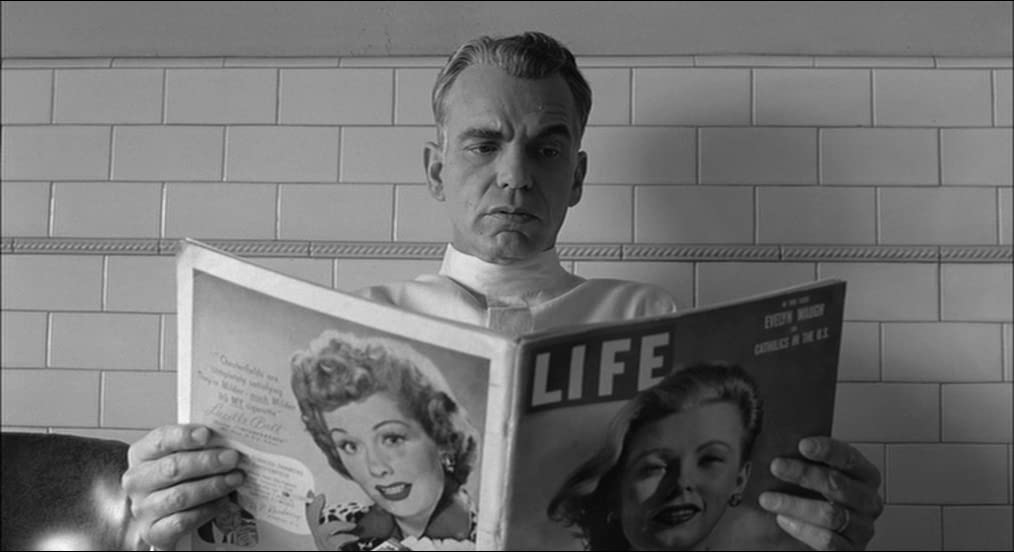
Melding a 1940s noir stylisation with a distant 1950s sense of atomic-age paranoia, this much underrated and underseen effort is not just the most imaginative of the Coen brothers' nihilistic investigations into the theme of accountability, but a subjective character study about a man seemingly content to drift through his own existence. Like the similarly underrated A Serious Man (2009), apathy is presented as a kind of hidden bliss here; the characters in both films only smited when they finally attempt to control their own destiny. A masterwork of dark irony, black comedy, and a peerless period aesthetic.
Over the Garden Wall
Over the Garden Wall [Various, 2014]:
Featuring beautifully crafted animation, endearing characters and a storybook narrative, Over the Garden Wall is a little masterpiece of perfectly balanced content and form. Created by Patrick McHale, the dark and often absurd sense of humour, the witty songs, the emotional maturity and the episodes of genuine surrealism (to say nothing of the thematically rich narrative, with its allusions to Dante's Inferno) all result in something that could almost be described as Twin Peaks for children.
Funeral in Berlin
Funeral in Berlin [Guy Hamilton, 1966]:
Director Guy Hamilton is both an underrated master and an underrated master of mise-en-scène, constantly enlivening every terse exchange or moment of surveillance with unique shot compositions and a remarkable use of location. The acerbic wit of Michael Caine's reluctant spy is a huge part of what makes the character so compelling here, as his “anti-Bond” Harry Palmer plays various sides off against one another, while seemingly doing nothing at all.
The Palmer films aren’t merely the “anti-Bond” because they present espionage without action or pyrotechnics, but because they have a greater cynicism about politics and the machinations and manipulations of world events. The titular setting here – grey Berlin, where the ravaged scars of the Second World War stand in contrast against the construction of concrete modernity – is a world away from Bond’s exotic islands and luxury manor houses, but it’s a fitting location for a story that pits the Israeli secret service against former Nazi war criminals, while agents from both sides of the Iron Curtain attempt to manipulate events to their own benefit.
The divided setting suggests the divided loyalty of characters and the people they work for, as interpersonal conflicts are given the same focus as political ones. The sequence where the coffin is transported across the border, and the play on perception and deceptions, seems a precursor to another of Hamilton's films, Live and Let Die (1971) and a reminder of an earlier one, The Party's Over (1964). A quietly complex espionage classic.
Prom Night
Prom Night [Paul Lynch, 1980]:
The last vestiges of the 1970s are all over this, with the constant soundtrack of disco floor fillers and phantasmagoria of star lights and saturated color seen during the titular prom. It's an aesthetic that shows an obvious debt of influence to Brian De Palma's earlier, hugely successful Stephen King adaptation, Carrie (1976). Like Carrie, there's also a tracking shot through a girls’ locker room here, but it's more chaste and less shocking in this context than the markedly more sensationalist take by De Palma. The thrum of the soundtrack and cross-cutting between dance and terror might also make this as much a precursor to Lucio Fulci's similarly disco themed slasher Murder Rock (1984) as it is to the more analogous likes of My Bloody Valentine (1981), Friday the 13th Part 2 (1981) or Terror Train (1980).
Slow and for a large part bloodless, many see this as bottom of the barrel stuff compared to Halloween (1978) and The Texas Chainsaw Massacre (1974), but I had a lot of fun with it. The third act especially is masterfully directed. A reminder that before the blockbuster boom of ‘80s slasher cinema (which focused more on elaborate deaths and gratuitous violence), many early slasher films were more concerned with themes of suppressed trauma and moral retribution. This is one of the saddest films of the sub-genre, haunted from the earliest scenes by the death of a child, and brought full circle with the eventual reveal of the killer's painful motives.
Saturday, 5 November 2022
Prison
Prison [Renny Harlin, 1987]:
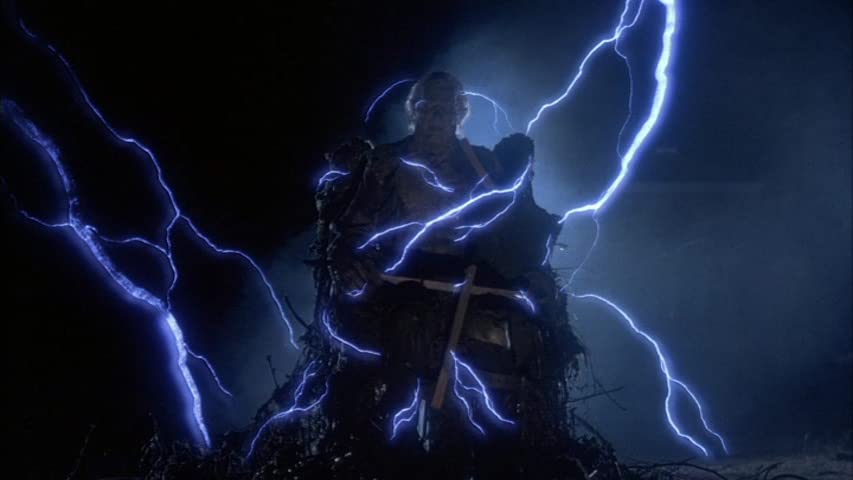
Part of a brief wave of horror films about murderers coming back from the dead after being executed in the electric chair, the blandly titled Prison, which has the distinction of being director Renny Harlin's first feature film produced in America, stands head and shoulders above its similarly themed competition, Destroyer (1988), Shocker (1989) and House III (aka The Horror Show, 1989), but that isn't itself much of an endorsement. Harlin's preferred brand of horror, at least as far as his later films, such as Deep Blue Sea (1999) and Mindhunters (2004) might suggest, tends to be of the old dark house tradition, albeit with the house transposed to an uncharacteristic setting, so in many ways this type of film is well within the director's wheelhouse.
To his credit, Harlin does well with the material. A lot of the supernatural sequences and the general tone of dreamlike unreality makes the film feel like the director's audition reel for the subsequent A Nightmare on Elm Street 4: The Dream Master (1988), but certainly the casting of a young Viggo Mortensen, veteran Lane Smith and a pre-fame Tommy Lister give Prison a bit of a pedigree. Tonally, the film certainly has some issues, being both too serious and grim in its violence and setting, but too hokey and often silly to take seriously as anything other than supernatural shlock.
FeardotCom
FeardotCom [William Malone, 20002]:
I have a real soft spot for director William Malone's earlier remake of House on Haunted Hill (1999) and that first run of films produced by Dark Castle Entertainment; the company set-up by producers Joel Silver, Robert Zemeckis and Gilbert Adler to release horror films with a distinctly old-fashioned flavor and lots of ornate style. Later films from the same company, such as Thirteen Ghosts (2001), Ghost Ship (2002) and House of Wax (2005), have a lot of nostalgic value attached to them for me, and Malone's subsequent film, this derided J-horror knock off, hits a lot of those same notes. This was a period when horror cinema was largely dismissed by critics, with few reviewers willing to look beyond the sensationalist violence and generic plots of these films to offer much in the way of serious analysis. Twenty years later and horror movies are now "elevated," with even the schlockiest of stuff being approached as if it's carrying some deep and rich social commentary.
FeardotCom certainly isn't rich in social commentary, but for me it does a lot of things that elevate it above it's mostly dismal reputation. Essentially both a gloomy serial killer procedural in the spirit of the superior Seven (1995) by David Fincher and a revenge tale about a haunted website (with more than a few hints to similarly better films like Ring (1998) and Pulse (2001) respectively), FeardotCom is a film that survives on the strength of aesthetics. The retro-futurist production design by Jérôme Latour and noir-ish cinematography by Christian Sebaldt give the film a look of authentic expressionism, which more than compensates for some of the ludicrous plotting and derivative psycho-shlock. The surprisingly talented cast includes Stephen Dorff and Natascha McElhone as the main protagonists investigating these strange deaths and their links to the titular website, while the often scenery-chewing support comes from Stephen Rea as a mad doctor, with Nigel Terry, Amelia Curtis, Jeffrey Combs and Udo Kier all appearing in extended cameos.
Thursday, 3 November 2022
The Crow: City of Angels
The Crow: City of Angels [Tim Pope, 1996]:
A famously contentious and much derided sequel to the popular but ill-fated comic book revenge film The Crow (1994). Noted post-production interference and re-cutting from the always problematic Harvey Weinstein and brother Bob may have played some part in the film's many narrative shortcomings, but there's no escaping that this is fundamentally a derivative and inferior copy of the first film in both plot and theme. Visually, it's sometimes striking – the hyper-saturated colors, urban hellscape and vibrant ‘Day of the Dead’ pageantry of the final third, is a contrast to the first film's goth monochrome – but this is a definite case of diminished returns. Tim Pope, a music video pioneer of the early 1980s, has proven himself a great filmmaker many times across his numerous videos for artists as varied as The Cure, Talk Talk, The The, Soft Cell, Neil Young and The Style Council, and should've been a great match for the material. A real tragedy then that he ended up tangled up with such a compromised effort.
Wednesday, 2 November 2022
Flashdance
Flashdance [Adrian Lyne, 1983]:
It's essentially a fairy-tale, and like most fairy tales there's an element of wish-fulfilment here around considerations of class and aspiration. Our protagonist, Alex - the industrial welder-by-day, exotic-dancer-by-night, who dreams of being accepted as a professional dancer at the Pittsburgh Conservatory of Dance and Repertory - is imprisoned by economic circumstances. She meets prince charming in the form of Nick, her boss at the steel mill where she works, and this becomes a means for escape. Unlike Cinderella however, Alex still works hard for her escape, giving the film a Rocky (1976) like aspirational quality, where we see (through extended musical montage) the journey and progression of the character as defined by her work. As a contemporary of filmmakers like Tony and Ridley Scott, director Adrian Lyne's commercial sensibilities and hyper-stylized approach to the varied dance sequences give the film an incredible visual identity. Critics at the time lazily termed this style "MTV cinema", but it's much closer to what French critics at the time termed "Cinéma du look," as the filmmaker's quick, rhythmical cutting, expressive scenes of emotional conflict, lived-in locations and extensive use of backlight and diffusion, really helped to establish a new language in American filmmaking, which dominated the next two decades.
Monday, 31 October 2022
Days of Thunder
What works is the action. The blur of color and movement as cars jockey for position, the thrum of engines, the sound of tires screeching. It’s in the thrill of the race - the rush of noise and movement - that the film springs to life, proving a technical tour de force for director Tony Scott and his crew. What doesn’t work is everything else. The dull protagonist, the unconvincing romance, the generic rivalries turned into friendships.
As screenwriter, Robert Towne can’t decide if he wants the film to be a straight rags-to-riches racing drama, a knockabout study on male ego and the rivalries between men, a sombre medical drama in which characters overcome trauma, a redemption story for a character haunted by past mistakes, or a generic love story ripped from the cheapest of daytime soap opera.
The screenplay sets all these different elements against one another in the most predictable way possible, and rather than develop them into a coherent narrative or character study, merely watches them go around a few laps, like these cars on a race track. It feels like a succession of scenes that were written the night before the shoot and survived the final cut due to the insistence of Paramount’s publicity department. By no means terrible, but definitely a film in conflict with itself.
Saturday, 29 October 2022
Eye for an Eye
Eye for an Eye [John Schlesinger, 1996]:
If you’ve ever wondered what a late Michael Winner film might look like if it was produced with "prestige film" talent, then look no further than this. Everyone here is doing exceptional work - especially the starry cast, who commit entirely to the complexity of their individual characters, as well as grappling with the sensitivities of the plot - however, despite the hard work of all involved, the film is no less morally questionable or manipulative in its sensationalist pandering to fears around violent crime and justifications of vigilantism as something like Death Wish II (1982) or Dirty Weekend (1993). Disappointing for a filmmaker of John Schlesinger’s great talent.
The Presidio
The Presidio [Peter Hyams, 1988]:
A serviceable conspiracy thriller from director and cinematographer Peter Hyams - a dependable journeyman of such films as Capricorn One (1978), Outland (1981), 2010: The Year We Make Contact (1984) (an early example of what is now known as a "legacy sequel"), Time Cop (1994), Sudden Death (1995) and End of Days (1999), among others. Hyams tends to get overlooked by the contemporary movie culture, enraptured as it is by the lure of the autocratic auteur. I suspect this particular film might’ve retained more of a legacy had original co-star Kevin Costner not backed out, but it's still provides decent entertainment value. As criticism, the courtship between the characters played by Mark Harmon and Meg Ryan, and the complications this creates between our protagonists, Harmon and Sean Connery (the father of Ryan's character), is somewhat predictable, but the mix of murder mystery, action movie and lament of old soldiers still carries some weight. Similarly, the San Francisco setting (much of it fogbound) provides a great atmosphere.
Sliver
Sliver [Phillip Noyce, 1993]:
I've often felt there was a fine line between Hollywood's cycle of 1990s erotic thrillers and Italy's cycle of 1970s giallo movies, which might explain why I'm so fascinated by the sub-genre of films like Shattered (1991), Basic Instinct (1992), Final Analysis (1992), Striking Distance (1993), Color of Night (1994) and Jade (1995). These films, many of them critically derided, have a surface of contemporary Hitchcockian mystery, but are more often closer in tone to the lurid, psychosexual thrills of films like A Lizard in a Woman's Skin (1971), Black Belly of the Tarantula (1971), Death Walks on High Heels (1971), Your Vice is a Locked Room and Only I Have the Key (1972), The Perfume of the Lady in Black (1974) and Deep Red (1975), among others.
For all the Hitchcockian pretentions on voyeurism and dehumanisation present in this slick thriller from director Phillip Noyce and screenwriter Joe Eszterhas, this psycho-killer loose in a modern high-rise movie is much closer to The Case of the Bloody Iris (1972) than it is to Rear Window (1954). Sharon Stone, an icon of this particular sub-genre of films and an underrated actor in her own right, is an engaging presence as the protagonist, Carly Norris, a successful, thirtysomething career woman who takes on a luxury apartment where the last tenant, an apparent doppelgänger for Carly, allegedly committed suicide.
Sliver [Phillip Noyce, 1993]:
There are shades of Roman Polanski here, specifically The Tenant (1976), though the connection might rest with Ira Levin, who as well as writing the book that Sliver is based on, also wrote the source material for the Polanski directed Rosemary's Baby (1968). Noyce's direction is stylish in a sleek, typically 90s manner, accentuating the bland and empty surfaces of these modern apartments and the disconnect between tenants (where their lives play out on fuzzy black and white video monitors as entertainment for a potentially voyeuristic killer.)
Sliver hits a lot of the right notes for this kind of film, which is well made on a technical level, but it's undoubtedly flawed by the fatal miscasting of both the male leads, as well as the fact that the motivations of the characters are dully predictable. Essentially, Noyce's film lacks a compelling enough hook to give weight to its scenes of surveillance and investigation. That it toys with the self-reflexive relationship between the viewer and the viewed is interesting, but there needed to be more of an emotional connection with the character and a stronger sense of mystery to draw the audience in. When you have a murder mystery where the identity of the killer becomes obvious from the first scene, and there is no misdirection or red herrings to provide a distraction, then the result is something that feels very plodding and predictable.
La Prisonnière
Redolent of the kinetic art that plays such a large role in the film and the lives of its characters. In theme, it's like the missing link between Buñuel's Belle de jour (1967) and Tsukamoto's A Snake of June (2002): as in another film about repressed female desire finding expression through sadomasochist fantasy; albeit, once again from a "male gaze" perspective. Either this or it's Clouzot's quietly unsettling take on the themes of Beauty and the Beast, where a woman falls under the spell of a monster and attempts to change him. The psychedelic climax is extraordinary cinema.
In many ways, this final work is an example of Clouzot reusing the plot points and aesthetic experimentation that he'd planned to use in his unfinished film, L'Enfer (begun in 1964 but abandoned after Clouzot suffered a heart attack three weeks into the shoot.) Élisabeth Wiener is excellent in the lead role here, backed by great support from the small ensemble, which includes Bernard Fresson, Dany Carrel and Laurent Terzieff.
Every element of the film is loaded with symbolism and significance. The apartment with the shutters down, suggesting the closed-off repression of the suburban couple soon to have their lives disrupted; the emphasis on kinetic art, which, like the film, are effectively aesthetic objects that transform reality; the motif of mirrors and refracted windows that distort the perspective of the audience to match the distorted perspective and warped outlook of the central characters; the commentary on mass produced art and the commodification of human expression; the themes of voyeurism and objectification, both in art and desire; to say nothing of the premonitions of death and transfiguration, which are hinted throughout.
Beverly Hills Cop III
In the same way that Beverly Hills Cop II (1987) was unmistakably "a film by Tony Scott," Beverly Hills Cop III is unmistakably "a film by John Landis." Cars smashing into each other, Motown music numbers, vaudeville-level skits, directors’ cameos and a flat, presentational filming style, which resembles early Hollywood slapstick, are characteristics here. The plot is thin, but if anything lets the film down it's Murphy. He's the weak link here, delivering a performance that’s less the detective Axel Foley we know and love from Beverly Hills Cop and more a bored version of himself. Murphy told Landis he wanted to play the role as more sensible and subdued, as if the character had mellowed with age, but this translates into a performance that's mostly on auto-pilot.
Nonetheless, I don’t think this is as bad as most people consider it. It’s certainly not the worst film Landis directed during this period, and despite his shortcomings as a person, he nevertheless remains a talented action director who shoots gunfights like he’s directing a 1930s western (a compliment.) A filmmaker like Joe Dante or Tim Burton probably would’ve done more with the Disneyland-like setting, using it to satirize the generic escapism and rollercoaster-ride nature of franchise cinema, but for Landis it’s just an opportunity for spectacle and broad visual humor. Bronson Pinchot returns briefly as Serge (the gallery manager from the first film) and practically steals the show.
Beverly Hills Cop II
From the first scene, the tonal and aesthetic contrast between this film and its 1984 predecessor, is striking. The first Beverly Hills cop began with an upbeat pop song, which established a knockabout tone of mainstream entertainment, while also providing an ironic counterpoint to the film's opening montage of Detroit and its areas of economic adversity. From here, director Martin Brest launched into an introductory sequence that defined the film's effortless combination of action and character-comedy. It was a sequence that told us everything we needed to know about the central character, Eddie Murphy's fast-talking detective Axel Foley, while in turn setting up the clash of cultures between this blue collar professional and the world of greed, affluence and criminality that the titular location comes to represent.
Rather than begin with a similar scene of comic action, this sequel, directed by the unsung Tony Scott, begins with a percussive soundtrack over color-tinted images of downtown Beverly Hills, before launching unexpectedly into a violent jewelry robbery. The imagery, which was unfussy and presentational in Brest's film, is now heavily backlit, with deep shadows and a careful approach to composition. The cuts are short but match the rhythm of the music. The art direction and costume design stress style, glamour and decadence over functionality. It's a sequence of remarkable filmmaking ingenuity and proof of Scott's total command of the filmmaking elements. It's just unfortunate that such intelligent stylizations are often wasted here on a weak and derivative script.
The problems with Beverly Hills Cop II are manifest. On one side we have Scott directing a high-art heist movie that recalls the works of the “cinema du look” [where he applies the same incredible audio-visual aesthetics of his earlier film, The Hunger (1983), to a proper action movie], while on the opposite side we have a derivative sequel to Beverly Hills Cop almost intruding on this other, more interesting narrative. The script for the latter seems barely there and exists as a loose template for Murphy to improvise around. The same scenes and scenarios from the first film reoccur, giving this film an over-familiar quality. But everything about this new installment has been beefed-up and dumbed-down, resulting in a Beverly Hills Cop film that tries to play to the same audiences as Commando (1985) and Rambo: First Blood Part II (1985). A not uneasy mix of elements.
Beverly Hills Cop
While it's disguised as an action-comedy (and a very good one), it wouldn't be unreasonable to say Beverly Hills Cop is more accurately a culture clash study on class relations, where blue-collar cop Axel Foley navigates the false fantasia of Beverly Hills and comes out on top. Every setting and scenario invites the audience to jeer and sneer at a community that hides corruption and inequality behind an elite surface. It doesn’t go so far as to become satire, but it's not merely escapism.
Here, the film could be seen as a companion piece of sorts to that other Jerry Bruckheimer production of the early 1980s, American Gigolo (1980), in the sense that Axel Foley, like the protagonist Julian Kay from the Paul Schrader film, is a working-class character navigating a world that he inherently doesn't belong to. He's there to provide a service, playacting roles and scenarios in order to plausibly navigate certain situations. The fake surface of the city becomes a carnival mirror, further alienating the protagonist by confronting him with its perpetual elitism, class bigotry and big money criminality.
That many of the film’s interactions are with people in the service industry isn’t accidental. Reception staff, waiters, valets, maître d's, cops, exotic dancers, gallery assistants. These are the invisible people that make the fantasia of Beverly Hills possible. They exist there only in the sense that they provide a service. They work to belong.
We can delight at Murphy’s incredible performance - which is absolutely tailored to his unique, comic skillset - but the film offers more than just the surface delivery of its admittedly engaging elevator pitch. From the opening montage of Detroit’s areas of economic decline, contrasted with the later montage of Beverly Hills opulence, to breaking up the party at elite social clubs and a literal raid on a mansion, the film is pushing its (playful) attack on systems of inequality for the benefit of its largely working-class audience.
Friday, 28 October 2022
My Bloody Valentine
My Bloody Valentine [George Mihalka, 1981]:
The valentine’s Day theme may have been better suited to a high school setting, closer to a film like Prom Night (1980) or April Fool's Day (1986) for example, so placing this in the confines of a blue-collar mining community with a backstory about a cursed town steeped in tragedy is certainly a choice. The identity of the killer seems like an afterthought here (I'm not convinced the twist stands up to much scrutiny, though a re-watch might be in order) but as an early example of the slasher genre this does a lot of things well. The use of the mine provides great production value and authenticity, and there are some really terrifying murder sequences, which take full advantage of the killer's incongruous and imposing look.
Intersection
Intersection [Mark Rydell, 1994]:
A largely forgotten remake of Les Choses de la vie (1970) by Claude Sautet (forgotten, despite featuring a stellar cast of then superstars: Richard Gere, Sharon Stone, Lolita Davidovich and Martin Landau specifically), Intersection seemed to be released at a curious intersection in 90s cinema. Its tone and aesthetics are very much in step with the cycle of post-Jagged Edge (1985), post-Fatal Attraction (1987) thrillers from the early 1990s, such as Shattered (1991), Dead Again (1991), Basic Instinct (1992), Final Analysis (1992) and others - films that wove themes of crisis and infidelity around mostly affluent characters, and used them to indulge in thrillers that often weren't very thrilling, but rather oddly dreamlike - however, it was released in competition with films like Pulp Fiction (1994) and Clerks (1994). The culture was moving on from this kind of adult contemporary cinema and embraced the comparatively more vibrant and profane works of a new generation, and as such Intersection received almost entirely negative reviews and sank like a stone into the dark waters of cultural oblivion.
The general criticisms of the film from the time seem fair; Gere's character isn't sympathetic and his life crisis at the center of the drama comes from a place of entitlement and egotism. It's difficult to follow this character on an existential journey when nothing beyond the vagaries of life and death are ever really at stake. That said, I found the strange scene towards the end of the film, in which the protagonist meets what could be, figuratively or even literally, himself as an old man (complete with a granddaughter modelled on his latest mistress) to be so fascinating and quietly surreal in nature that it brought together the various themes of the film and elevated the third act.
Subscribe to:
Comments (Atom)
Schalcken the Painter (1979)
Schalcken the Painter [Schalcken the Painter [Leslie Megahey, 1979]: This is a film I first saw around four years ago. At the time I found...
-
Schalcken the Painter [Schalcken the Painter [Leslie Megahey, 1979]: This is a film I first saw around four years ago. At the time I found...
-
In discussing the brief snippet from the ever contentious Uwe Boll's no-doubt harrowing new film Auschwitz (2011) - particularly the way...
-
In an earlier post regarding the DVD release of the Mike Leigh at the BBC box-set, I described this particular film, Nuts in May (first broa...