Saturday, 31 August 2024

Schalcken the Painter (1979)

Schalcken the Painter [Schalcken the Painter [Leslie Megahey, 1979]:


This is a film I first saw around four years ago. At the time I found it slightly disappointing, especially compared to some of the other BFI Flipside titles released for the same genre. I’d expected a more cinematic horror film, like later Flipside titles, Symptoms (1973) and The Appointment (1982), whereas this is very much a TV production in scale and scope.

As such, it’s limited by its exclusive use of studio interiors and lack of establishing shots, which gives the film a very stagey, hermetic quality. It also fumbles its biggest horror set piece by having lead actor Jeremy Clyde show terror in an artificial, slightly pantomimic fashion, which struck me as unintentionally amusing (and as such robbed the sequence in question of its power to shock and unnerve.)

However, a recent rewatch of the film without those earlier expectations made me appreciate it a great deal more. It’s a slow, sombre film with incredible period aesthetics and a restless nocturnal mood. The whole film feels almost suspended, as if the characters are sleepwalkers passing through a nighttime reverie; an eternal ‘dark night of the soul’, where the themes of guilt, betrayal, unrequitable desire, temptation and the certainty of death, haunt the characters like ghosts in the shadows.


Schalcken the Painter [Leslie Megahey, 1979]: 

Made for the TV series ‘Omnibus,’ Megahey’s film is based on an 1839 short story by Sheridan Le Fanu, ‘Strange Event in the Life of Schalken the Painter.’ At first glance, it’s a film that feels very much akin to the kind of stylised arts docudramas pioneered by Ken Russell for the BBC. And yet, it has a tone and a subject matter much closer to the films that Lawrence Gordon Clark produced for the long running ‘A Ghost Story for Christmas’ series.

Having first aired on the BBC on the 23 December 1979, Megahey’s film is an unofficial part of the same tradition of ghost stories for Christmas, though its blending of fact and fiction, as well as its intentionally more restrained and stilted direction, gives it a very different tenor to a film like A Warning to the Curious (1972) or The Signalman (1976).

Esteemed actor Charles Gray voices Le Fanu and his dry, objective delivery helps to establish the historical basis of the film as well as the biographical backgrounds of the various characters. The film is fiction, but it maintains a tone of factual reportage, weaving figures and details from real life into the escalating horror, which gives an illusion of plausibility to the later instances of the supernatural or the unexplained.


Schalcken the Painter [Leslie Megahey, 1979]:


The period detail is exceptional, with many shots functioning as pictorial recreations or references to the Dutch masters in both design and mise-en-scene. The design of the fashionable home of Schalcken’s mentor Gerrit Dou, as well as the flat compositions and the emphasis on framing through open doorways, each recall the paintings of Johannes Vermeer, while the scenes outside the house employ the chiaroscuro lighting of Rembrandt van Rijn.

The Flipside release features in-depth interviews with writer and director Leslie Megahey (who passed away in 2022) and cinematographer John Hooper, which cover the background and production of the film. In the great BFI tradition, the release also contains two short films that explore similar themes of the Gothic and the fantastique: The Pit (1962) and The Pledge (1981)

Saturday, 17 August 2024

Elvis (2022)

Elvis [Baz Luhrmann, 2022]:


If we think of the image of Presley slumped in his penthouse suite, catatonic on a cocktail of hamburgers and prescription pills, with his bank of television screens blazing through the darkness, we get a close approximation of the experience and presentation of Luhrmann’s Elvis – a flashy speed-run through a century of American pop cultural history.

Rather than depict a linear presentation of Presley’s life, Luhrmann gives us a disorganized montage of competing scenes, sounds, events and images, all cut together as if we’re channel surfing (or as if our attention is being pulled in several different directions from one scene to the next.) The whole film feels as if each scene is being broadcast individually and simultaneously across a wall of television monitors, and we, as the audience, are having to scan from screen to screen then back again; the disorienting cacophony of sounds all mixed and remixed as if we’re hearing everything all at once and are left to pick out snippets of conversations, music, voices, until they’re drowned out again, or our attention focuses on something else.

On a level of technique this all sounds audacious, reminiscent (on paper at least) of the experimental approach Oliver Stone brought to his earlier films, JFK (1991) and Nixon (1995). Unfortunately, Luhrmann lacks the focus of Stone as well as his depth and conviction. While he throws everything at his multi-media recreation of Elvis as pop cultural icon, it’s not exactly clear what the point of it all is?


 Elvis [Baz Luhrmann, 2022]:


One could use Presley as a lens through which to explore the changing landscape of pop culture, race and popular music. There’s a bit of that here, but not as much as you might expect for a film running close to three-hours. You could also look at the story more cynically, presenting Elvis as the establishment’s sock puppet (whose stage-managed persona and ‘scandalous’ hip shaking distracted the masses from the uncomfortable realities of the civil rights movement, the Korean war, the assassination of activists, presidents and presidential candidates, the war in Vietnam and the Watergate scandal). Luhrmann attempts to broach a bit of this as well, but he’s 1) too enamored with Presley as an artist to not view his role in this sympathetically, and 2) shifts the focus of the film in too many conflicting directions for any of it to land.

For instance, there’s no reason for the film to be told from the perspective of Presley’s manager, ‘Colonel’ Tom Parker. The film presents Parker as the villain, but also allows Parker to present himself as a victim; giving the film an unnecessary conflict between what we see and what we’re told. We get the sense that Luhrmann wants the audience to feel as manipulated and lied to by Parker as Presley must have done in real life, but we don’t really need this, do we? We don’t need this additional level of self-reflection in which Parker gaslights the audience, while the audience becomes a witness to how monstrously Parker manipulates his star. It feels like Luhrmann is going for a kind of Citizen Kane (1941) rewritten by Brett Easton Ellis, but he can’t quite pull it off (it doesn’t help that Hanks as Parker is delivering one of the worst performances of the decade here.)


 Elvis [Baz Luhrmann, 2022]:


In this context, the end of the film and how the message is framed feels like insulting bullshit. Luhrmann gives Parker a platform to say it was “love that killed Elvis,” despite the obvious evidence that Presley was killed by his manager and handlers locking him into a punishing contract and schedule, allowing him to become estranged and alienated from any outside support network in order to better milk him as a cash cow, and then getting hooked on junk food and prescription meds. But none of this background matters for Luhrmann, as he ends the film with a montage of the real-life Presley, fully enshrined as a genuine icon, a legend, and not as another victim of the merciless entertainment industry (like Judy Garland or countless others) who was chewed up and exploited for financial gain.

So, what is Elvis for Luhrmann? What drew him to this project beyond a surface level idolization of Elvis and his work? I think the key is in the sequence depicting the production of the so-called ‘1968 Comeback Special.’ It’s here where the film finally snaps into focus, and we get a clear sense of what this all means for Luhrmann. The deconstructive, behind-the-scenes, film-within-a-film aspect of the special; the fourth-wall-breaking, ‘putting on a show’ spectacle of it all; the idea of Elvis as artist (or Elvis as Luhrmann), defying the expectations of his manager and the suits and the corporate sponsors; the idea of authenticity, of the pop star straining not just for artistic expression, but straining to be the voice of a people, to use his pop platform, his voice, his ‘gift’, to say something meaningful, to become protest personified.


 Elvis [Baz Luhrmann, 2022]:


It’s a dazzling sequence for Luhrmann and becomes a kind of ‘Rosetta stone’ for the rest of the film, reflecting and refracting seventy years of pop culture history, enfolding the histories of gospel, rock n’ roll, punk rock, hip hop, theatrical performance and more onto the artifice of Hollywood spectacle; onto the format of the musical; on German expressionism; on the music video. All of it mixed and remixed, as Elvis transcends his role as pop star to become a focal point for American history; his voice expressing on behalf of all voices; his pain becoming our pain; his defiance becoming our defiance.

Again, it’s bullshit, and no less insulting than allowing a proxy Tom Parker to say Elvis was “killed by love,” but it’s the kind of bullshit Luhrmann frequently gets away with, 1) because these kind of sequences (both the ‘68 special and the later scenes involving Presley’s residency in Las Vegas) play exceptionally well to his style of multi-media, cinematic bricolage, and 2) because we get a sense he actually believes it.

Tuesday, 8 November 2022

Eve's Bayou

Eve's Bayou [Kasi Lemmons, 1997]:

A tremendous feature debut from actor turned writer and director Kasi Lemmons. The mood here is slow and sombre, perfectly evoking the sense of an endless, oppressive summer, which feels conjured from a half-remembered childhood, where parental disillusionment and the shadow of death have become distorted by superstition and the supernatural. One of the key films about the home, about family, and about how the foundations of both can be rocked by circumstances. The scene where Debi Morgan’s character re-lives the murder of her first husband as it plays out in the reflection of a mirror, then turns, physically entering the memory itself, is Tarkovsky-level directing. Morgan throughout is incredible and imbues the moments of the supernatural with a genuine emotional plausibility.

Friday the 13th

Friday the 13th [Sean S. Cunningham, 1980]:

While not a great piece of cinema in the conventional sense, the stature of Cunningham's film is really elevated above other the icons of the slasher sub-genre by virtue of its third act reveal. The psychological and sociological implications of the killer's identity provide an emotional weight and dramatic complexity too often missing from films of this nature. Further, the appropriation of influences, from Mario Bava to John Boorman's film of Deliverance (1972), are applied incredibly well.

What’s fascinating about Friday the 13th, perhaps more so than films like Halloween (1978), Prom Night (1980) or My Bloody Valentine (1981) is that it almost becomes a cinematic Rorschach test. If you’re a liberal, you might see it as a film about youth being punished by the older generation for the perceived sin of enjoying themselves. If you’re a conservative, then you might see it as a retribution against the amoral, out-of-control youth debasing themselves and American family values. It's a film that taps into the politics of the late 1970s and early 1980s, as well as the cultural mood of the era.


Friday the 13th [Sean S. Cunningham, 1980]:

The context is vague and indirect, but still apparent enough that it can be read into the development of the characters and the themes of the film: i.e. loss of innocence, parental responsibility and wayward youth (as well as the usual horror film connotations to voyeurism and objectification, sex and death, which are all apparent themes.) Similarly, the isolation of the setting as both a physical and metaphysical space, the nightmare of the final girl, the way fear creates wounds, the rebirth of the character “Jason” as he emerges from his watery grave to wreak havoc across further sequels, all seem (intentionally or not) self-reflexive.

More than anything the film also provides something of a reminder that early slasher films were essentially "a vibe." Later, there was an expectation that someone had to die on every third page of the screenplay, but here, as in Halloween, or something like Bava's proto-slasher film A Bay of Blood (1971), the film is content to luxuriate in the atmosphere of its lakeside setting, in the dumb teen preoccupations and concerns of its characters, and in the comings and goings of the staff attempting to get the summer camp up and running. 

The Man Who Wasn't There

The Man Who Wasn't There [Joel & Ethan Coen, 2001]:

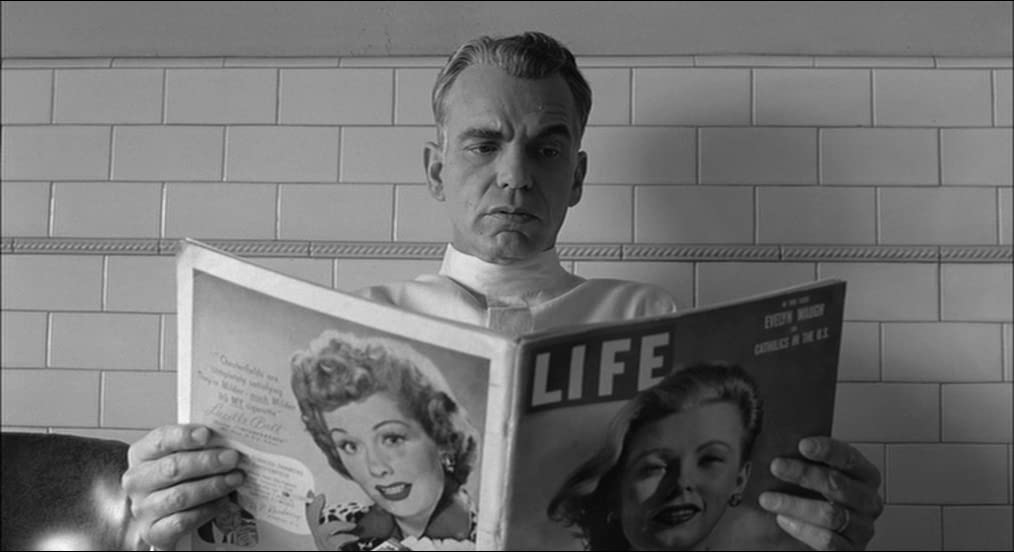
Melding a 1940s noir stylisation with a distant 1950s sense of atomic-age paranoia, this much underrated and underseen effort is not just the most imaginative of the Coen brothers' nihilistic investigations into the theme of accountability, but a subjective character study about a man seemingly content to drift through his own existence. Like the similarly underrated A Serious Man (2009), apathy is presented as a kind of hidden bliss here; the characters in both films only smited when they finally attempt to control their own destiny. A masterwork of dark irony, black comedy, and a peerless period aesthetic.

Over the Garden Wall

Over the Garden Wall [Various, 2014]:

Featuring beautifully crafted animation, endearing characters and a storybook narrative, Over the Garden Wall is a little masterpiece of perfectly balanced content and form. Created by Patrick McHale, the dark and often absurd sense of humour, the witty songs, the emotional maturity and the episodes of genuine surrealism (to say nothing of the thematically rich narrative, with its allusions to Dante's Inferno) all result in something that could almost be described as Twin Peaks for children.

Funeral in Berlin

Funeral in Berlin [Guy Hamilton, 1966]:

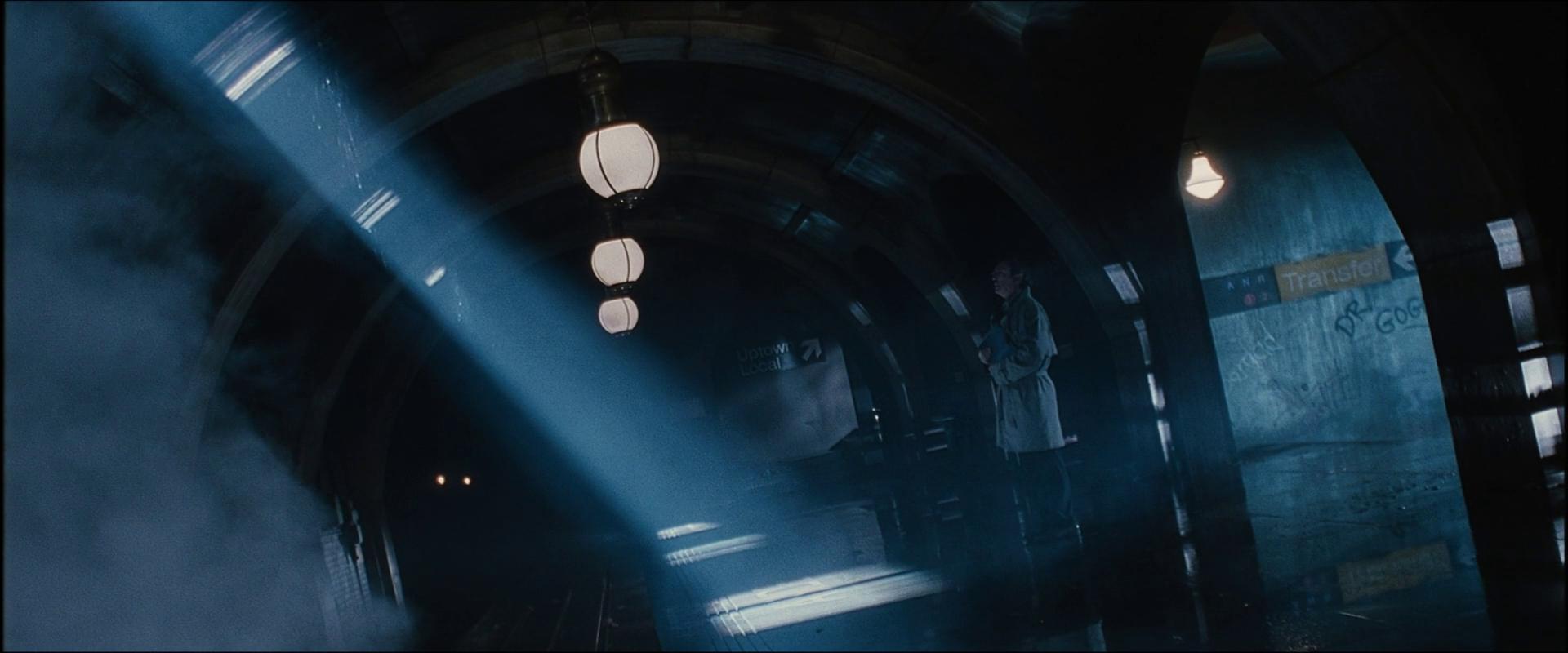
Director Guy Hamilton is both an underrated master and an underrated master of mise-en-scène, constantly enlivening every terse exchange or moment of surveillance with unique shot compositions and a remarkable use of location. The acerbic wit of Michael Caine's reluctant spy is a huge part of what makes the character so compelling here, as his “anti-Bond” Harry Palmer plays various sides off against one another, while seemingly doing nothing at all.

The Palmer films aren’t merely the “anti-Bond” because they present espionage without action or pyrotechnics, but because they have a greater cynicism about politics and the machinations and manipulations of world events. The titular setting here – grey Berlin, where the ravaged scars of the Second World War stand in contrast against the construction of concrete modernity – is a world away from Bond’s exotic islands and luxury manor houses, but it’s a fitting location for a story that pits the Israeli secret service against former Nazi war criminals, while agents from both sides of the Iron Curtain attempt to manipulate events to their own benefit.

The divided setting suggests the divided loyalty of characters and the people they work for, as interpersonal conflicts are given the same focus as political ones. The sequence where the coffin is transported across the border, and the play on perception and deceptions, seems a precursor to another of Hamilton's films, Live and Let Die (1971) and a reminder of an earlier one, The Party's Over (1964). A quietly complex espionage classic.

Prom Night

Prom Night [Paul Lynch, 1980]:

The last vestiges of the 1970s are all over this, with the constant soundtrack of disco floor fillers and phantasmagoria of star lights and saturated color seen during the titular prom. It's an aesthetic that shows an obvious debt of influence to Brian De Palma's earlier, hugely successful Stephen King adaptation, Carrie (1976). Like Carrie, there's also a tracking shot through a girls’ locker room here, but it's more chaste and less shocking in this context than the markedly more sensationalist take by De Palma. The thrum of the soundtrack and cross-cutting between dance and terror might also make this as much a precursor to Lucio Fulci's similarly disco themed slasher Murder Rock (1984) as it is to the more analogous likes of My Bloody Valentine (1981), Friday the 13th Part 2 (1981) or Terror Train (1980).

Slow and for a large part bloodless, many see this as bottom of the barrel stuff compared to Halloween (1978) and The Texas Chainsaw Massacre (1974), but I had a lot of fun with it. The third act especially is masterfully directed. A reminder that before the blockbuster boom of ‘80s slasher cinema (which focused more on elaborate deaths and gratuitous violence), many early slasher films were more concerned with themes of suppressed trauma and moral retribution. This is one of the saddest films of the sub-genre, haunted from the earliest scenes by the death of a child, and brought full circle with the eventual reveal of the killer's painful motives.

Saturday, 5 November 2022

Prison

Prison [Renny Harlin, 1987]:

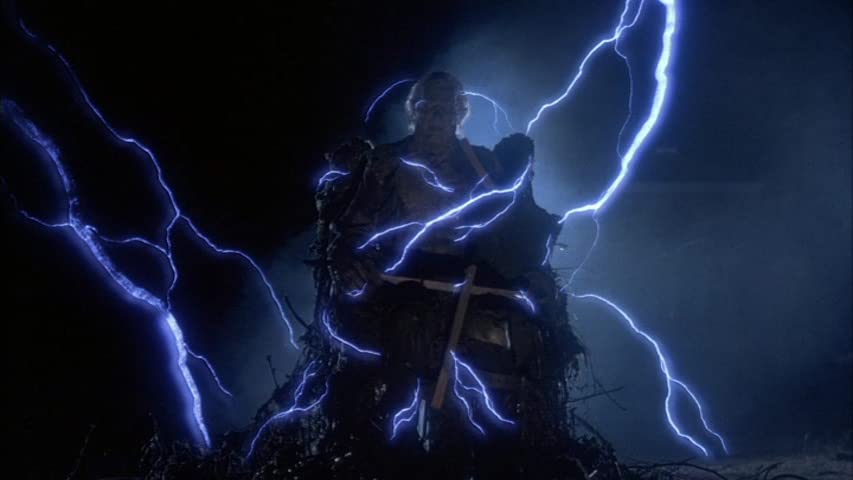
Part of a brief wave of horror films about murderers coming back from the dead after being executed in the electric chair, the blandly titled Prison, which has the distinction of being director Renny Harlin's first feature film produced in America, stands head and shoulders above its similarly themed competition, Destroyer (1988), Shocker (1989) and House III (aka The Horror Show, 1989), but that isn't itself much of an endorsement. Harlin's preferred brand of horror, at least as far as his later films, such as Deep Blue Sea (1999) and Mindhunters (2004) might suggest, tends to be of the old dark house tradition, albeit with the house transposed to an uncharacteristic setting, so in many ways this type of film is well within the director's wheelhouse.

To his credit, Harlin does well with the material. A lot of the supernatural sequences and the general tone of dreamlike unreality makes the film feel like the director's audition reel for the subsequent A Nightmare on Elm Street 4: The Dream Master (1988), but certainly the casting of a young Viggo Mortensen, veteran Lane Smith and a pre-fame Tommy Lister give Prison a bit of a pedigree. Tonally, the film certainly has some issues, being both too serious and grim in its violence and setting, but too hokey and often silly to take seriously as anything other than supernatural shlock.

FeardotCom

FeardotCom [William Malone, 20002]:

I have a real soft spot for director William Malone's earlier remake of House on Haunted Hill (1999) and that first run of films produced by Dark Castle Entertainment; the company set-up by producers Joel Silver, Robert Zemeckis and Gilbert Adler to release horror films with a distinctly old-fashioned flavor and lots of ornate style. Later films from the same company, such as Thirteen Ghosts (2001), Ghost Ship (2002) and House of Wax (2005), have a lot of nostalgic value attached to them for me, and Malone's subsequent film, this derided J-horror knock off, hits a lot of those same notes. This was a period when horror cinema was largely dismissed by critics, with few reviewers willing to look beyond the sensationalist violence and generic plots of these films to offer much in the way of serious analysis. Twenty years later and horror movies are now "elevated," with even the schlockiest of stuff being approached as if it's carrying some deep and rich social commentary.

FeardotCom certainly isn't rich in social commentary, but for me it does a lot of things that elevate it above it's mostly dismal reputation. Essentially both a gloomy serial killer procedural in the spirit of the superior Seven (1995) by David Fincher and a revenge tale about a haunted website (with more than a few hints to similarly better films like Ring (1998) and Pulse (2001) respectively), FeardotCom is a film that survives on the strength of aesthetics. The retro-futurist production design by Jérôme Latour and noir-ish cinematography by Christian Sebaldt give the film a look of authentic expressionism, which more than compensates for some of the ludicrous plotting and derivative psycho-shlock. The surprisingly talented cast includes Stephen Dorff and Natascha McElhone as the main protagonists investigating these strange deaths and their links to the titular website, while the often scenery-chewing support comes from Stephen Rea as a mad doctor, with Nigel Terry, Amelia Curtis, Jeffrey Combs and Udo Kier all appearing in extended cameos.

Thursday, 3 November 2022

The Crow: City of Angels

The Crow: City of Angels [Tim Pope, 1996]:

A famously contentious and much derided sequel to the popular but ill-fated comic book revenge film The Crow (1994). Noted post-production interference and re-cutting from the always problematic Harvey Weinstein and brother Bob may have played some part in the film's many narrative shortcomings, but there's no escaping that this is fundamentally a derivative and inferior copy of the first film in both plot and theme. Visually, it's sometimes striking – the hyper-saturated colors, urban hellscape and vibrant ‘Day of the Dead’ pageantry of the final third, is a contrast to the first film's goth monochrome – but this is a definite case of diminished returns. Tim Pope, a music video pioneer of the early 1980s, has proven himself a great filmmaker many times across his numerous videos for artists as varied as The Cure, Talk Talk, The The, Soft Cell, Neil Young and The Style Council, and should've been a great match for the material. A real tragedy then that he ended up tangled up with such a compromised effort.

The Sea Shall Not Have Them

The Sea Shall Not Have Them [Lewis Gilbert, 1954]:

A rousing, men on a mission survival drama, which essentially cross-cuts two stories of wartime bravery, one involving the crew of an RAF Air Sea Rescue boat, the other involving the crew of a downed bomber stranded in a dinghy in the North Sea. Director Lewis Gilbert, who co-wrote the screenplay with Vernon Harris, uses the inherent conflicts and contrasts of the situation to document the minutiae of the RAF crew (the ranks and hierarchies) while engaging in scenes of intimate human drama. It's a great ensemble piece with some never-gratuitous gallows humor.

Death Becomes Her

Death Becomes Her [Robert Zemeckis, 1992]:

More so than the excessively deconstructive and indulgent Back to the Future Part II (1989), this macabre screwball fantasy occupies the same place in the filmography of director Robert Zemeckis that the similar unhinged and aggressively non-commercial Indiana Jones and the Temple of Doom (1984) did for his friend Steven Spielberg. It's an example of an otherwise fairly "safe" or mainstream filmmaker abandoning good taste and sensibility to instead indulge in the unbridled quirks and eccentric influences that had been suppressed from his previous efforts. Tonally, Death Becomes Her isn't a million miles removed from the director's earlier Who Framed Roger Rabbit (1988), but it's pitched at a markedly more adult audience potentially attuned to its specific influences.

The screenplay by Martin Donovan and David Koepp is referential to everything from old dark house horror serials of the 1930s (with its mysterious female antagonist, its hints of exoticism, its elixir of life and its scenes of Bruce Willis evoking something of a Dr. Frankenstein-like mad scientist) to the camp melodrama and toxic sparring of All About Eve (1950) or What Ever Happened to Baby Jane? (1962). There's a barnstorming musical number which begins the film (again, as in in Temple of Doom), a lot of allusions to film noir and the works of Alfred Hitchcock, a sequence modeled on the film One Flew Over the Cuckoo's Nest (1975) and a general tone that feels very much akin to a series Zemeckis was producing during this period, Tales from the Crypt (1989-1996). It's also a kind of farcical body horror about death and the deterioration of the human body, making it almost a zombie movie, though no character ever uses the word.

The special effects, which were groundbreaking at the time of the film's release, are still exceptional, but it is that morbid, Tales from the Crypt style humor and the willingness of the entire cast to commit to these wild tonal shifts that really impresses. Meryl Streep and the aforementioned Willis in particular are fantastic and deliver some of the funniest exchanges, but they're well supported by Goldie Hawn and an enchanting Isabella Rossellini. There's also a very funny cameo from film director Sydney Pollack as an emergency room doctor. Zemeckis can be an odd filmmaker to grapple with given the many faces and facets of his career, and Death Becomes Her is an odd fit even for him. It doesn't quite connect to his run of 1980s blockbusters, nor to his subsequent turn to serious dramas with Forrest Gump (1994), Contact (1997) and Cast Away (2000). In some respects it feels closer to a film he produced but didn't direct; another horror/comedy: The Frighteners (1996) from Peter Jackson.

Wednesday, 2 November 2022

Flashdance

Flashdance [Adrian Lyne, 1983]:

It's essentially a fairy-tale, and like most fairy tales there's an element of wish-fulfilment here around considerations of class and aspiration. Our protagonist, Alex - the industrial welder-by-day, exotic-dancer-by-night, who dreams of being accepted as a professional dancer at the Pittsburgh Conservatory of Dance and Repertory - is imprisoned by economic circumstances. She meets prince charming in the form of Nick, her boss at the steel mill where she works, and this becomes a means for escape. Unlike Cinderella however, Alex still works hard for her escape, giving the film a Rocky (1976) like aspirational quality, where we see (through extended musical montage) the journey and progression of the character as defined by her work. As a contemporary of filmmakers like Tony and Ridley Scott, director Adrian Lyne's commercial sensibilities and hyper-stylized approach to the varied dance sequences give the film an incredible visual identity. Critics at the time lazily termed this style "MTV cinema", but it's much closer to what French critics at the time termed "Cinéma du look," as the filmmaker's quick, rhythmical cutting, expressive scenes of emotional conflict, lived-in locations and extensive use of backlight and diffusion, really helped to establish a new language in American filmmaking, which dominated the next two decades.

Monday, 31 October 2022

Days of Thunder

Days of Thunder [Tony Scott, 1990]:

What works is the action. The blur of color and movement as cars jockey for position, the thrum of engines, the sound of tires screeching. It’s in the thrill of the race - the rush of noise and movement - that the film springs to life, proving a technical tour de force for director Tony Scott and his crew. What doesn’t work is everything else. The dull protagonist, the unconvincing romance, the generic rivalries turned into friendships.

As screenwriter, Robert Towne can’t decide if he wants the film to be a straight rags-to-riches racing drama, a knockabout study on male ego and the rivalries between men, a sombre medical drama in which characters overcome trauma, a redemption story for a character haunted by past mistakes, or a generic love story ripped from the cheapest of daytime soap opera. 

The screenplay sets all these different elements against one another in the most predictable way possible, and rather than develop them into a coherent narrative or character study, merely watches them go around a few laps, like these cars on a race track. It feels like a succession of scenes that were written the night before the shoot and survived the final cut due to the insistence of Paramount’s publicity department. By no means terrible, but definitely a film in conflict with itself.

Anna

Anna [Luc Besson, 2019]:

Writer and director Luc Besson probably intended for the film's peculiar structure to draw comparisons to a matryoshka doll (the doll being the symbol with which his title character, Anna, a Russian criminal, turned spy, turned super model, is apparently linked.) So what we have is a series of nested flashbacks being presented as if they're different, hidden layers; each one intended to strip away the façade of Anna's differing personas to take us closer to the character's emotional truth.

It's an interesting approach, in theory, and especially for a film that deals with themes of espionage, role playing and appearance as deception. However, in practice, such intelligence is beyond Besson's capabilities, as he delivers a story that is less complex than convoluted. The structure, which cuts back and forth between 1985, 1987, 1989 and 1990 (and often flashing backwards and forwards three months at a time between scenes) is genuinely alienating, exposing the contrivances of Besson's plotting and the transparency of his narrative machinations. It also makes the relationships between his characters vague and unknowable, reducing every major plot point to a nonsensical twist. It's a fatal flaw in a film that already had a lot going against it.

Besson has been without interest for me for over a decade now, and Anna does little to reverse the downward trajectory that his career has taken. It's a joyless, by-the-numbers production that seems self-consciously manufactured to recall the filmmakers former glories, specifically La Femme Nikita (1990) and Léon (aka The Professional) (1994). Worse, it finds Besson pushing an incredibly sexist "female empowerment" narrative, where once again a wayward young woman is picked from the slums, rescued by an older male mentor (who also becomes her insatiable lover), and is then stripped (literally) of her identity and sense of self in order to be rebuilt as an image of the man's ideal.


Anna [Luc Besson, 2019]:

Thirty years ago, this same narrative was enough to see Besson tagged as a feminist filmmaker, but such a reputation now seems entirely ludicrous when we compare this tired scenario against the numerous sexual assault allegations that have since been made against the filmmaker, and how the nature of these allegations seem to mirror this male savior/male mogul ideal that he often endorses through his work. Anna might use her chess smarts to play the KGB and the CIA off against each other, but she does so by bed-hopping between the two factions and letting Besson's camera sneaks shots up her skirt.

As Anna, former model Sasha Luss deserved a better film. She delivers a strong performance, even with such weak material, and throws herself into the film's action sequences with great skill and enthusiasm. Besson was once a master of action cinema, but here he delivers mostly scenes of disorganized carnage or moments of self-parody.

Further reading at Lights in the Dusk: Taxi: Notes on 'the Auteur' [12 September 2020] Luc Besson: An Introduction? [26 September 2019], Possible Worlds: A look at the science-fiction films of Luc Besson [20 October 2019],

Schalcken the Painter (1979)

Schalcken the Painter [Schalcken the Painter [Leslie Megahey, 1979]: This is a film I first saw around four years ago. At the time I found...