Monday, 31 October 2022

Days of Thunder

Days of Thunder [Tony Scott, 1990]:

What works is the action. The blur of color and movement as cars jockey for position, the thrum of engines, the sound of tires screeching. It’s in the thrill of the race - the rush of noise and movement - that the film springs to life, proving a technical tour de force for director Tony Scott and his crew. What doesn’t work is everything else. The dull protagonist, the unconvincing romance, the generic rivalries turned into friendships.

As screenwriter, Robert Towne can’t decide if he wants the film to be a straight rags-to-riches racing drama, a knockabout study on male ego and the rivalries between men, a sombre medical drama in which characters overcome trauma, a redemption story for a character haunted by past mistakes, or a generic love story ripped from the cheapest of daytime soap opera. 

The screenplay sets all these different elements against one another in the most predictable way possible, and rather than develop them into a coherent narrative or character study, merely watches them go around a few laps, like these cars on a race track. It feels like a succession of scenes that were written the night before the shoot and survived the final cut due to the insistence of Paramount’s publicity department. By no means terrible, but definitely a film in conflict with itself.

Anna

Anna [Luc Besson, 2019]:

Writer and director Luc Besson probably intended for the film's peculiar structure to draw comparisons to a matryoshka doll (the doll being the symbol with which his title character, Anna, a Russian criminal, turned spy, turned super model, is apparently linked.) So what we have is a series of nested flashbacks being presented as if they're different, hidden layers; each one intended to strip away the façade of Anna's differing personas to take us closer to the character's emotional truth.

It's an interesting approach, in theory, and especially for a film that deals with themes of espionage, role playing and appearance as deception. However, in practice, such intelligence is beyond Besson's capabilities, as he delivers a story that is less complex than convoluted. The structure, which cuts back and forth between 1985, 1987, 1989 and 1990 (and often flashing backwards and forwards three months at a time between scenes) is genuinely alienating, exposing the contrivances of Besson's plotting and the transparency of his narrative machinations. It also makes the relationships between his characters vague and unknowable, reducing every major plot point to a nonsensical twist. It's a fatal flaw in a film that already had a lot going against it.

Besson has been without interest for me for over a decade now, and Anna does little to reverse the downward trajectory that his career has taken. It's a joyless, by-the-numbers production that seems self-consciously manufactured to recall the filmmakers former glories, specifically La Femme Nikita (1990) and Léon (aka The Professional) (1994). Worse, it finds Besson pushing an incredibly sexist "female empowerment" narrative, where once again a wayward young woman is picked from the slums, rescued by an older male mentor (who also becomes her insatiable lover), and is then stripped (literally) of her identity and sense of self in order to be rebuilt as an image of the man's ideal.


Anna [Luc Besson, 2019]:

Thirty years ago, this same narrative was enough to see Besson tagged as a feminist filmmaker, but such a reputation now seems entirely ludicrous when we compare this tired scenario against the numerous sexual assault allegations that have since been made against the filmmaker, and how the nature of these allegations seem to mirror this male savior/male mogul ideal that he often endorses through his work. Anna might use her chess smarts to play the KGB and the CIA off against each other, but she does so by bed-hopping between the two factions and letting Besson's camera sneaks shots up her skirt.

As Anna, former model Sasha Luss deserved a better film. She delivers a strong performance, even with such weak material, and throws herself into the film's action sequences with great skill and enthusiasm. Besson was once a master of action cinema, but here he delivers mostly scenes of disorganized carnage or moments of self-parody.

Further reading at Lights in the Dusk: Taxi: Notes on 'the Auteur' [12 September 2020] Luc Besson: An Introduction? [26 September 2019], Possible Worlds: A look at the science-fiction films of Luc Besson [20 October 2019],

Sunday, 30 October 2022

Seven Deaths in the Cat's Eye

Seven Deaths in the Cat's Eye [Antonio Margheriti, 1973]:

A film that sits comfortably within two spheres of Italian genre cinema. First, the Gothic horror, in which wealthy characters gather at a brooding castle to grapple with long-held family secrets, animosities, and murderous greed. Second, the Giallo, where titular allusions to animals and a specific number of forewarned victims, set the scene for a slow-burning tale of murder and madness. Many of the films in this Gothic tradition are often erroneously referred to as Giallo films, but this one - helmed by the prolific Antonio Margheriti, director of the earlier Gothic horror classic, The Long Hair of Death (1964) - has some legitimacy to the claim.

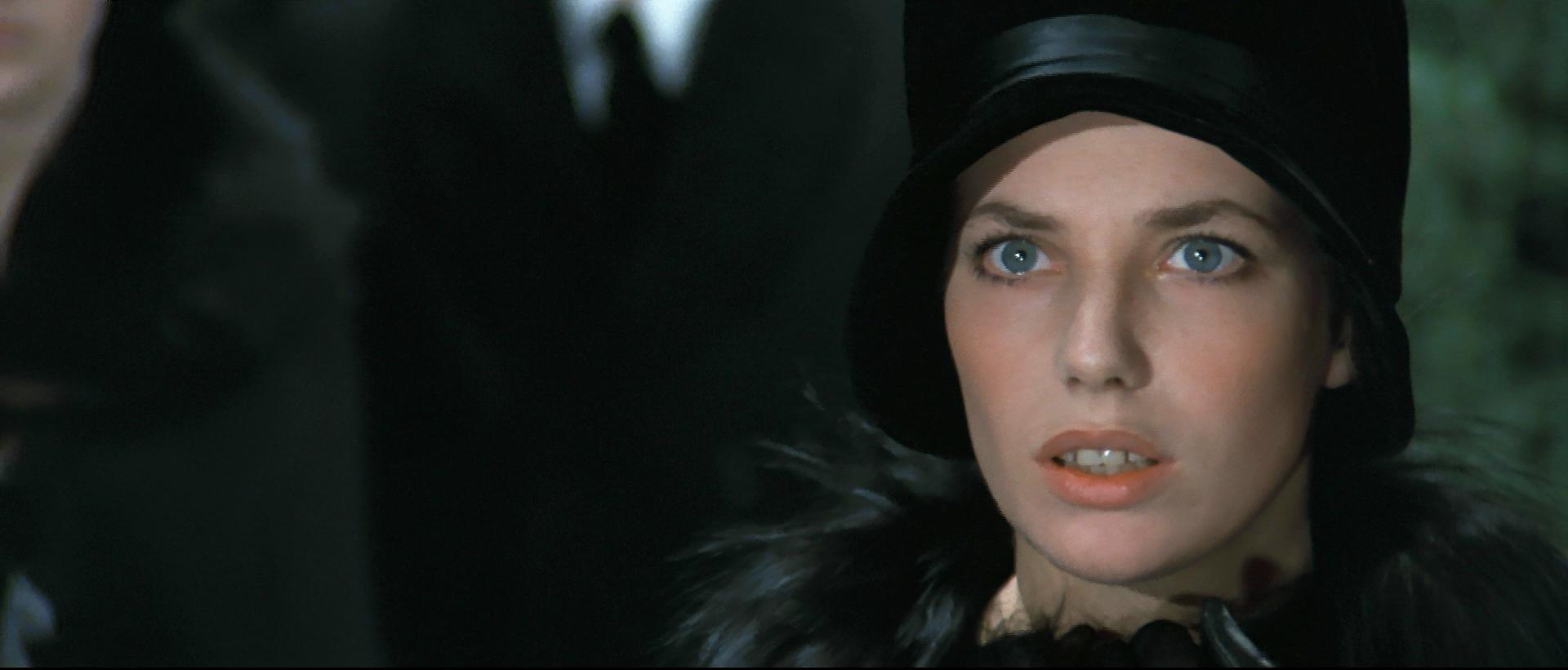
Here, Jane Birkin plays a young woman returning to her family castle in the highlands of Scotland, where she immediately becomes embroiled in a veritable soap opera of familial dysfunction. There's a touch of the eccentric here too, as Margheriti includes a rogues' gallery of characters, including Hiram Keller as a handsome young madman who might've killed his sister, Doris Kunstmann as a French teacher with lesbian intentions, and Anton Diffring as a doctor with more than medicine on his mind. There's also a potentially violent gorilla that lives with Keller's character, as well as the all-seeing cat that bears witness to each of the many murders, with both adding to the sense of the strange and the uncanny.

Birkin would go on to give much better performances in later films by directors such as Jacques Rivette and Agnès Varda (among others), but she's undoubtedly at her most beautiful here, and is an always welcome presence. Her partner at the time, Serge Gainsbourg, also makes an appearance (uncharacteristically) playing the part of a laconic police inspector, which makes this of definite interest to the work of the pop provocateur. While somewhat prosaic and even old-fashioned compared to many other Italian murder mysteries released during this same period, Seven Deaths in the Cat's Eye is quite excellent. It features a strong, often somber atmosphere throughout, and includes some almost psychedelic stylizations, including an early dream sequence and some exceptional use of light and color.

The Ballad of Tam-Lin

The Ballad of Tam-Lin [Roddy McDowall, 1970]:

I have a real fondness for strange, unclassifiable films, and they don't come much stranger and more unclassifiable than this. The only feature-film directed by actor and photographer Roddy McDowall, The Ballad of Tam-Lin (released in some territories as The Devil's Widow, The Devil's Woman, or simply Tam-Lin) adapts the traditional Scottish ballad by the poet Robert Burns and transposes it onto the then-contemporary world of swinging London.

Mod stylizations define the film's aesthetic, as Stephanie Beacham's sheltered vicar's daughter, Janet Ainsley, falls under the spell of Ian McShane's sexually charged photographer, Tom Lynn. Tom is part of a travelling coven of bored and beautiful scenesters who congregate around the wealthy, middle-aged American heiress, Michaela Cazaret. Cazaret in turn has bewitched the young Tom, resulting in a sparring love triangle that increasingly moves into the realm of the supernatural, as pastoral romance and folk horror influences combine with the excesses of drugged-out psychedelia.

Cazaret is played with great command and sensitivity by the fading superstar Ava Gardner, and it was in part McDowall's awe for Gardner, and his desire to provide the actor with a comeback role more befitting her talents and ageing beauty, that led him to direct the film.


The Ballad of Tam-Lin [Roddy McDowall, 1970]:

In terms of style and aesthetics, the film is a real time capsule, building on the influences of European art-cinema, with its careful, widescreen compositions, bold primary colors, and extraordinary use of the natural landscape. Here, a scene of seduction plays out across a series of stop-frame images, while frequent dissolves between characters, scenes and locations work to accentuate the dreamy, barely lucid tone that defines the film throughout. Many viewers will no doubt see such adornments as entirely dated, and that's fair enough, but as someone who really values fearless originality in picture-making, the excesses and indulgences of McDowall's film feel purely cinematic, and make sense within its strange witch's brew of bucolic fantasia, 60s art-house decadence and genuine horror.

The third act shift into psychotropic terror is a trip in every sense of the word, and sees the text of the original poem manifest in both literal and figurative visions of escape, transfiguration, and salvation from supernatural retribution.

The acclaimed folk-rock group Pentangle supply the soundtrack (along with instrumental music by Stanley Myers), which makes full use of the poet's verse and often underlines literal translations from text to screen. In any context, this is a film that remains obscure and fascinating in the best possible way, and is one that seems (intentionally or otherwise) to tap into the confluence between hippie era utopia and the darker, black magic influences threatening the dream of this generation of young lovers, which seemed to be permeating the culture following the Manson Family massacres.

Saturday, 29 October 2022

Eye for an Eye

Eye for an Eye [John Schlesinger, 1996]:

If you’ve ever wondered what a late Michael Winner film might look like if it was produced with "prestige film" talent, then look no further than this. Everyone here is doing exceptional work - especially the starry cast, who commit entirely to the complexity of their individual characters, as well as grappling with the sensitivities of the plot - however, despite the hard work of all involved, the film is no less morally questionable or manipulative in its sensationalist pandering to fears around violent crime and justifications of vigilantism as something like Death Wish II (1982) or Dirty Weekend (1993). Disappointing for a filmmaker of John Schlesinger’s great talent.

Born American

Born American [Renny Harlin, 1986]:

Given the implications of the title and the politics of the era when the film was first released, the expectation here was for something steeped in jingoistic, pro-U.S., anti-Soviet propaganda, in which the north American protagonists get to espouse their traditions of liberty, freedom and justice for all, while simultaneously violating a litany of international laws and treaties. Surprisingly, this isn't the case. While the film is unashamedly anti-Soviet to an almost parodic level, it also seems to view its trio of American characters with a level of derision. These teens, who travel to Finland for vague reasons and immediately cross the border into Russia for a bit of fun (taking photos of military checkpoints and shooting a bow and arrow into the snow is apparently how these kids get their rocks off) are shown to be so aggressively stupid and naïve that one can only conclude that co-writers Renny Harlin and Markus Selin (the former making his feature debut as director) are lampooning the perception of north American exceptionalism as enthusiastically as they're lampooning Soviet sleaze and corruption.

It's a strange film, with some plot points that are so brazenly bizarre that they could've come from a work of science-fiction. For instance, Harlin and Selin begin with a very grounded, character-based study of three American teenagers on a road trip across the Soviet border (which initially recalls elements of Walter Hill's film Southern Comfort, 1980) before hauling the characters off to prison for what can only be described as an even more sensationalist and reactionary version of the Alan Parker/Oliver Stone adaptation of Midnight Express (1978). Here, inmates compete in games of human chess, while high-ranking Russian ministers with a propensity for torturing inmates with jumper cables attached to their nipples, bribe the U.S. counsel with unwilling victims dragged from the women's prison.

The entire film has an odd tone that's pitched somewhere between serious commentary on proxy wars and the CIA's involvement in prolonging the Soviet conflict, and the most ludicrous action movie (n)ever released by The Cannon Group. As director, Harlin is already showing a lot of potential, despite the limitations of the text. While the film ultimately exemplifies many of the weaknesses that still affect his work to this day (under-written characters, vague plotting, a questionable tone) it also shows a natural talent for directing large-scale action and gritty heroism. With its snow-bound locations and emphasis on ordinary men pushed into violence and survival by extraordinary conditions, we can already see faint traces of his later Hollywood movies, such as Die Hard 2 (1990), Cliffhanger (1993) and even his found-footage horror film, Devil's Pass (2013). 

The Presidio

The Presidio [Peter Hyams, 1988]:

A serviceable conspiracy thriller from director and cinematographer Peter Hyams - a dependable journeyman of such films as Capricorn One (1978), Outland (1981), 2010: The Year We Make Contact (1984) (an early example of what is now known as a "legacy sequel"), Time Cop (1994), Sudden Death (1995) and End of Days (1999), among others. Hyams tends to get overlooked by the contemporary movie culture, enraptured as it is by the lure of the autocratic auteur. I suspect this particular film might’ve retained more of a legacy had original co-star Kevin Costner not backed out, but it's still provides decent entertainment value. As criticism, the courtship between the characters played by Mark Harmon and Meg Ryan, and the complications this creates between our protagonists, Harmon and Sean Connery (the father of Ryan's character), is somewhat predictable, but the mix of murder mystery, action movie and lament of old soldiers still carries some weight. Similarly, the San Francisco setting (much of it fogbound) provides a great atmosphere.

Schalcken the Painter (1979)

Schalcken the Painter [Schalcken the Painter [Leslie Megahey, 1979]: This is a film I first saw around four years ago. At the time I found...